
The Night Everything Shattered - Part 7
“My emotions are the slaves to my thoughts, and I am the slave to my emotions” - Unknown author
The morning of 25 January 1997 didn’t arrive so much as it crept into the house; quietly, reluctantly, as if even the sun hesitated to shine on what was left of us after the night before.
There was a heaviness in the air that didn't feel like morning at all. It felt like the pause after an explosion, when the dust still hangs thick, and every breath tastes like something broken. My hands trembled without my permission. Even when I wasn’t thinking about it, my fingers kept curling, remembering the cold weight of the firearm from the night before, lingering like a shadow.
Nothing feels the same after you have held something that could end a life. Even the light coming in through the kitchen window felt altered, sharper, intrusive.
Lizette and I stood side by side at the kitchen sink, peeling potatoes like we had done many times before. But this morning, the ordinariness of the task felt obscene, like pretending a house is still standing when the roof has already caved in.
The smell of onions frying in the pan should have brought comfort. It should have reminded me of home, of Sunday lunches, of laughter filling this same space. Instead, it only reminded me of how foreign everything had become. The sizzle in the pan was too loud in an area where nothing else dared make a sound.
Except for Kegan.
He raced his little three-wheel scooter up and down the passage as if movement alone could save him from the tension he couldn’t name. The plastic wheels rattled over the tiles, echoing through the hallway. Every so often, he would pause, lingering at the kitchen entrance with those somber, searching eyes only toddlers possess, eyes that somehow understand far more than the mind behind them can process.
He watched us, his mother and his “Ammie,” as if waiting for a signal that everything was okay. But there was none. Only stiff air, tight shoulders, and the kind of silence that children feel first.
The confusion on his little face was unmistakable. He didn’t have the words for it yet, but he sensed the shift, the fracture, the wrongness of it all.
He didn’t understand why the laughter had stopped, why the warmth had drained from the house, why the two people who had held him, bathed him, guided him, were suddenly strangers to each other.
He didn’t understand why they no longer reached for each other’s hands during grace at the dinner table, why the smiles had turned into sighs and tears, why the slightest noise now seemed to irritate instead of amuse.
And he didn’t understand me; why his Ammie no longer scooped him into the bath with her, making silly bubbles and playing with plastic ducks, why I didn’t sit next to him on the couch anymore to watch The Lion King for the hundredth time, why bedtime stories had stopped, leaving him lying awake longer, missing the rhythm of my voice whispering him into dreams.
He didn’t understand why I cried so much, or why his mother’s tone had become sharper, colder, clipped at the edges.
He only knew his world was changing, and not for the better.
The potatoes slipped in my hands, peeling unevenly because my fingers wouldn’t stop shaking. Every so often, I’d wipe at my eyes with my wrist, pretending it was just the onions stinging them, but the tears came from a much deeper place. A place I didn’t have the tools to hide anymore.
I glanced sideways at Lizette. She kept her eyes low, her movements controlled in a way she had adopted over the past few months; mechanical, distant, careful not to let anything soften. She looked like someone who had decided, fully and finally, to leave, and was now simply
moving through the motions until the moment arrived.
She didn’t look at me. She hardly ever did anymore. And every time she avoided my gaze, another piece of me fell away.
At one point, the smell of the onions became too much. Or maybe it was everything else: the silence, the weight of her indifference, the pressure in my chest that refused to let me breathe properly. Whatever it was, something inside me cracked again.
“I’m just… gonna sit for a bit,” I muttered, though Lizette didn’t respond, not even with a nod.
I walked into the braai room, just off the living room, separated by the sliding door. We had only used it once, on Christmas Day. The house was still new to us; two and a half months of trying to settle in, trying to make it feel like home.
Back at the previous house, the braai area had been our spot. That braai area had been alive, filled with regular BBQs, laughter, and those easy, joyful moments that made life feel light. Music playing, drinks on the counter, neighbours and friends popping in, laughter rolling out into the evening air. It also became part of our rhythm as a couple; That old braai space held everything warm about us. It was where disagreements softened, where silly jokes were born, where we leaned into each other without even thinking about it, where hugs, passion, and kisses were shared, where future dreams were discussed.
But this new braai room felt nothing like that. Instead of coziness, there was an emptiness… a hollow space waiting for memories that never had the chance to exist. It still smelled new, untouched. No warmth. No history. No echo of who we used to be. Standing in it now, it felt less like a room and more like a reminder of how quickly something once full of life could become useless. As if this house, this room, had been waiting to become the place where everything finally broke.
I sat down on Kegan’s little chair, of all places. It was ridiculous, almost childish, but the smallness of it offered a strange familiarity, a grounding. My elbows came to my knees, my hands covering my face as the tears pushed through again, hot and relentless.
For a moment, I thought I had managed to contain my sobs. But the sound broke loose; a short, sharp inhale that escaped before I could swallow it back. And that was all it took.
Kegan heard me.
Cautiously, he peeked around the corner, slowly, cautiously, like a child approaching a wounded animal. I sensed him before I saw him. A tiny hesitation at the doorway, the soft scraping sound of his scooter being abandoned halfway in the living room. I turned to face him, tears streaming down my cheeks. His eyes were wide, filled with worry far too heavy for someone who had only lived two years on this earth. When our eyes met, I saw the question in his look. He didn’t know what was wrong, but he knew it was serious. Serious enough that his little heart felt compelled to move toward me. He took a slow step into the room. Then another.
Slowly, he approached me, his eyes never leaving mine. And as if drawn by something deep and instinctual, love, empathy, or a child’s pure heart, he walked up to me with quiet determination. No fear. No hesitation. Just the simple, honest courage of someone who wanted to make it better, even if he didn’t know how.
I lifted my head slightly, just enough to see him clearly through the blur of my tears.
“Ammie cry,” he said softly.
Two words. Only two. Yet they struck deeper than anything anyone had said to me in months.
His voice wasn’t confused this time. It wasn’t asking. It wasn’t distressed. It was comforting. It was acknowledging. It was him trying to carry something with me.
He reached out with his tiny, chubby hand, still soft with babyhood, and with the gentlest touch, he wiped a tear from my cheek.
No child should ever have to console an adult under such circumstances. No toddler should ever need to be the strong one.
But in that moment, he understood more than anyone else in the house did.
He felt what was happening.
And he came to me anyway.
My heart caved in completely.
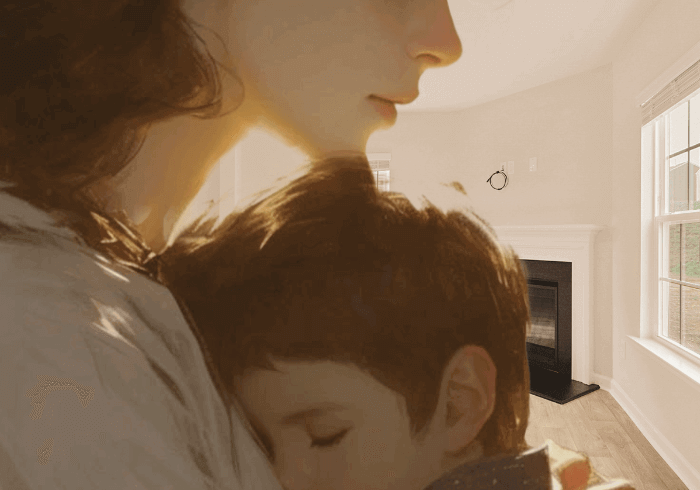
The Embrace, the Outpouring, the Bond
“A child’s compassion - pure, wordless - mended what years of love could not. He didn’t understand the words - only the ache, and somehow, that was enough.” - Elmarie Heckroodt
Kegan stood in front of me with his tiny hand still hovering in the air, his little chest rising and falling beneath his T-shirt from all his racing around. There was no misunderstanding his intention; he came to fix what he could, to give the only thing he had to offer: his presence.
I swallowed hard and wiped at my other cheek with the back of my hand, though it did nothing to hide the red blotches forming on my face. I didn’t want to frighten him, but I also couldn’t pretend anymore. I couldn’t be strong, not in that moment, not after everything that had led us to this morning.
“Kulu…” I whispered.
The nickname flowed out of me instinctively, wrapped in affection, history, and everything I felt but couldn’t say out loud without breaking again. His little body reacted immediately. He moved closer, his feet pattering softly against the tile floor.
When he reached me, he placed both of his tiny hands on my knees and looked up, his eyes wide and round and full of concern that no child should ever need to express.
I reached out with both hands and gently lifted him onto my lap. The moment he settled against me, the weight of him on my lap, his warmth, his trust, his innocence, made something inside me melt and collapse all at once. I wrapped my arms tightly around him, as if holding on to him could keep the world from falling apart.
He rested his head against my chest, right over my heart, and his breath warmed the skin through my shirt. His little fingers curled lightly into the fabric, as though he were anchoring himself to me.
I closed my eyes and pressed my cheek against his head, feeling the touch of his hair against my skin.“Oh, my dearest Kegan…” My voice cracked like thin glass.
The words broke free before I could stop them, pouring out in a trembling whisper. “I love you so deeply, my boy…” My throat tightened painfully, but I forced myself to continue, because some things have to be said even when it hurts.
“I’m so sorry you have to see all this unhappiness. I never wanted this for you. I never wanted you to feel this tension, this… this breaking.”
He didn’t respond with words, but he pressed himself closer into me, as if his little body was trying to shield me from whatever was hurting me. That simple gesture, small, unthinking, instinctive, destroyed me in a way nothing else could.
“You don’t deserve this,” I whispered into his hair. “You don’t deserve any of it.”
He lifted his head slightly and looked at me again, big brown eyes blinking slowly, softly, like he was absorbing every syllable, even if he couldn’t fully understand the language. But he understood the feeling. Children always understand feelings first.
“Your mommy…” I paused, swallowing against the pain rising in my chest. “Your mommy doesn’t love me anymore.” The words felt impossible to say out loud, like admitting them made them more real. “And she wants to leave."
His eyes flickered with confusion, just a small flicker, but I felt it like a blow. He didn’t know what “leave” meant in the way adults do, but he knew it wasn’t something good. He knew it meant change. He knew it meant something disappearing.
“She wants to take you away from me,” I whispered, my voice trembling.
Kegan didn’t speak. Instead, he leaned forward and wrapped his little arms as far around my neck as they could go. His embrace was clumsy, limited by his size, but it carried a strength that hit me straight in the soul.
In that moment, the entire world narrowed down to the two of us, me and the child who had taught me what unconditional love feels like. There was no space for anything else. Not Lizette’s coldness. Not the past. Not the looming future. Just him, his little heartbeat, his soft breaths, his tiny fingers gripping me with a desperation he didn’t even understand.
I held him tighter, burying my face in the curve of his small shoulder. Tears streamed down my cheeks in a steady flow, warm and relentless.
“I never wanted this,” I murmured into his shirt. “I never wanted to lose you. I never wanted you to feel afraid.”
His small hand moved to my cheek again, brushing the wetness away in the only way he knew how, gentle, hesitant, but determined.
Nothing and no one could have interrupted that moment. It felt sacred, suspended in time, as if the world outside had been muted just so I could feel the weight of what was being torn apart.
I remembered all the nights I bathed him, the warmth of the water, the way he would splash and laugh when I made little waves. I remembered him falling asleep on my chest while we watched TV. I remembered how he would run up to me with pure joy in his eyes when I walked through the door after work, as if my return made his whole world complete.
That bond didn’t form easily. It didn’t grow out of convenience. It grew out of every small act of love that had passed between us, every giggle, every cuddle, every shared moment of comfort and trust. We were tied together. Deeply. Permanently.
And that made this moment feel like the tearing of something that wasn’t meant to be torn. He was my reason for still believing that love could exist without conditions, without punishment, without betrayal.
When I held him that afternoon, I wasn’t just holding my son. I was holding the very thing I’d spent a lifetime searching for, the kind of love I had begged for as a child but never received. Sometimes, I’d imagine what it would feel like to be loved without fear, to have someone look at me the way a father should look at his child: with pride, not possession, not something that was controlled with a slap in the face or a belt on my body.
I could still remember those nights from long ago, lying in bed, staring at the ceiling, listening to my father’s voice echoing down the hallway. His tone always carried authority, sharp and cold, even when he wasn’t shouting. My mother never answered back. Her silence became part of the house, like the ticking of the clock or the hum of the fridge, constant, but empty.
His hours were unpredictable; we never knew when he’d come home. Some nights he wouldn’t come home at all. When he did, he was always well-dressed, smelling faintly of aftershave, never alcohol. On the outside, he was respectable. But I learned early on that respectability doesn’t always mean kindness.
There were women, too many to remember, and I stopped trying to keep track. I didn’t understand why my mother stayed, or why I kept hoping one day he’d walk through the door and see me, really see me, not as part of the house or background noise, but as his daughter.
That longing stayed with me, buried beneath years of trying to be enough for people who could never give what I needed. Kegan didn’t just fill the space inside me; he healed it, unknowingly, with every small act of love. His laughter, his trust, the way he’d reach for my hand even when he didn’t have to; those were the moments that rewrote the story I’d been carrying since childhood.
“How will I live without seeing you every day?” I whispered, but the question wasn’t really for him; it was for the universe, for whatever fate or force had decided that this was the path laid out for us.
There was so much I wanted to tell him.
About my childhood.
About the father who never saw me.
About the years I spent longing to feel the kind of love I found in this little boy’s arms.
About how he had healed parts of me without even trying.
But none of that mattered in that moment.
All that mattered was that he knew how much he was loved.
“I love you so much, Kulu,” I murmured, my lips brushing the top of his head. “More than anything.”
He pressed his forehead against mine, our noses almost touching, small, gentle, unconditional.
I held him close until the tears finally slowed and my breathing steadied. Only then did I loosen my grip. I gently brushed my fingers through his soft hair, pushing it away from his forehead. I placed a small kiss on his mouth, soft, tender, filled with every emotion words couldn’t carry.
“I will always love you,” I whispered. “Always.”
When I finally stood up, he slid off my lap with a little thud and blinked up at me, unsure of what would happen next. I ran my hand down his cheek and gave him a sad smile before turning back toward the kitchen.
I felt his eyes on me as I walked away.
And I carried the weight of that gaze with every step.
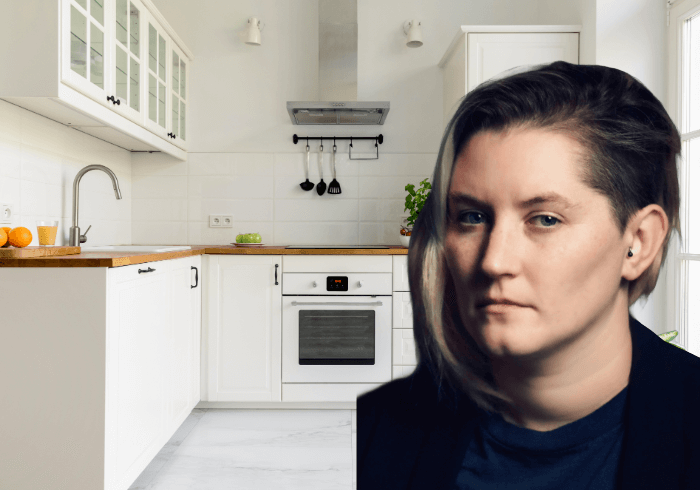
Lizette’s Cold Words, the Shattering, and the Unraveling
The walk back to the kitchen felt longer than it should have. The house was the same size it had always been, but grief stretches space in a way nothing else can. Every room felt further away, every doorway heavier to cross. I wiped the last of my tears with the sleeve of my shirt, hoping, foolishly, that I might look composed by the time I stepped into the kitchen entrance.
Lizette was still standing at the sink.
At first glance, the scene hadn’t changed. The potatoes were now mostly peeled, their pale skins curled in a pile beside her. The onions in the pan had turned a richer brown, caramelizing into a sweetness that contradicted the bitterness between us. The window stood open just a crack, letting in a faint breeze that did nothing to cool the tension.
But something had changed.
Or perhaps it had always been there, and I was only now noticing how striking it truly was.
She wasn’t just quiet. She wasn’t just distant. She was gone; emotionally, mentally, already halfway out of our life together.
Her eyes were fixed on the sink, on the repetitive motion of rinsing and slicing, as though the task itself was the only thing keeping her from crumbling. But there was no softness in the set of her jaw, no hesitation in her posture. She wasn’t wavering. She wasn’t conflicted. She was resolved.
I took a few slow steps into the kitchen, stopping just behind her. I didn’t touch her. Touching her had become dangerous. It made her recoil. It made me ache. It reminded us both of everything we used to be and everything we no longer were.
The silence pressed between us like a wall. I spoke first, not because I wanted to, but because the silence forced me to.
“It’s not too late to change your mind,” I said quietly, the words barely escaping my throat. It didn’t sound like a plea, but it was. A quiet desperation wrapped in a whisper.
Lizette exhaled slowly, the air leaving her lungs as though the sentence she was about to say had been waiting at the back of her throat for months.
“I don’t think I can…” She paused for barely half a second, just enough to tease hope before crushing it. “I’ve made up my mind.” Her voice wasn’t sharp, but it was cold. Cold in that frightening, final way, like a door shutting quietly but firmly.
I stared at her profile, the curve of her cheek, the eyelashes I’d kissed so many times, the mouth that had once said I love you with warmth now shaped around words I wasn’t ready to hear. I felt something in my chest pull tight, then tear, then collapse inward.
“You’ve made up your mind?” My voice quivered despite my best attempt to steady it.
She nodded once. Brief. Detached. As if confirming something administrative, not life-altering.
There are moments when words cut deeper because of the way they’re said; not loud, not cruel, but with an emptiness that reveals something irreversible. Her tone didn’t shake, didn’t crack, didn’t carry regret. It carried certainty.
I felt tears pricking my eyes again, rising without permission. I tried to blink them back, but emotion doesn’t care about timing.
Her coldness and abruptness caught me off guard, and I instinctively pulled back, not physically, but emotionally, like the body’s natural response to a sudden burn. Shock tightened my chest as if someone had abruptly pulled the air out of the room.
She turned the faucet off, placed another peeled potato on the cutting board, and only then, finally, she looked at me.
“You asked me,” she said, her tone too calm for the moment. “I needed to answer.”
The simplicity of it broke me more than if she’d shouted. She wasn’t angry. She wasn’t defensive. She wasn’t emotional. She was done.
“I’m sorry…” she added, not softly, not tenderly, just… neutrally. “I just had to say it before I leave.”
"Before I leave." The phrase struck like a blow to the chest. Not “before we talk.” Not “before we
figure this out.” Not “before I think things through.”
"Before I leave..." Those three words cracked something wide open inside me. The implications flooded in at once; her packing, her absence in our bed, the empty side of the couch, the silence in the house where a dream could have been achieved, the hollow space where Kegan’s voice would echo without mine to answer.
I felt the kitchen shift around me, the colors dim, as if my body had retreated to some internal space where the world became muffled. My throat tightened so painfully that breathing felt like swallowing glass. She didn’t flinch. She didn’t reach for me. She didn’t soften.
I stood there, trying to gather the pieces of myself before they slipped through my fingers. But the pieces had already started falling. I wanted to respond, anything, something, even a whisper, but nothing came. No words formed. No sound found its way out. Instead, I felt my face go numb, my legs heavy, and my heart? My heart felt like it had fallen out of my chest and landed somewhere on the cold floor tiles.
I turned around because it was the only thing I could do. Not out of strength, but because staying there, facing that coldness, would have destroyed me beyond repair.
My feet moved on their own, slow, dragging, each step echoing through the hallway. Behind me, the kitchen resumed its small, domestic noises; the quiet clink of a knife, the hissing onions softening in the pan, the rhythmic slice of Lizette’s blade meeting the cutting board. It was surreal, almost cinematic: the sounds of ordinary life continuing even while something enormous was collapsing within me.
She didn’t call after me. She didn’t ask if I was okay. She didn’t reach for me. There was no “wait.” No “we need to talk.” No pause. No flicker of hesitation. Just silence. And that silence said everything.
I walked to our bedroom, the room we had shared for almost three months, though it felt wrong to call it “our” anything now. The door creaked when I pushed it open, a familiar sound that felt strangely foreign. The bed was neatly made, the pillows in their usual place, the blanket pulled tight and smooth. It was a picture of our life’s routine; untouched, unbothered, unaware that the people who lived in it were falling apart.
I sat on the edge of the bed, my hands limp between my knees. For a moment, I just stared at the floor. The carpet fibers blurred. The light from the window stretched across my bare feet, but I didn’t feel it.
Tears began sliding down my cheeks again, not dramatically, not in a sob, but quietly, steadily. The kind of crying that happens when the body is too exhausted to fight anymore.
My mind replayed her words, each time sharper, heavier. “I’ve made up my mind.” “Before I leave.” “I’m sorry.”
"Sorry." The most meaningless apology I had ever heard. Because what was she sorry for? For betraying me with another woman? For staying this long? For leaving this way? For letting me believe the love we built could withstand what it clearly couldn’t?
Those questions hammered through my mind, each one cutting deeper than the last. I wasn’t just losing a woman; I was losing the life I had fought to build, the family I prayed over, the future I believed God Himself had entrusted to me. And in that moment, the apology felt like a cruel whisper over an open wound.
I didn’t know. I still don’t. What I did know was that something inside me was unraveling, slowly, painfully, as if being pulled apart thread by thread. I stared at my hands. These were the hands that had held her face, stroked her hair, carried our child, built our home, wiped Kegan’s tears. These hands had built a life that was now slipping through my fingers.
And I could do nothing to stop it. Nothing.
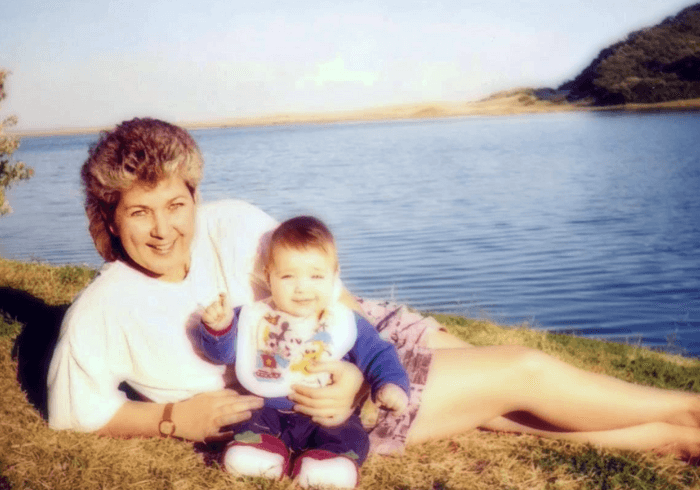
© 1995 Elmarie Heckroodt. All rights reserved.
The Goodbye She Never Said Out Loud
But the truth was… her apology didn’t matter anymore. Not in the way it should have. Not in the way a family-breaking sorrow ought to be softened by regret. It felt empty. Detached. Like words spoken only because silence would have revealed too much.
I left her standing there, trembling, but not with heartbreak. Not with the kind of pain that comes from losing someone you love. It was the trembling of someone who had already stepped out of the relationship long before their body walked out the door. A shaking born from guilt, not grief. And that, God, that was the part that shattered me, because I realized I was the only one grieving the death of something that apparently had died months ago.
I stood up from the bed and walked toward our photo frame against the wall, searching for any sign of the woman I once knew, the one who laughed with me, prayed with me, and promised forever with me. But all I saw was distance. A stranger wearing the face of the person I built my life around.
I felt my knees weaken under the weight of it all. It wasn’t just the betrayal; it was the finality. The knowing. The quiet, agonizing acceptance that no matter what I did, no matter how much I loved, fought, forgave, or prayed… this moment was the end.
And still, in the middle of that emotional wreckage, our boy was there. Tiny arms. Tiny heartbeat. Tiny breath against my chest. The innocence of a child caught in the crossfire of choices he never made. He was the only steady thing in a house spinning out of control.
I called him, and as he came running down the hallway, I reached out with both my arms and held him tight, not out of fear of losing him, but because he reminded me of everything real. Everything pure. Everything worth saving. His small hand curled into my shirt as if he knew I needed anchoring.
And in that moment, I made a silent vow in my spirit; one I knew God was witnessing:
“If everything else falls apart, I will not. Not for him. Not for me.” Because even if she couldn’t love me anymore…Even if the home we built collapsed right in front of us…Even if her heart had already chosen someone else…
Mine still chose him. And mine still chose to survive.
At around 11 o’clock, there was a knock at the door. It was Liz. She opened it and stepped inside as if it were her home. I heard her voice from the bedroom and went to the front door, where Lizette had already met her in the entrance way. She was holding the firearm. I recall the magazine was inserted, and I immediately noticed the safety clip was off. Having been a policewoman for years and trained extensively in firearms handling, I knew the importance of always being aware of a weapon’s status. Every course I had attended drilled into me the necessity of vigilance, precision, and safety, and in that moment, all that experience came flooding back.
“I don’t want this thing in my house,” she said, her voice calm, detached, almost casual. No hint of apology, no trace of concern. Just the words.
Lizette took it from her, and Liz left shortly after. I retreated to my room, still reeling, my body and mind exhausted from the events of the previous night, and now shaken and wary, unsure of what had just happened or what was coming next. I stayed silent, wary, my mind replaying the previous night and the heavy weight of what could have been. The presence of the firearm, returned that morning, was a constant reminder, a lingering shadow of fear and betrayal that refused to leave.
I couldn’t shake the thought that Liz’s choice to return the firearm was deliberate. She had witnessed the panic, the chaos, the fear from the night before. She had seen me crumple into myself, helpless, broken. She knew what the gun symbolized: the power to end everything, or nearly everything, in a single instant.
Why did she bring it back here? Why not hand it over to the police, as any reasonable and responsible person would? The answer eluded me.
Part of me wanted to believe she didn’t want the responsibility. But another, colder part whispered a darker thought. Maybe she hoped I’d follow through, that I’d end the night’s terror on my own terms, leaving her free and unburdened, where she could have Lizette all to herself.
She knew my fragility, my exhaustion, my grief, and saw it as an opportunity.
We didn’t have a safe. Later that afternoon, when I confronted Lizette again about their affair, I noticed it....She was standing with her back against the crockery cupboard in the kitchen. From where I was standing at a distance, something caught my eye - the tip of the barrel sticking out, small and out of place, subtle but unmistakable, on top of the cupboard. From the counter beneath, you couldn’t see it at all. But standing back, it was obvious. And that’s how I knew exactly where Lizette had hidden it.
The weight of my suspicion pressed against me, sharper and heavier than any physical object. I couldn’t confront her about it, couldn’t voice the thoughts that made my stomach knot and my head spin. All I could do was notice, silently, how the firearm was out of place, sticking up there - a reminder of everything that had happened the night before, and everything that was still unresolved. I had no answers, except for "I'm sorry and "I've made up my mind", and now the uneasy knowledge that the gun was close, visible, and impossible to ignore.
Even now, as I'm writing, I replay that moment, that morning, over and over. The fact that she returned the firearm instead of handing it in at the police station feels deliberate, calculated, and it leaves a question I will likely never fully have an answer to: What was she really hoping for?
After Liz left, Lizette returned to the kitchen, and I joined her in finishing our supper. I stood there for a while, just watching her prepping the food, speechless, and then, as if a surge of new life had been breathed into me, I reached for the firearm that was perched on top of the cupboard behind Lizette. "What do you think you’re doing? ...shoot me if you want to," she said, devoid of emotion.
She crouched down, picked up Kegan, and held him close to her, almost like a shield, indicating that I would have to shoot him first before I could shoot her. I raised the firearm in a desperate, aimless gesture, unsure of what I wanted to do with it. I definitely didn't want to use it. "You know I don’t want to shoot you...you know I can’t," I said, feeling helpless and desperate. And she had known it too.
Tears clouded my vision, and I could barely focus on the chilling scene before me. Defeated, I let my arms fall, still gripping the cold, deadly weapon. I couldn't let go of it, nor could I bring myself to pull the trigger. There were no plans driven by desperation or any predictable actions. It was just a numb, pitiful, and vulnerable figure clinging to something stronger than herself.
Lizette, still holding Kegan, walked past me and said, "If you want to shoot me, do it now, but I’m leaving anyway," and then she vanished around the corner leading to the front door. Seeing her react in such a heartless and cold manner left me distraught as I stood there in total dismay. I struggled to gather my thoughts as I looked down at the "deadly piece of iron" I still held in my hands.
I wandered to the telephone, as if in a daze, not even sure who I would call.

Lizette was outside, across the road, talking to the neighbor, with Kegan in her arms. As I watched them through the open garage door, I felt a sense of distance and detachment, so afraid of letting go, so afraid of losing control, and humiliated by Lizette's demeanor, which exuded coldness, hatred, heartlessness, and bluntness.
Through my tear-filled eyes, all I saw was the warm, passionate, understanding, deeply involved, and committed person that I had once known, but now seemed like a small pile of "human nothing. She meant nothing anymore... she had become devoid of love and life.
Despite these distressing thoughts, I couldn't bring myself to let go. "Please, don't go, Skiews, (her nickname)... I’m begging you," I whispered, almost audible. It felt like I had lost everything.
Suddenly, the years were showing in my eyes, and I moved as if burdened by the things I didn’t express but deeply felt. I had believed in love, goodness, happiness, and trust, but they had all been lies. The happy ending I had dreamed of for so long would never come.
Memories of my childhood crept back: hiding behind the entrance to my parents’ room, listening to whispered voices over the telephone. It was my father and another woman, their words slithering through the line, cutting into the quiet of the house. My mother’s sobs were silent, barely there, yet I felt an aching urge to take away her pain, to make it stop, but I was just a child, powerless and small. I pressed my tiny hands over my ears, wishing I could protect her, wishing I could fix what I could not.
Now, as I carried the weight of years on my shoulders, I realized how those early betrayals had carved themselves into my soul, shaping the way I saw love, shaping the way I moved through life. Every hope I held, every belief in a happy ending, felt fragile and tainted, and I understood that some wounds never truly healed. They were supposed to make me stronger, or at least, make me endure, but there I was, standing in the garage, feeling like that little child again.
I turned away and walked to the telephone, which was fitted against one wall in the hair salon, leaving the firearm in the cats’ litter box in the garage. Nothing mattered anymore.
I entered the well-kept and nicely decorated hair salon, Lizette’s pride and joy, and rested my head against the soft-purple wall, feeling alone, lost in my thoughts, and gazing out the sliding door. I realized there was nothing left for me there, nothing I wanted to do, and nothing I wanted to take with me. I had learned and experienced everything about love, and the lesson had become painfully clear. All I felt at that moment was sadness, not grief, agony, or despair, just sadness.
Feeling utterly helpless, I picked up the receiver, my hands trembling. God, please… who can I call to come to my rescue? I thought, and on instinct, I dialed a number. The voice on the other end snapped me fully into reality.
“Hello?”
It was Lizette’s father.
“Uncle Gert… please… come get Kegan,” I said, my voice breaking, barely holding back panic. “I… I don’t know what to do… I’m so afraid… afraid I'm going to shoot Lizette. She… she is having an affair with Liz... I've been suspicious for a while now… please… just… come fetch Kegan.”
The words tumbled out faster than I could control them. There was no time for explanation, no room for reasoning. Before anything more could be said, I hung up.
Moments later, the shrill ringing of the phone cut through the silence, making my heart leap. I knew, without a doubt, I had to answer it.
The sedatives and alcohol had stolen my grip on reality, dulled every nerve, and left me moving through the motions almost like my body was moving without my mind. Each movement felt alien, robotic, as if I were watching myself from the outside, a ghost performing actions I could barely feel. And yet, my hands lifted the receiver, obeying instinct while my thoughts floated somewhere distant, disconnected from the panic rising in my chest.
“May I speak to Ounooi… where is she?” Uncle Gert’s voice was hesitant, laced with anxiety.
I didn’t answer. Without a word, I placed the receiver down on the countertop, stepped outside, and called Lizette.
“Hello, Dad,” she said.
There was a pause as she listened to her father, the silence heavy enough to choke the air around us. Then, with a quiet but resolute strength, she said: “No! This is my life, and you are not taking my child away from me.”
That was the end of the conversation. Little did we know, those would be her last words ever spoken to her father.
Without another word, she replaced the receiver, left the salon, and went to sit in the television room with Kegan. I joined them briefly, but soon Kegan said he was hungry. Lizette went to the kitchen and served up food for the three of us, and we gathered around the table. The rituals we once followed: holding hands, saying grace, and Kegan finishing with his cheerful “Amen”, were absent that evening. We simply began eating. I remember Kegan saying “Amen” spontaneously, as if on instinct, before diving eagerly into his small bowl of food.
I stared at the plate of food in front of me. I had no appetite, and excused myself from the table and took another beer from the fridge. I moved through the house like one of the walking dead: aware of my surroundings but detached from them, my senses dulled, my thoughts hollow. It was as if I’d already died inside, but my body hadn’t received the message yet.
There are moments in life where language fails, where emotion exists far beyond the limits of vocabulary. What I felt during those moments cannot truly be captured by words on a page.
Only the finest director, working alongside a gifted production team, could ever hope to script such devastation. Only an actor guided by extraordinary direction could begin to portray the paralysis, the chaos, the hollow ache, the terror, and the desperate fight to hold on. These weren’t just feelings; they were an experience that swallowed everything, something that had to be lived to be understood, and even then, it would remain beyond explanation.
This chapter ends here… but your thoughts matter! Drop a comment below.

Author: Elmarie Heckroodt
Stay informed! A new chapter is released every week.
Your next chapter, “Pulling The Trigger – Part 8,” will arrive in your email next week.
Keep an eye on your inbox so you don’t miss it.
© 2025 Elmarie Heckroodt. All Rights Reserved.