
The Months That Broke Me - Part 6
The Serpent Who Smiled
She wore innocence like perfume - sweet, fleeting, and poisonous. No one else saw the fangs beneath her smile, but I did.
What most people didn’t know was that Lizette’s lover had played a huge role in the chain of events that led to the shooting, how deep her hands were in the darkness that followed.
How her presence, her whispers, her pretend innocence stirred the storm that would end in blood and ruin.
She had set into motion a series of moments, small and subtle at first, that would culminate in the most devastating night of my life.
She had been the pretend-to-be-innocent witness of what truly happened that awful night, too arrogant to admit the truth. The arrogance in claiming her innocence, the pride in her deceit, and a blindness to the consequences of her actions radiated the devil from hell.
She became both witness and ghost - the sanctimonious saint in everyone else’s eyes, but to me, the serpent who smiled as she denied her own bite.
During the trial, she was a witness for the State. She carried herself as if she were the victim of every accusation, yet every glance, every word she spoke was a mask- false, hollow, carefully curated.
In retrospect, now as I’m writing, the evening before the shooting, she wore that same hollow expression - the one that said, "I know what’s coming, but I’ll say nothing." At the time, I was so overwhelmed with emotions that I saw it as genuine concern.
In the witness box, she wanted the world to see her as innocent, as pure as a newborn, but only I knew the real truth. Only I knew what had truly unfolded, revealed to me by a witness who was now gone, taken from this world before the truth could even be spoken aloud…Lizette.
Fortunately for me and extremely unfortunate for her, she has to live with a conscience that is unbearable, every day, for the rest of her miserable life, and carry the guilt and secrecy of being the “other woman” for eight months, the secretive mistress who should have been invisible, erased, silenced…forever and now she will live haunted by that love, long after Lizette is gone. She had loved Lizette fiercely, dangerously, and with the kind of reckless devotion that would ultimately tear everything apart.
She was always there. Not in an obvious way, not enough to raise alarms, but in a way that lingered, like perfume that stayed in a room long after its owner had gone. Liz had a way of drifting into our space, blending familiarity with intrusion, pretending to belong. Not only when we were living with them, but also after we moved to our new home. She laughed too easily at Lizette’s jokes, touched her arm too casually, and stayed up too long after Kegan and I went to bed.

The Kiss I Never Wanted to See
Moments that shattered trust in the dead of night.
We were friends when we still lived in our previous house, before we bought a plot, just around the corner from where they were staying, and started building our new home. We had regular barbecues on weekends, filled with laughter and a sense of shared comfort. We had become such good friends that we had barbecues every weekend, sometimes at our home and sometimes at theirs.
We fell in love with the area where they were staying, which was a new developing area, and decided to buy a plot there.
After our house in Parow-Valley was sold, Tess and Liz welcomed us into their home for the time that our new house was being built. Kegan moved along with us. The reason I mention this is that Lizette, his mother, wanted to send him off to his grandparents in Robertson for the duration of the building. A two-hour drive away. When I said no, he would stay with us at Tess and Liz, Lizette mentioned to me that Liz gets irritated when Kegan touches stuff in their house, as two-year-old toddlers do, and that she doesn't want her house or ornaments damaged or broken.
I recall a few times when we had a barbecue at their house, before we moved in with them, I noticed subtle moods of irritation from Liz towards Kegan. I still refused for him to live with his grandparents for 6 months (that is how long the building would have taken to be completed).
He was my child too, and I couldn’t let him be shifted like a pawn, so he stayed.
We moved in with Tess and Liz in June 1996. During the period we stayed with Tess and Liz, Lizette, a hairdresser by trade, did not work. I was the only one generating an income. Tess, a ward sister at a medi-clinic, mostly worked night shifts. I worked day and night shifts: 4 days of 12-hour shifts from 6 am to 6 pm, then 3 days off, then 4 days of night shifts from 6 pm to 6 am, then 3 days off again. Liz worked a normal 8–5 job and was off over weekends, leaving her ample time with Lizette.
It was during this period that subtle cracks began to appear: When Liz laced up her running shoes, Lizette suddenly wanted to jog too, something she never did while we were together. When Liz mentioned she was going to the café, Lizette was already behind her, claiming we we’re out of cigarettes. She also didn't come to bed when I went to sleep and would rather spend time watching television with Liz.
It started with small things, too small to name, but big enough to feel. It was all so casual, so innocent on the surface, that questioning it would have seemed jealous or absurd. But unease has a way of settling in the gut, whispering that something isn’t right.
At first, I told myself it was nothing. We were living under their roof, after all. Gratitude should have outweighed suspicion. But there were moments - quiet, fleeting ones - when something in Lizette’s eyes shifted, as if a secret was being passed between them in silence.
The signs were subtle, almost tender in their cruelty. A sudden hush when I entered the room. The way their laughter trailed off like smoke. The glances - that unmistakable glances - shared across the table when their eyes met.
They thought they were careful. They thought their stolen moments disappeared into thin air. But betrayal has a sound, even in silence. It hums beneath the surface like an electrical current - faint, steady, waiting to burn.
I hate her because only now, as I am writing, I can kick my butt that I was so naive. Why couldn’t I see right through her cracked mask?
One evening, Tess was on night duty at the medi-clinic as a ward sister, and I was on study leave. I was in my room studying, and the house was wrapped in silence except for the faint audio from the television in the living room.
Around two in the morning, I stirred from sleep and reached across the bed - cold sheets, no Lizette. I rose quietly, each step carefully tiptoed, as though my own heartbeat might betray me. My heart was pounding, my stomach twisted in knots. The television light blinked faintly down the passage, my shadow a ghost etched against the wall.
As I neared the living room, I saw no one on the couch as I expected, and moved closer; the faint sound of the movie gave way to something else: the soft rhythm of breathing, a murmur, the rustle of movement.
They weren't aware of my quiet approach. Then I saw them. Both of them, on the floor in front of the couch - Liz and Lizette - locked in an embrace that needed no explanation. Their arms clung to each other as if the world beyond that moment didn’t exist, embracing, close, intimate, lips pressed together, kissing with intense passion, a kiss so intense it burned into my chest. I stood frozen for a few seconds, watching the undeniable truth unfold right in front of me. I wanted to scream, to confront her right there, but something inside me died instead.
“Their kiss was fire; my heart, the ash.” - Elmarie Heckroodt
The television light flickered across their faces, a cruel, ghostly glow that revealed everything I hadn’t wanted to believe or see. The air felt heavy, almost pressing against my chest. My legs felt like lead. I didn’t speak, I didn’t move, I didn’t scream or demand answers.
I simply turned away, stomach heavy with nausea, and went back to my room. My body shook long after I lay down.
The day thereafter, when I was off, I held my breath through their laughter and whispered conversations, pretending not to notice the closeness I knew was growing between them.
Each look they shared, each laugh, each subtle touch - an arrow to my chest.
I noticed uneasy glances that lingered too long, quiet laughter when they thought I wasn’t looking. Small gestures, moments that hinted at betrayal long before the shooting changed everything.
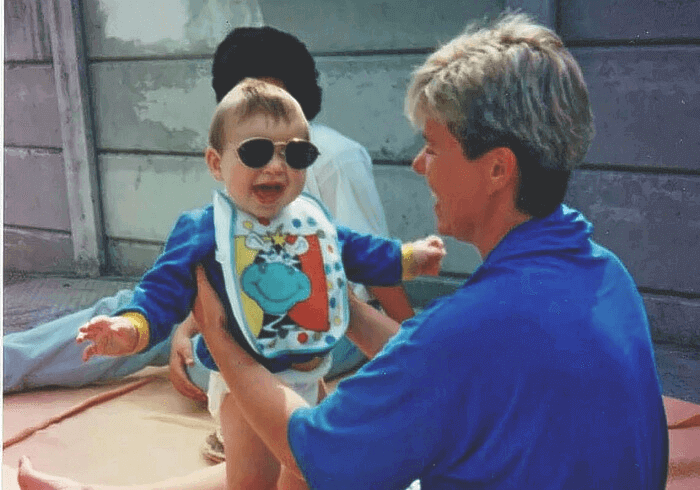
The Child Between Us
Kegan’s Laughter Lost in the Shadows of Betrayal.
Lizette also became more agitated whenever Kegan needed attention. And every time he looked at me with those wide, trusting eyes, that little smile that could melt anyone’s heart, I had to go play with him, soothe him, and entertain him, because she refused.
Liz’s irritation with Kegan also grew steadily, her harsh words slicing through my patience like knives, her eyes rolling whenever he cried, her sighs cutting through the air whenever he wanted even the smallest measure of affection. Each time it happened, it tore at me. It broke me to see my child treated as if he were an inconvenience, as if his very existence was a burden in someone else’s home.
I had no control, no relief, no reprieve.
I felt powerless in a house that wasn’t even ours, living under someone else’s roof, in someone else’s space, subject to their rules and moods. The thought that I had no say in what was happening to my son filled me with despair, an emptiness that gnawed at me day and night.
How could a mother, the one who gave life, treat her own child like a temporary visitor, an object to be shifted at whim, just to accommodate her own convenience and the preferences of another adult? The injustice of it struck me in a physical way, chest tightening, stomach churning. I was drowning in helplessness.
One afternoon, Liz became irritated with Kegan again, and her voice carried sharp edges, cutting through the quiet room. “Don’t touch the ornaments on the hallway stand!” she snapped, as if a two-year-old’s curiosity were a crime.
My hands trembled as I said firmly, “He is just a toddler. You shouldn’t scold him like that.” Her reply was like a slap across my face, casual, cold, and arrogant: “It’s my house. Who are you to tell me how to talk to your child?” My blood ran cold. That should have been my son’s sanctuary, my place to protect him, and yet I had no power there.
It escalated. The friction in the house grew until, one day, when I was at work, Lizette, without a word to me, took him to his grandparents in Robertson, a two-hour drive away. My chest burned with disbelief and grief when I returned home from work, asking where Kegan was. I called her to our room, closed the door, trembling, voice cracking: “How can you do this? He is our son! He is not a thing you can move around as you please!” She responded with chilling detachment, as though her words were law, not argument: “It is my son. I can do what I need to maintain peace in other people’s homes.” Peace. She called it peace. I felt none. Only emptiness, dread, despair. I returned to my car and drove to the beach. That was peace.
Two days later, I couldn’t bear it anymore. The silence in the house was unbearable.
I missed him terribly - his laughter echoing down the hallway, the soft pitter-patter of his little feet, the joy in his small body as he danced to the Macarena song, the way he looked up at me with trust and love in his eyes. My heart ached so profoundly I could feel it in my throat.
I drove to fetch him, my heart aching the entire way, gripping the steering wheel as though it could anchor me to sanity, praying he had not felt the coldness of absence too deeply. But it was also comforting to know that his grandparents loved him to the moon and back.
When we arrived back at Tess and Liz’s house, Lizette saw Kegan in my arms, and the moment froze in horror.
"The distance between us became a canyon, carved by choices I could not argue." - Elmarie Heckroodt
Lizette’s face twisted in fury the second she saw him. Without a word, without hesitation, she grabbed Kegan from my arms and stormed to the car, driving him back to Robertson again.
My heart sank, shattered, hollowed by the realization: she didn’t want him around. She didn’t want him interrupting her time, her space, her bond with Liz. I was left stunned, speechless, suffocating under a mother’s betrayal that I couldn’t fathom, a child’s suffering that I could not stop, and a helplessness so complete it consumed me entirely.
How could a mother treat her own child as an object, something to move and place as convenience dictated, without care, without compassion, without the love that should have been unconditional? The thought that he was interfering with her and Liz’s time together hit me like a boulder.

Innocence in Ink
Their giggles painted what their lips had already confessed.
One afternoon, during a day shift, I went home to have lunch. The moment I walked in, something felt off, though I couldn’t quite put my finger on it. I found it unusual that Liz’s vehicle was parked in the driveway.
The house felt quieter than usual, the soft ticking of the wall clock the only sound besides the racing beat of my own heart. As I entered the dining room, my chest sank. I froze. There they were - Liz and Lizette - sitting side by side at the table.
Liz was home. That shouldn’t have been the case. Why was she home? I could see a faint tension in her posture, a softness in the way she glanced at Lizette that immediately set my nerves on edge.
I asked her casually, trying to sound normal, “Why aren’t you at work?” “I’m on leave,” she said, looking up at me with a small, almost too-innocent smile. Just those three words made my stomach tighten. By now, my suspicions were growing, inching toward certainty. The way they looked at each other, the way they spoke, the subtle curves of their bodies leaning in slightly as they spoke, the slight closeness while moving on the chairs, the way their hands almost brushed as they reached for something on the table - it all felt wrong. I felt like an intruder in my own life.
Then I noticed it: an A4-size piece of paper sprawled across the table. I moved closer, trying to steady my hands, and asked, “What are you drawing?”
I saw the sketches - crude stick figures, innocent-looking at first, but soon unmistakable in their intent. They were drawing sexual positions, experimenting with angles, laughing as if it were a game. A wave of nausea washed over me. I could feel my throat constrict, my heart hammering in my ears. I wanted to turn and run, to escape the nausea that was rising inside me.
I forced myself to respond, joking along, pointing to a specific angle as if I were playing along too. But inside, I was trembling, consumed by revulsion and despair. Every fiber of my being wanted to scream, to demand answers, to shake them both until they admitted the truth. My mind raced. They were in love. That was undeniable. And yet, I kept my face calm, my voice even. I swallowed hard, masking the fury and heartbreak that threatened to consume me.
The way they looked at each other, the subtle smiles, the way their bodies leaned closer while cooking supper - it all screamed of something I wasn’t supposed to witness. That was the moment I knew for certain that they were having an affair. I stared at them, the absurdity of the scene making my head spin. They acted like children, giggling over drawings that should have meant nothing, yet meant everything. It was pathetic, grotesque even, and I felt a wave of disgust that threatened to spill over.
I finished my sandwich forcefully, but the taste was gone from my mouth, made myself a cup of coffee with trembling hands, and left the house to continue my shift without saying another word. Each step back toward my car was heavy, as if the ground itself were trying to hold me down. My thoughts spun in dizzy circles. How could they do this? My mind refused to let go. How could Lizette, the mother of our child, sit there giggling with another woman while I, her partner, was left blind to the truth until that moment?
After I left the house, I called my mother immediately. My voice was tight and strained, trembling as I told her what I had seen. I could hear her worry crackling through the line. She didn’t hesitate. She responded firmly, her concern cutting through my haze: “The sooner you get out of there, my child, the better. This isn’t healthy. It’s not normal. I feel sick thinking about it, too.”
Even through the phone, I could feel her revulsion mirror mine, a flicker of solidarity in a world that suddenly felt hostile, alien, and unbearable. And in that moment, I knew nothing would ever be the same again.
I felt a small measure of relief in knowing someone else understood. The weight of what I had witnessed pressed down on me, but at least I wasn’t alone in seeing it.

A Step Into Questions I Couldn’t Answer
When an instruction becomes a canyon of confusion and silent despair.
During September, Lizette told me that she needed a break. She said she needed space, but the space between us already felt like a canyon swallowing me whole. Her tone was sharp, emotionless.
She said I should go stay with my mother for two weeks. I didn’t understand - why did she need space from me? What had I done? I was on a 3-week study leave at the time, and her words cut deep.
I packed a few personal belongings, got into my car, and left in tears, the kind that burn and humiliate you. She remained at Tess and Liz’s house every day, alone with Liz, while Tess worked night shifts.
Great timing, I thought sarcastically. She always supported me in my studies. Now, when I needed her support the most, the intimate time spent with Liz was more important. I was studying my final subject, criminal law, and upon passing, I would be promoted to Captain.
I phoned her every day from my mother’s house, begging her whether I could come back, but every call ended the same way - with rejection.
My mother had always been very involved in all of my relationships. A few times, she told me that she sensed something was wrong. My mother quickly realized the pattern and one night said quietly, while looking at me with tender, but concerned eyes: “Sus, there’s more to this than meets the eye. I think there’s something between Lizette and Liz.” Tears welled up in my eyes because I saw the signs myself, but refused to believe them fully. Her words echoed my own suspicions, but I still didn’t want to believe them. I wanted to be wrong. I wanted Mom to be wrong, but instead I acknowledged her suspicions and told her what I had been seeing, but also that I thought I was just being paranoid.
A few days later, I convinced Lizette to come over to my mother’s home so we could talk. She said there was nothing to talk about, but I insisted until she finally gave in and came to my mother's home. I needed answers to all my questions. I needed my sanity back.
It was approximately 3 p.m. I heard a vehicle stop in front of my mother's house, and I went out. It was Lizette, but she arrived in Liz's vehicle, not her own. I found that strange, but she brushed it off, saying Liz’s car had been parked behind hers.
My mother and my 16-year-old sister were also at home at that stage.
We went to my room to talk, but suddenly she felt like a stranger to me. Something in her felt foreign, distant. Her eyes were cold, her voice detached. Her whole demeanor was that she didn't want to be there. When I tried to pull her closer to kiss her, she resisted and said that she isn't ready yet, and coming there was a mistake. I begged her not to leave, but she stood up from the bed and made her way to the bedroom door, heading down the hallway towards the front door, and stepped out. I was in tears, almost hysterical, and screamed at her to please not leave. She ignored my desperate pleas and walked on.
My eye caught my duty firearm, where it was hanging in its holster on the wardrobe door handle, and I instinctively took it from the holster and went after Lizette. I followed her down the hallway, crying, begging her not to go. My mother and sister were shouting behind me to put down the firearm, but I wasn’t threatening her, nor was I pointing the firearm at her. Their voices disappeared into the hallway walls as I continued to follow Lizette, who was already outside, heading for the vehicle. In my mind, I only heard the echo of my mother’s voice saying she knew there was something between Lizette and Liz.
The 9mm firearm was hanging lifelessly in my hand as Lizette walked away, got into the car, and drove off, just as I reached the driver's side window, attempting to beg her not to leave, ignoring my desperate pleas.
The next moment, my mother was at my side, where she found me crumpled in the middle of the road, sobbing. She took the gun, locked it away, and tried to console me. But I was inconsolable. I still had no answers. She carefully took the firearm out of my lifeless hand and lifted me off the tarmac. The tears were blinding me as my mother led me back into the house. My sister was still hysterical, asking my mother for the firearm, and locked it in the safe in my mother's room. That moment, the chaos, the terror my mother and sister witnessed, the helplessness, still burns in my memory.
My mother tried to comfort me, but I kept asking her why Lizette was acting so differently and why she didn't want me with her. My mother had no answers, except saying that there is definitely something between Lizette and Liz. She is a mother, and she knows, she said.
After my tears dried up, Mom left the room briefly and came back with a glass of water and a tablet. She said I must drink it and that it will calm me down. Soon, I drifted off into a deep sleep. It was a sleeping tablet that Mom gave me. I only awoke the following morning.
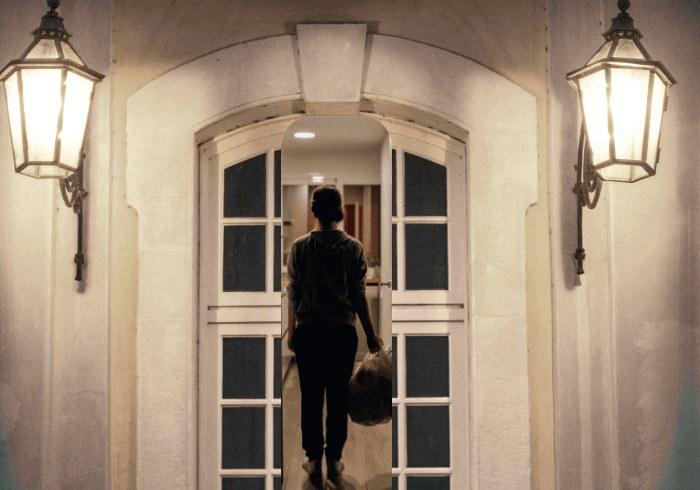
The House That Held Everything I Feared
Familiar walls became prisons of suspicion and dread.
After two weeks, I returned to Tess and Liz's house, after I phoned Lizette and asked for permission as if asking permission from a higher authority.
At first, she said that she is not ready yet, but I told her that two weeks have passed and I'm coming back. I was not going to give up that easily. I missed Kegan terribly, but I was helpless and had no say in his return.
The tension in the house was thick enough to choke on, almost tangible, and suffocating, but I stood my ground. Lizette acted as if nothing had happened, but I could feel the distance, the deception. Lizette and Liz were inseparable, leaving me isolated, and my suspicions were growing worse by the day.
I held my breath through their laughter and whispered conversations, pretending not to notice the closeness I knew was growing between them.
Every time I left for work or walked towards the building site to see the progress, a coldness settled in my chest. At home, I would spend most of the time in our room, unable to focus on anything except the gnawing question that never left my chest - What is really going on between Lizette and Liz?
I continued trying to convince myself that I was still imagining things. Maybe she just needed a break. Maybe she was stressed because she hadn’t started working yet. Maybe she was stressing over something that went wrong at the building site on specific days, a wall built incorrectly, a window opening at the wrong place. Maybe she was missing Kegan, too, but kept him at his grandparents' to keep the peace in someone else’s home. Maybe she was trying to clear her mind by thinking, will we be able to cope financially after we move in once our house is done. Maybe she felt obligated to obey the rules of living in someone else’s house. But the pieces didn’t fit.
Every time I tried to have a proper conversation with her and ask her what was wrong, she was distant, emotionally flat, and her eyes, those eyes that once looked at me with love, now carried something secretive, guarded. Every time I tried to reach out, she withdrew further, and I was left reaching for a ghost.
Our conversations became mechanical, limited to routine and Kegan. She still smiled, but it was never from the heart - it was the kind of smile people wear when they’re trying to hide something. At night, I would lie awake, staring at the ceiling, hearing the faint sounds of her breathing beside me, and wonder who she was dreaming about. I tried to convince myself that I was just tired, that the stress of our new house and finances was making me paranoid. But deep down, I knew.
By November, our new house was already taking shape, and I couldn't wait to move into our own place. According to the builder, we could move in by the end of November 1996. I thought moving in would give us a fresh start - a chance to fix what was broken, but the excitement was muted by tension.
Meanwhile, I was making arrangements for the title deed to put the house in my name. During those years, we still received a house subsidy from the police force, but even that brought little relief to our financial situation. Lizette was still without work.
By the end of November, our house was finished.
We moved in with great excitement. I thought this was the beginning of a fresh new start for Lizette, Kegan, and me. But the excitement of moving in was overshadowed by tension, uncertainty, and fear.
The house was perfect, and Lizette was supposed to open her salon, but she didn’t. Days turned into weeks, and her excuses grew thinner. We were drowning financially, living off my police salary and a house subsidy that barely kept us afloat. I begged her to start working, but she just brushed it off with empty promises and said, “Don’t stress. I’ll start soon.”
As part of the house, the hair salon, the way Lizette wanted it, was built, and she was very excited about getting started, but she didn't. It remained unused.
After a month, my mother asked her when she was planning to start working. She responded that she will be sending out flyers on the 27th of January 1997.
At the end of November, my first mortgage payment and transfer fees were deducted from my payslip, and I was left with R53.00 in my bank account. I had no idea how we were going to survive. I told Lizette, she has to start working; otherwise, we are going to lose the house. She said I must not stress, soon she will be generating an income as well. "Don't stress....don't stress." That was her reaction every single day - those words are still echoing in my ears. Little did I know she had other plans.
Before we moved in with Liz and Tess, I went to our medical doctor and asked her to prescribe me medication that would relieve my stress and anxiety. I felt it necessary to be prescribed something because of my suspicions and because of our financial status. I could feel the emotional drain it was causing. I had constant fatigue, and it was starting to affect my work in a negative manner.
She prescribed Xanax. It is used to treat anxiety disorders and anxiety caused by depression. Xanax is also used to treat panic disorders with or without a fear of places and situations that might cause panic, helplessness, or emotional turmoil. Xanax works by increasing the effects of a brain chemical called gamma-aminobutyric acid, which promotes calmness and produces a relaxed feeling. The drug decreases the level of excitement in the brain, helping treat anxiety and panic disorders.
Adverse effects of Xanax include: Decreased mental alertness. Confusion. Trouble concentrating. Memory impairment. Drowsiness, fatigue. Light-headedness. Dizziness. Muscle weakness. Poor balance/coordination. Slurred speech. Blurred vision. Nausea, vomiting, upset stomach. Worsening depression.

The Invitation I Never Sent
Some doors open themselves, even when you’ve closed them tight.
Christmas was supposed to be family-only. I wanted a simple, special day, surrounded by the people who mattered most: Kegan, Lizette, my mother, Dudley (my stepfather), my father, his wife, and my siblings.
It was going to be our first Christmas in our brand-new house, something I’d worked hard for and felt proud of. As everyone started arriving, laughter filled the rooms, the smell of roasted meat drifted through the air, and my little boy ran around in excitement. That's all I wanted - Normalcy. Family. Peace.
Lizette’s relatives declined the invite. Her parents were spending the day with her twin brothers and their families. That didn’t bother me. It meant the day would be more intimate -my kind of Christmas. My aunts, uncles, nieces, and nephews were visiting from Gauteng, and there was a rare sense of togetherness. For once, life felt as if it might settle.
Then Lizette asked if Tess and Liz could come too. I said no. It wasn’t out of malice. It was just the one day I wanted to focus on family without the shadows that had been following us for months. Tess and Liz had their own family; they didn’t need to be part of ours. I made that clear. But Lizette ignored me and invited them anyway.
When they walked into the house, I saw it instantly - the unmistakable spark in Lizette’s eyes. It was the kind of light you can’t fake, the kind that made my heart skip a few beats. She lit up in a way she hadn’t for me in months. I felt anxious as I greeted them, pretending everything was fine. I took them aside, polite but firm, and told them this was a private family day. I meant no disrespect, but the invitation was not extended to them.
The look Lizette gave me after they left could’ve cut through steel. Her eyes were sharp with fury, the kind of silent rage that speaks louder than shouting. She accused me of being rude, said I had embarrassed her. I reminded her that I’d made it clear - Christmas was for family, not friends, especially not Liz. I’ve seen enough of her pathetic face for too long. For the first time, since we moved into our own home, she couldn't get her way and was now making me out as rude, but I didn’t argue further. I’d learned that reasoning with her only led to more tension.
The rest of the day, she stayed mostly in our bedroom, sulking. She came out now and then to put on a show of normalcy - a smile here, a short conversation there - but her absence was louder than her presence. She said she had a headache, and I let it be. I’d already spent enough energy trying to fix what she clearly didn’t want to mend.
Kegan, blissfully unaware of the tension, played with his new toys on the lounge floor. His laughter was a balm to my soul, the only real joy in that house that day. He ran between family members, showing off his presents, his excitement radiating through every room. My little boy played with his toys, oblivious to the tension that hung in the air. His laughter was a small shield against the bitterness that had crept into our home. He was enjoying the attention from everybody and was super excited about receiving his birthday and Christmas presents. His birthday was just four days before Christmas, so for him, the celebrations had simply rolled into one long stretch of joy and surprise. His bright little face lit up every corner of the room, and in that moment, he was pure innocence, untouched by the quiet storm brewing between his mother and me. His little face glowed with pride as he unwrapped more gifts. Watching him reminded me of why I kept holding everything together, even when it hurt.
The house was full: laughter, music, plates clinking, the smell of the spitbraai outside mixing with my mother’s favorite potato salad. There was a trifle waiting in the fridge, my favorite dessert, and for a moment, I tried to convince myself that things were fine. I put on my smile, laughed where I should, and played the role everyone expected from me: the proud homeowner and the hostess. No one, except my mother, could see through it.
But behind the laughter, I felt detached, as if I was watching the day unfold from a distance. The sound of people talking, the rustle of wrapping paper, the clinking of glasses: it all blurred into background noise. I looked around at my family, everyone enjoying themselves, and realized how good I’d become at pretending.
Later, my mother quietly handed me an envelope with R1000 inside. “I wish I could give you more,” she said softly. Her eyes said the rest. She saw right through me. I wanted to cry, not because of the money, but because she saw my exhaustion and was aware of our financial dilemma. I clutched the envelope and forced a smile, swallowing the lump in my throat.
That Christmas should’ve been one of my happiest days. Instead, it felt like a performance. Everyone saw a beautiful new home, a festive table, a loving family, and a happy couple. Very few, except my mother, saw the fractures, the loneliness, or how close I was to breaking.
Years later, my mother’s sister told me she had sensed something wasn’t right that day but didn’t want to interfere. She was right. Nothing about that Christmas was right, except Kegan’s laughter, which was the only real sound of love left in the room after everyone left.
Despite the tension, I still told myself it was a good day. Because sometimes, when everything is falling apart, pretending it’s fine feels easier than admitting the truth.

When the Party Never Ended For Her
Protecting our son meant standing alone against the woman I loved.
New Year's Eve drew closer, and Lizette told me that we were invited to spend the evening at Liz's parents. I did not want to go for obvious reasons. Lizette said, “Well, if you don't want to go, I'm going, but then Kegan stays with you,” she added casually, as if he were a burden. That was my breaking point. I wouldn’t let her go alone, not into the arms of the woman she swore she wasn’t involved with. There was no way I would allow Lizette to spend time alone in the presence of Liz, and against my will, I went.
We left at about 7 pm. It was the first time I met Liz's parents. They welcomed us with open arms, and there were food and alcohol tables for an entire army. The party was loud and overindulgent. I watched from the sideline while Lizette laughed, drank, and glowed with the kind of joy I hadn’t seen in months. My chest ached as I forced a smile, nodding at people I barely knew, pretending that everything was normal. I kept glancing at Kegan, who was two years old, moving restlessly in my arms, unaware of the tension, unaware that this night would mark another moment in a string of betrayals.
Around 11 p.m., Kegan grew restless, and I knew he wanted to go to bed. I had been taking care of him the entire time while Lizette and the others were partying. I went to Lizette and told her that it is time to leave, because Kegan wants to go to bed, but she dismissed me, saying he could sleep in the back of the bakkie, and she is not leaving just because he is miserable and sleepy. I refused and could feel my blood run cold. “He’s two years old,” I said. “I won’t let him sleep in the bakkie while you drink.” She waved me off, turned away, and went back to the others. My stomach knotted. I thought about my mother and the way she had always emphasized protecting her children, how she would never have allowed anyone to treat us this way. I thought to myself, “Why does she think this is acceptable? How can she disregard him like this?”
He was my son, too, and I would not compromise his safety for her whims. There was no way that I would put our child to sleep in the back of my bakkie while partying until midnight, and there was no way that I was going to break the vow of being a responsible parent I made the day he was born. Wasn’t it already enough that he, in his short life, had been shifted back and forth from one house to another like a rag doll? I told her that I am leaving with or without her.
After greeting everybody and thanking them for their hospitality, I got into the bakkie with Kegan and drove home. That drive home felt endless. Kegan fell asleep in his car seat, his small body finally at peace. He slept all the way in his baby seat until we arrived home safely. I held the steering wheel tighter, feeling the weight of exhaustion, betrayal, and helplessness pressing on my chest. I remembered my mother’s voice from years ago, warning me that I would face moments where I had to protect those I loved, even when the world seemed against me.
I carried Kegan and laid him down on his own bed. For a while, I was staring at the face of an angel because that is what he was. I turned away, exited his room, and went to sit outside in the dark, shaking and crying, listening to fireworks explode outside, but inside, my world was silent, lonely, and broken. I drank a beer, swallowed a Xanax, trying to dull the searing ache of betrayal. When midnight came, the fireworks worsened, and it felt as if one had exploded inside me and blasted my body to pieces. I was done pretending.
The night passed in an unbearable silence, a mix of despair and exhaustion. When I went to lie down, every fibre of my body was still shaking, and I started crying uncontrollably. There I was, New Year's Eve, all alone, Kegan sleeping, and my lover of almost 10 years partying the night away with her affair. There was no doubt in my mind anymore. The exploding sound of crackers continued into the clear, starry sky, long after midnight, and all I felt was broken, bitter, and devastated, but not angry. I swallowed another Xanax and downed a beer to dull the pain, but it barely touched the edges of my devastation.
That morning, I was still asleep. Kegan came running into the room and jumped onto the bed, shouting: "Wake up, Ammie, wake up." Like thunder, it hit me that Lizette never came home that night, but I had to keep my pose. I had to be there for my boy and make the best of the day to keep him happy. After I made him porridge, I sat down at the kitchen table with him, where he was sitting in his baby chair, eating his porridge. To him, it was just another day. It was 9 a.m. when I opened the first beer and swallowed 2 Xanax tablets with the alcohol. But not even that could stop my tears from rolling down my cheeks. Nothing could console me.
I tried to hide my pain from Kegan, but he wasn't stupid. He knew something was wrong. Every second, every minute, dragged into hours. I had a few more beers and told Kegan that we were going to watch his favorite movie. He could choose. His eyes lit up as if to ask: “Really, Ammie, can I choose any movie I want?” He pulled out a Walt Disney VCR cassette from the cabinet and carefully pushed it into the VCR player, and threw himself onto the bed beside me, remote in hand. He was so clever for his age, and I was so proud of him. While watching Donald Duck and the other favorite Walt Disney characters of Kegan, I drifted off to sleep, feeling content that Kegan had enough to keep himself busy.
Approximately 5 pm, Lizette arrived home. I had no strength for any arguments and just asked her where she was all day. Casually, she said she had spent the day at the beach with Tess and Liz. My stomach sank. I was alone, betrayed, exhausted, heartbroken, and yet I had to mask it for Kegan. I told her that she must please look after Kegan for the rest of the day and put him to bed when it's time, and I was going to take a shower and go to bed. She nodded abruptly and left the room, calling Kegan to the kitchen. After I took a shower, I swallowed 2 more Xanax tablets and downed 3 more beers, and waited until I fell asleep. I didn't want to feel the pain inside me any longer. I just wanted to drift into a deep sleep, wake up the next morning, and discover that all of this was just a nightmare.
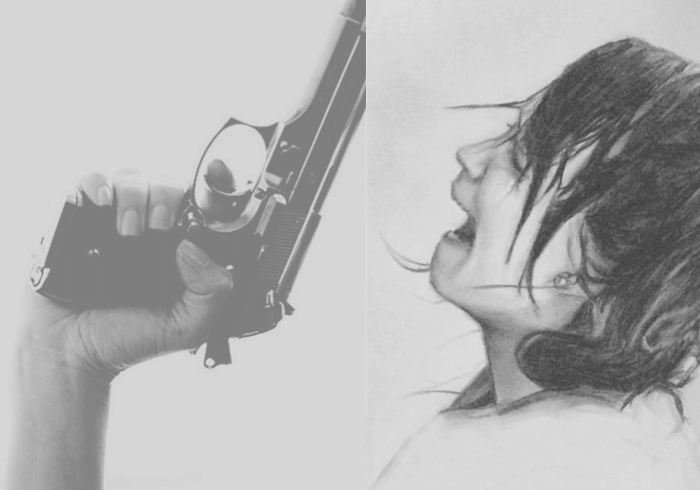
Between the Trigger and the Tear
The moment when life hung in the balance and mercy stepped in.
We still shared a room, but weren't intimate anymore. Every day, since New Year’s Day, I would confront her regarding her friendship with Liz, but every time she denied it. Every day, it was on the tip of my tongue to confront her with the night I saw her and Liz kissing on the carpet in front of the couch, but I just bit my tongue. I comforted myself by thinking, "Maybe I am just being paranoid. If it was the truth, why did she allow me to continue with the building of our house? Why did she allow me to transfer from the Police Dog Unit to the Detective branch, in the same town where we lived, and I didn't have to work night shifts anymore?" I worked from 8 am to 4 pm, so that I could be at home during the evenings to spend time with Kegan. Nothing made sense. It was trying to complete a puzzle, but one piece was missing. I had no concrete evidence, but all the signs were there.
I wanted her to tell me the truth herself - to look me in the eyes and admit that the woman I built a life with was no longer mine.
I remembered my mother’s words from a few weeks earlier, softly spoken during a phone call. “Sus, trust your instincts. Don’t let anyone make you doubt yourself.” I fully grasp her warning. Sitting on the edge of our bed, I understood exactly what she meant. Every subtle look, every whispered laugh behind my back, every unexplained absence -it all pointed to the truth I didn’t want to face.
The doctor booked me off sick for one week, but no medication could cure the ache inside me. I sat for hours on the edge of our bed, staring at the walls, listening to the faint noises coming from the hair salon where Lizette was busy unpacking stock. The sound of cardboard sliding against the shelves echoed like a constant reminder of the life she was building without me. One very tiny comfort was the fact that she would be starting to work the following Monday, the 27th of January. I told myself to just breathe, to hold on - but the silence was deafening. Even Kegan’s light, playful noises seemed muted, swallowed by the tension thick in the air.
It was Friday, the 24th of January 1997, and I had reached my breaking point. Four sleepless nights left me fragile, trembling, my mind unraveling, my heart bleeding out in silence. I couldn’t eat. I lived in a haze of anxiety and despair, medicated just enough to numb the worst edges, my body perpetually running on adrenaline, beer, Xanax, and fatigue. My nerves were raw and my spirit broken. Kegan was already asleep. I don’t know what kept me going every day. Maybe Kegan. Maybe the memory of my mother’s calm face, her quiet strength, telling me that I was stronger than I thought.
Lizette was busy in the hair salon, getting everything ready for Monday, when she would be starting to work again. I walked into the salon, firearm in hand. I couldn’t live with the pain anymore. My hands shook violently as I gripped it, heart hammering, chest tight with a fear I couldn’t name. Memories of my mother’s voice - “Always think before you act.” “Your child depends on you,” “I am still here,” I will always be here for you”, flashed in my mind, making the choice between despair and responsibility even more torturous.
I walked to where she was busy packing her stock neatly onto the shelves and said her name. When she turned around, I was standing with the firearm against my temple. I told her that I wanted her to see how I blow my brains out and that I could no longer live with the painful uncertainty of her and Liz having an affair. I couldn’t live another day in this uncertainty - an invisible hell where her heart belonged to someone else. It was slowly killing me.

He Took The Gun And Gave Me Back My Breath
When compassion wore a badge and saved a broken woman.
Her scream ripped through the air as she bolted out the door, calling for help. Being a new build area, there was no fencing between houses yet. The neighbours heard, and within seconds, the familiar voice of a policeman, Gerhard, whom we both knew very well, appeared in the doorway and talked me out of wanting to shoot myself. He spoke gently, pleading with me to put the gun down. His words were a blur, but something in his tone pulled me back. Tears streamed down my face. I couldn’t pull the trigger. I wanted the pain to stop, not my life.
He approached slowly, took the firearm from my shaking hand, and disarmed it. After a while, Liz also arrived at the scene, because Lizette phoned her, asking her to come over. God alone knows why she phoned her of all people. Gerhard handed the firearm to Liz and told her to take it to their house and lock it in a safe place. She left with the firearm. I sat on the floor, hollowed out, listening to the fading sound of her car, thinking to myself: “What the fuck was she doing here?”
Shortly after, she returned. I was in our room when Liz entered quietly, her face unreadable. She sat down beside me on the bed, her presence strangely soothing, her voice soft, calm, reassuring. Nothing and nobody could console me. I did not tell her about my suspicions, but told her that I didn’t know what was wrong with Lizette and that it felt as if I was losing her.
She tried to comfort me with all kinds of scenarios - postnatal depression, stress from the new house, and anxiety about her work. She comforted me by saying that I must give Lizette some space and that everything will eventually be normal again. Her demeanor, her words, everything she said actually sounded as if it could be true, and she sounded sincere. Everything she said, every word, felt like a lifeline. For a moment, I believed her. Her words felt like water on scorched earth: comforting, soothing, believable. I clung to them as if they could save me, as if they could undo everything I had seen and felt.
I wanted so badly for her to be right that I let myself believe every lie that came from her mouth. She spoke with such sincerity that I fell for it completely, hook, line, and sinker.
Meanwhile, I imagined what my mother would have said if she were here, standing silently by my side, reminding me of strength, judgment, and caution. Briefly, the thought of Liz thinking to herself, “Elmarie, you damn fool. Do you really believe a word of what I just told you?” flashed through my mind. At that stage, I only felt a little relief at being held together by someone who sounded like she cared. Little did I know back then. I hugged and thanked her, and she left. It was approximately 1 am.
I lay awake long after, the weight of uncertainty pressing down, the faint ticking of the wall clock echoing my heartbeats, wondering how I would survive the days ahead.
A Hero in the Darkest Hour
When calmness and courage saved a broken soul.
This is a tribute to Warrant Officer Gerhard “Knoppies” Cloete, the man who saved my life on the 24th of January, 1997.

Dear Knoppies,
I don’t know if words will ever be enough to express what you did for me that night, the night my world collapsed inside our new home in Kuilsriver. It was around 8 p.m., and I had reached the end of myself. The walls closed in, the silence screamed louder than my thoughts, and the firearm in my trembling hand felt like the only way to stop the pain.
When you appeared in the doorway of Lizette’s hair salon, I could barely register what was happening. You were calm and steady. Not the mischievous, joking man I had always known. For a moment, I froze, and then I heard your voice. “Traantjies,” you said, that familiar nickname that only you could pull off. It was like hearing an anchor drop in the middle of a storm.
You spoke to me gently, with the kind of steadiness only a true policeman could summon in a moment like that. You didn’t raise your voice or make sudden moves. You just stood there, patient, reassuring me that everything was going to be okay, that I wasn’t alone.
I don’t remember every word you said, but I remember how it felt: like a lifeline being thrown to me in the dark. You told me to look at you, to breathe, to trust you. And somehow, I did. My hands were shaking so badly I could hardly keep my grip on the gun, but eventually, I let go. You took it from me, carefully disarmed it, and handed it to Liz.
And then, you just held me. No judgment, no questions - just human compassion at its purest. You let me sob until I had nothing left inside me. You didn’t try to fix me; you simply made sure I stayed alive.
If it wasn’t for you that night, I wouldn’t be here today. That’s not something I say lightly. In the years that followed, there were moments when life became too heavy again — moments when I thought of ending it all. But every time, I remembered your calm voice, your steady eyes, and your words that night. And because of you, I didn’t.
You were known among your colleagues, including me, for your toughness, your pride in your work, and your mischievous humour, but that night, I saw a side of you that few ever did. The side that was compassionate, patient, and deeply human. Behind the uniform was a man with a heart that understood pain and knew how to reach through it.
You will always hold a special place in my heart, Knoppies. You didn’t just save my life that night; you gave me the chance to live it again. And even though time has passed, I’ll never forget standing there in that hair salon, shaking, broken, and being met not by judgment, but by grace.
Wherever you are on the road today, as a retired police officer, touring the country in your Isuzu camper, living your well-earned peace, I hope you know how many lives you’ve touched and how deeply you are appreciated.
With all my love and respect,
Elmarie (“Traantjies”)
If you ever cross paths with Gerhard “Knoppies” Cloete, know that you’ve met a man who once talked someone back to life - not with force, but with kindness, compassion, and courage.
This chapter closes here…
But the journey continues in the next post.

Author: Elmarie Heckroodt
Stay informed! A new chapter is released every week.
Your next chapter, “The Night Everything Shattered - Part 7,” will arrive in your email next week.
Keep an eye on your inbox so you don’t miss it.
© 2025 Elmarie Heckroodt. All Rights Reserved.