The Fire And The Silence I Inherited - Part 4
A raw reflection on a mother’s silent endurance and a father’s rage, and how their opposing forces shaped my understanding of love, strength, and survival
I was born into a house where silence and anger lived side by side.
On the outside, we were a family. Inside, there was a quiet war; one my mother fought through silence, and my father through fury.
I learned early that peace in our house was fragile, something that could shatter with a slammed door or a raised voice.
Before my second sibling arrived, my mother already knew my father was unfaithful. I didn’t know it then, I was just a child, but I could feel it in the air, like a heaviness that lingered between them.
The walls carried secrets and seemed to absorb every argument and every apology that never really came. It was as if the house itself was holding its breath. The quiet between their words was thick with something unspoken.
My mother’s voice softened with time, but my father’s presence grew louder. The sound of his keys at the door carried a warning none of us spoke aloud. Every object in that house: the dishes, the furniture, even the air, learned to brace itself.
And yet, life went on. Meals were cooked, laundry was folded, birthdays celebrated, and siblings were born. Five of us in total, two boys and three girls, and each arrival added another layer to a story my mother had already begun to accept.
She smiled for photographs, even when her eyes told another story. She stayed. She forgave. She kept the family together no matter how much it cost her.
I used to think her ability to carry on meant strength. I thought love was supposed to look like that: patient, enduring, willing to absorb pain for the sake of peace. Staying, no matter how much it hurt. I used to look at her and think, that’s what love looks like, a woman who never leaves, no matter how deep the wound.
By the time all five of us were born, she was already deep in a quiet kind of battle, one that demanded she hide her pain behind routine.
I believed peace was something you kept, even when it came at the cost of your own voice.
It took me most of my life to understand that what she endured didn’t just shape her. It shaped me too.
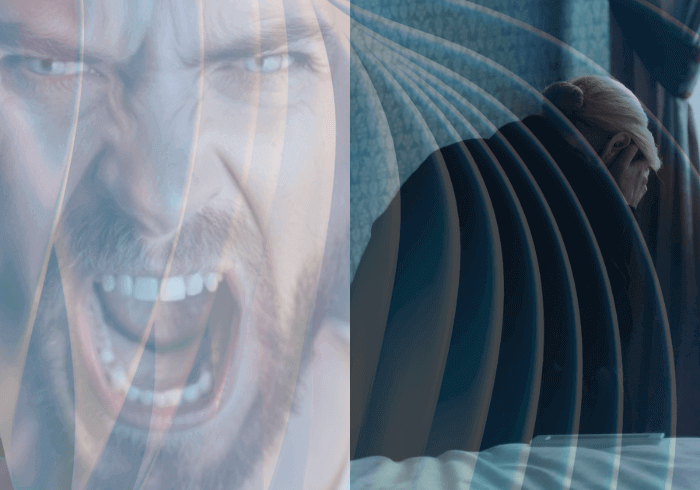
Why I Think She Stayed
1. Fear of Breaking the Family Structure
When I look back now, as the firstborn who watched it all unfold without truly understanding, I can see the layers behind her silence. I can see that my mother’s choice wasn’t weakness; it was a form of survival. But survival comes at a cost, and that cost often echoes through generations.
She stayed because, in her world, leaving wasn’t an option. My mother believed in keeping the family together at all costs. She feared what would happen to us: the judgment, the shame, the whispers, the instability, and the chaos that would follow. So she stayed, convincing herself that protecting us meant protecting the family, even if that meant sacrificing herself.
Divorce wasn’t an option she could bear; not in her world, not in her generation. Women in her time were told their worth came from keeping a man, not leaving one. She didn’t have the world’s permission to start over.
She believed that love meant loyalty, no matter the cost. That forgiveness was what made her good. That to walk away would make her the one who failed.
She stayed because every new baby felt like a new beginning, a chance that maybe he’d change this time, a chance to rebuild what betrayal had torn apart.
Every time he apologized, every time he promised to change, she wanted to believe him. Nothing changed, but she stayed because hope is a stubborn thing.
Somewhere deep inside, she probably still loved him, or maybe she loved the man she once thought he was. Love can twist itself into something that looks like loyalty, even when it’s just pain disguised as devotion.
Love and duty tangled inside her to such an extent that she couldn’t tell them apart.
So she stayed. And every time she swallowed her pride, every time she forced a smile, every time she held us a little tighter after one of his outbursts, she taught me something.
Looking back, I don’t think she stayed because she didn’t see the truth. I think she saw it all, but couldn’t see a life beyond it. The idea of leaving terrified her more than the reality of betrayal.
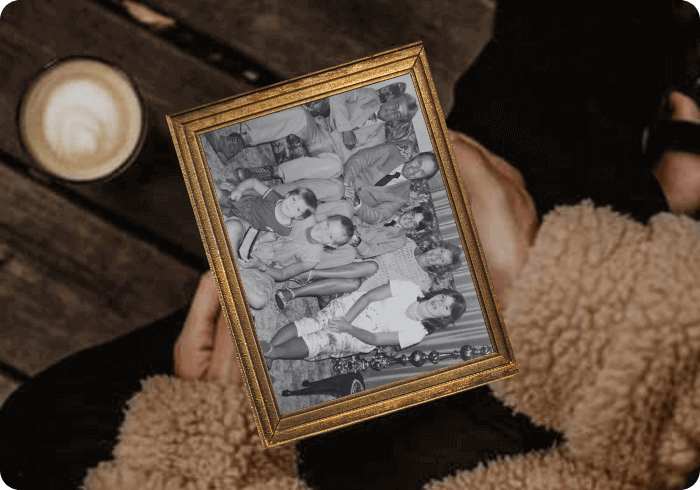
2. Hope That He Would Change
I think she hoped that love could fix what betrayal had shattered. That time, forgiveness, or another child, might bring him back to the woman she once believed he was.
Every new life she carried may have felt like a new beginning, a chance to rebuild what had fallen apart. Every birthday, every holiday seemed to carry that quiet hope, maybe this time things will be different.
But they never were. Her hope became another form of endurance, another way to keep breathing in a life that kept wounding her. But hope can only carry you so far, and his betrayals were relentless. Her quiet optimism became another form of endurance, a private battle she fought daily.
I remember the times I overheard her whispering words of hope to herself that no one else could hear. That hope became her armor, even when his actions continued to undermine it.
Sometimes I wonder if she believed that her loyalty could be contagious, that if she worked harder in being the social butterfly he expected her to be, loved hard enough, forgave deep enough, he might one day see her worth.
But that day never came.
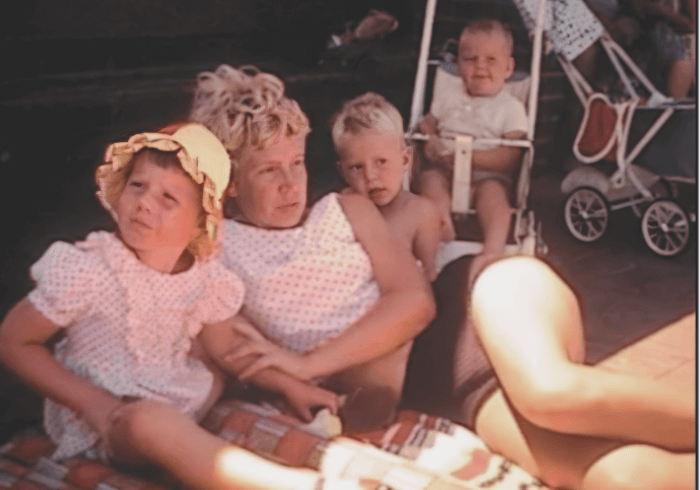
From left to right: Me, 6 years, my mother, my elder brother, 5 years, and my youngest brother, 3years. The remaining siblings, 2 sisters, were born 3 and 7 years later.
3. Duty and Protection
Back then, a woman’s world was smaller. She depended on him, not just for money, but for her place in society.
But my mother’s decision was not shaped by financial necessity; she was fiercely independent, a qualified piano teacher, and was taking private students for extra income. But despite earning her own income, she stayed because she believed in protecting us, her children, and keeping a sense of stability in a world that often felt unsafe.
Her endurance was a choice, a conscious act of shielding us from the chaos his temper brought into our lives.
Leaving would have meant stepping into a world that wasn’t kind to single mothers. So she stayed in the only safety she knew, even if that safety was built on cracks.
I can still see her packing our untidy clothing wardrobes late into the night, the rhythmic movement of her hands a kind of prayer.
She didn’t speak about what she carried, but I could sense it, the exhaustion, the resignation, the quiet fear of what life would be if she ever stopped holding everything together.
4. Cultural Conditioning
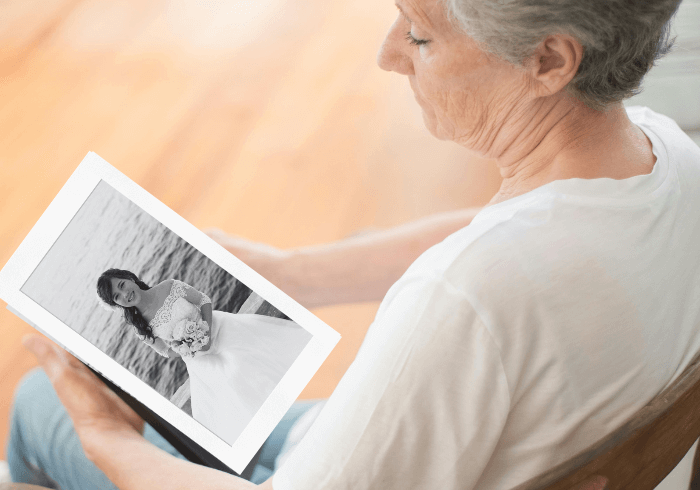
She was raised to believe that a “good wife” stands by her husband, that forgiveness is a woman’s virtue. That endurance is proof of love.
I can still see the pride she carried, a quiet, almost defiant strength, as if surviving her pain made her worthy of respect. She held it as a kind of dignity.
She came from a generation where silence was seen as dignity, where women didn’t talk about betrayal because doing so was considered shameful. Her silence wasn’t submission; it was her way of holding on to the only kind of power she was allowed to have.
She believed that surviving her marriage made her worthy of respect, even if it slowly broke her spirit and even if the world never saw the battles she fought in silence.
Every day she endured his anger and betrayal, proving something to herself: her worth, her strength, her ability to hold a family together despite the chaos.
5. Love Entangled with Resignation
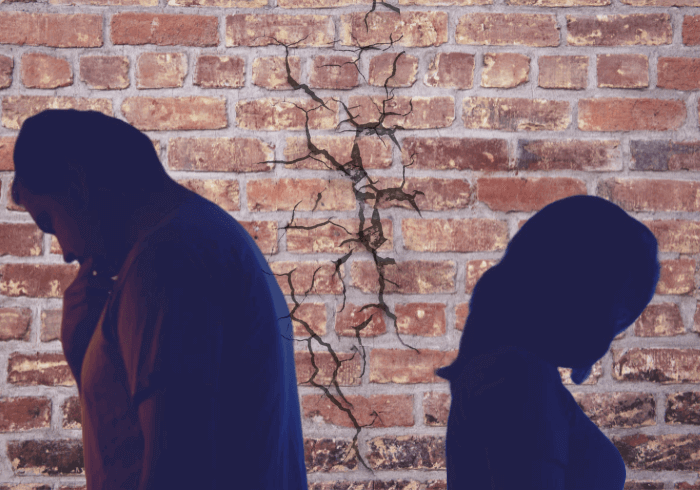
And maybe, she truly loved him. Not for who he became, but for who he once was.
Love can twist itself around memory until it becomes indistinguishable from loyalty, and impossible to separate affection from habit.
She stayed, perhaps, because leaving meant admitting that love had failed, and that the love she once fought for no longer existed, and that was a truth too heavy to carry.
There’s a strange kind of comfort in familiarity, even when that familiarity hurts. For her, the pain she knew felt safer than the unknown life that might follow if she walked away.
And now, looking back with the clarity of adulthood and the weight of everything I have lived through, I see her with different eyes; eyes softened by understanding, widened by truth.
I can finally grasp the indescribable strength it must have taken for her to wake up every day and continue breathing inside a life that chipped away at her spirit piece by piece.
Her endurance was not weakness, and it was never blindness. It was a quiet, steady defiance. A silent vow she made to protect her children, to hold the line, to keep the world from collapsing around us.
In retrospect, her ability to carry both love and pain in the same fragile heart wasn’t just remarkable; it was extraordinary. It was a form of courage the world rarely recognizes, the kind that leaves no medals, no applause, just a legacy of survival etched into my memory, who watched her hold everything together with nothing but her will.
What I Inherited
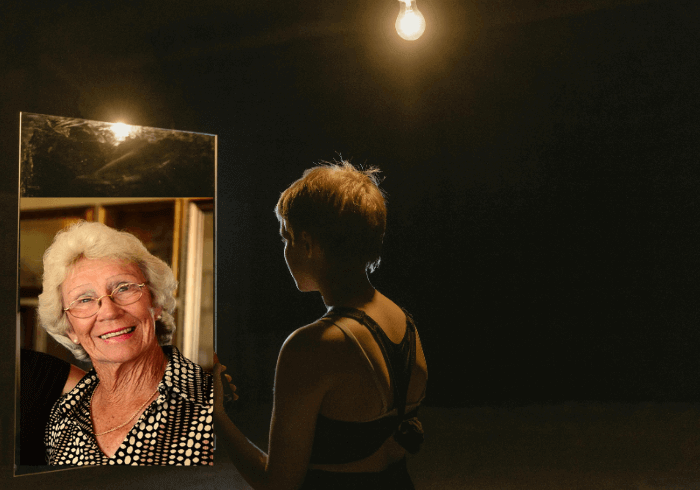
Being the firstborn meant I saw everything. I didn’t just witness Mom’s silence; I absorbed it.
I absorbed the contradictions, the tension, the secrets, the unspoken rules of our house. I felt every argument ripple through the walls, every cold shoulder, every uneasy reconciliation. I learned early to measure moods before speaking. To comfort before asking. To fix before feeling.
I learned to read emotions without words. I became the quiet observer, reading moods, anticipating tension, sensing storms before they broke. I learned that love meant sacrifice, that peace had to be protected at all costs, and that forgiveness was noble, even when it broke you.
Love and fear became intertwined in me. I learned early that survival meant compromise, patience, and restraint. I learned to carry pain quietly, to forgive, and to hope for moments of fleeting peace.
Without realizing it, I inherited her survival tactics. Her silence became my instinct and taught me resilience, but it also taught me suppression. Her fear of conflict became my comfort zone. I carried them into my own life, like an emotional inheritance passed down through gestures instead of words.
Her patience taught me compassion, but it also taught me fear; not the fear of being hurt, but the fear of causing hurt. A quiet fear. A fear that teaches you to swallow your truth to keep the peace, to stay small so nothing breaks.
And my father’s temper taught me how to defend myself, but also how easily defense can turn into destruction. His rage taught me vigilance, and his anger taught me fear; a different fear, the kind that makes your body tense before the shouting even starts. The fear that trains you to read footsteps, breathing, the shift of a door handle, because safety depends on becoming a detector for danger.
And somewhere in the middle, I am learning how to separate the two; how to let my mother’s legacy fight the poison he left behind.
It was horrifying to realize that I had a skill, but also a curse. Because when you grow up absorbing everyone else’s emotions, you forget how to recognize your own.
I grew up believing that strength meant endurance. That to survive was enough. That speaking up would only make things worse. That peace must be kept, even when your soul is screaming. I became the one who held it all together, who absorbed pain without complaint. That’s not strength, that’s inheritance.
Still today, there are moments when I see flashes of my father in myself, not the man he was in his gentler hours, but the one whose anger could turn a room cold in seconds. I would feel that same fire rise in me, that same sharpness in my tone, and it terrifies me because it feels like proof that his poison still runs in my blood. But today I also know better.
Strength isn’t the ability to survive anything; it’s the courage to stop surviving and start living. It’s having the courage to stop pretending. It’s allowing yourself to feel what you’ve spent a lifetime burying. I’ve been spending the past 2 years unlearning what his rage taught me: that control equals power, that silence equals peace, that love is something you have to earn by enduring pain.
I learned to forgive too quickly, to excuse too easily, to love people who didn’t know how to love me back, because that’s what I had seen my mother do. In retrospect, this behaviour all leads to one thing: Fear. Fear of endings, fear of confrontation, fear of being alone.
And while my mother’s legacy taught me survival, it was my father who shaped the shadows I carried. His story deserves its own telling.
The Man Who Shaped the Shadows
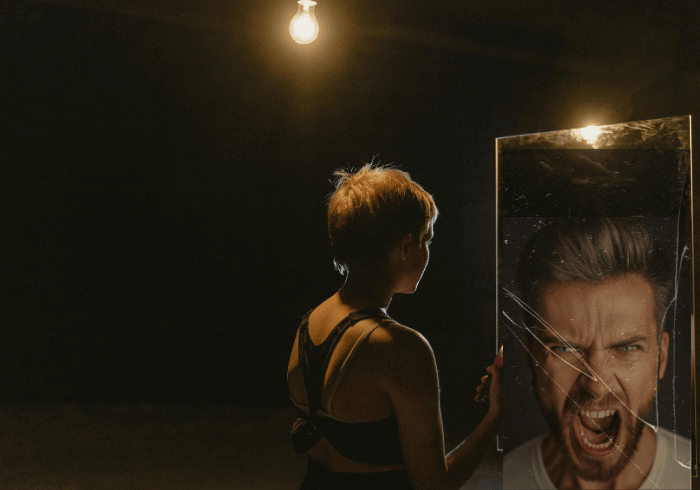
My father was a man of extremes. He could be magnetic, funny, charismatic, charming, even kind. People liked him. They saw what he wanted them to see. But at home, his temper was a storm that never needed a reason.
He carried a rage that filled every room he entered. I recall the tension that accompanied the sound of his footsteps, the way we all seemed to brace ourselves, waiting to see which version of him would emerge. I remember how quickly the air could change, how laughter could freeze mid-sentence when his voice sharpened, how even silence had a sound, the sound of everyone waiting for what would happen next.
That fear does something to a child. It rewires you. You learn to measure the mood in the room before you breathe. You learn to go quiet when you want to scream. That kind of fear doesn’t fade when you grow up. It burrows in deep. It becomes instinct. You learn to sense tension before it arrives. You learn to stay small, to avoid setting off the spark.
For years, I told myself I was nothing like him. I was my mother’s child, calm, compassionate, steady. I clung to my mother’s gentleness, her empathy, her ability to forgive.
But anger has a way of finding its way through blood. It is an inheritance, too.
The first time I felt it rise inside me, sharp, hot, uncontrollable, it terrified and blinded me at once. It felt inherited, like a poison that had been passed down without my consent.
That’s when I realized that my father hadn’t just left scars on me, he’d left traces in me.
His rage had seeped into the bloodline. And my mother’s silence became the way I tried to contain it.
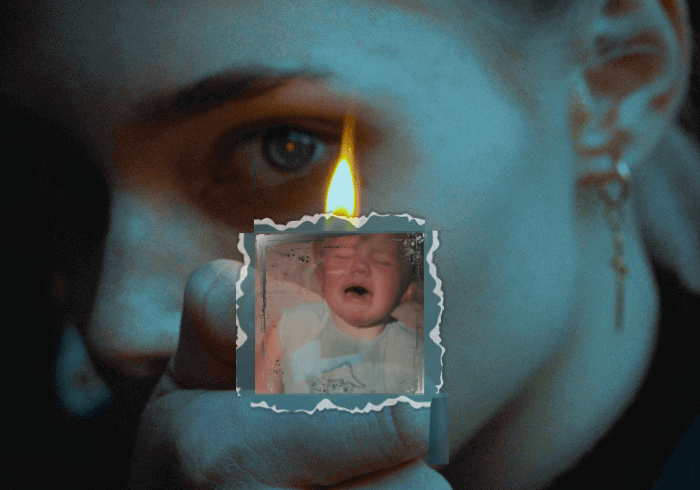
One was fire, the other was ice, and both lived inside me.
I carried both of them: her endurance and his fury, like two halves of a broken mirror, each reflecting a version of me I didn’t fully understand.
When Awareness Came
Awareness didn’t arrive like lightning. It wasn’t one dramatic moment that opened my eyes.
It was the quiet understanding that grew over the years. It came slowly, through a series of quiet reckonings. A gradual awakening.
I began to see my mother’s choices not through the eyes of a child who idolized her, but through the eyes of a woman who understands pain. Through adult eyes, I replayed old memories. The realization became clear: the same silence that protected her was the silence that held me back.
She didn’t fail me by staying. She taught me through her staying what it means to survive.
But she also showed me what happens when survival becomes your entire identity. That awareness became my liberation, not from her, but from the parts of myself that were shaped by her pain.
I realized that what she passed down wasn’t only love, it was the echo of her survival. I began to recognize her silence inside my own, her patience inside my hesitation, her endurance inside my fear of letting go.
It happened in moments, small, ordinary moments, when I heard myself saying things she once said, or reacting the way she used to react. I saw myself choosing peace over honesty, comfort over truth.
It was painful to admit, but necessary, because awareness is the first act of breaking the cycle.
And that awareness changed everything.
It allowed me to love her not just as my mother, but as a woman who did the best she could with the tools she had. It allowed me to forgive her, not for staying, but for believing that staying was the only way to protect us.
After her passing in 2016, I began to see my mother not just as my mother, but as a woman, one who had dreams, fears, and a heart that wanted peace more than anything. I began to understand her choices not with judgment, but with empathy.
At this stage, nobody knew me. All they knew was the, quote-unquote, “horrible, aggressive, selfish, self-centered rebellious piece of rubbish,” my father said I am. I didn’t even recognize myself, because something shifted. Something I can’t lay my finger on.
I began to see my parents as human, flawed, wounded, trapped in their own patterns. My mother, fighting to hold the family together because she thought love required suffering. My father, drowning in his own rage and guilt, unable to love without control.
Understanding them didn’t erase the pain. But it gave it shape. And when pain has shape, you can finally start to lay it down.
I began to understand that I am both of them, and neither of them. Her endurance. His temper. Her compassion. His defiance.
And maybe the purpose of my life isn’t to escape either side, but learning how to hold them both without letting one destroy or consume the other.
There are still moments when his rage rises in me; sudden, fierce, frightening. I recognize my father for what he is: a man who left a legacy of fear, whose anger flows through my veins, and whose temper I still wrestle with.
I realized that part of me, the part I sometimes despise, is him. I had always known that his aggression lived in me, but I didn’t know how to escape it, how to stop it from shaping who I became. To be honest, I didn’t realise how deeply it had rooted itself, or how hard it would be to loosen its grip. It's a daily struggle and emotionally very draining.
If a complete blood transfusion could flush his poison from my veins, I’d pay for it in a heartbeat. Hell, I’d probably ask for a second round.
And honestly? I’m not joking. Some days, the fight inside me feels so intense, so exhausting, that the idea of squeezing out every drop of blood he left behind sounds like a dose of numbness that sends me drifting where nothing can touch me.
Because living with his rage sitting under my skin isn’t just tiring, it’s a daily negotiation with a part of myself I never asked for. A part of myself I’ve spent a lifetime trying to unlearn.
So yes, if science ever announced a procedure to drain out inherited trauma, I’d be the first in line, medical aid card in hand, telling the nurse: "Take it all. Start fresh. Drain me empty, but please do a proper refill."
Not because I’m weak, but because I know how heavy it is to carry a temperament that isn’t yours, a storm you never created, a fire you never lit, yet somehow it became my responsibility; a suspended life sentence I didn’t ask for, but still have to serve.
And other times, I hear her voice inside, whispering, “Stay calm, don’t make it worse.”
But I’ve learned those voices aren’t commands. They’re echoes. They belong to the past.
And I don’t have to keep obeying them, and they don’t have to shape my future....what's left of it, because my life isn't in my own hands.
If there is one thing I regret, it’s that I didn’t have the wisdom to see this truth sooner.
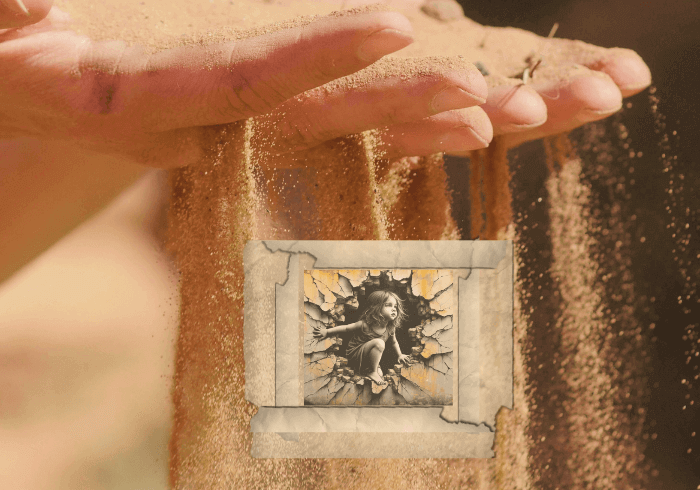
I look back, and I see years, entire seasons of my life, that slipped through my fingers.
Years where I wasn’t really living.
Years where I was just reacting, surviving, repeating patterns I never chose but somehow believed I deserved.
This regret cuts deep. It’s not the kind of regret that fades when you distract yourself or tell yourself, “It’s in the past.”
It’s the kind that sits in your chest and reminds you that time is not something you can bargain with. I don’t have decades ahead of me. I don’t have endless chances, because my life isn't in my hands. The best years of my life, I could have had, are gone...forever.
The painful truth is that my life was never really in my own hands, not while I was still chained to what he left behind in me.
When I think of all the years I lost, it overwhelms me. Not because I wanted a perfect life, but because life itself is precious. It’s beautiful. It’s fragile. It's full of fun and joyful moments. I missed most of it, because I handed too much over to fear, to silence, to rebellious behaviour, to the ghosts of a man who shaped my mind before I ever had the chance to shape it myself.
But here’s the part I need you to hear:
I’m not sharing this so you can feel sorry for me. I’m sharing it because I want you to look at your own life and see where you’re still held captive.
I want you to be honest about the places where you’ve settled, stayed silent, or convinced yourself that this, whatever “this” is, is the best you’ll ever get. Don't settle for less than your worth, because you are worthy!!!
Don't allow that lie to steal your life long before death ever arrives.
If you feel worthless, unwanted, or stuck… if you feel like you’ve wasted too much time to make a change… if you’re carrying chains that were forced onto you long before you knew anything about choices, then let my regret become your warning.
Let my honesty become your mirror.
Let my pain become your turning point.
You still have time. You still have a voice. You still have a future that does not have to look anything like your past.
I lost too many years to a story that wasn’t mine. Don’t lose yours too.
Break your chains while you still can.
Live fully, freely, fiercely, before life passes you by.
The Legacy I Choose to Keep
The older I get, the more I realize that my mother’s story and mine are forever intertwined.
I see that my parents’ story lives in me, but it doesn’t have to define me. I am not their mistakes.
My mother’s endurance gave me strength. My father’s rage gave me fire and the understanding of what not to be. I do not need to repeat his path.
I can honor my mother by living fully, allowing her strength to fight the fire inside me. I want to let her courage blossom in me; to finally become the person my soul recognizes. And though I still feel his shadow in my veins, I also feel her light. It is time for her light to lead, for her endurance to fully awaken in me, and for me to rise from both fire and silence into the person I was always meant to be.
Do I have to honor my father for what he did?
NO!!!! - Abuse is not honorable, harm is not honorable.
Trauma is not something we celebrate, rewrite, or frame in a positive light to appear “gracious.”
Honoring someone requires respect.
Abuse destroys it.
But forgiveness is different. Do I forgive him? Yes, but …
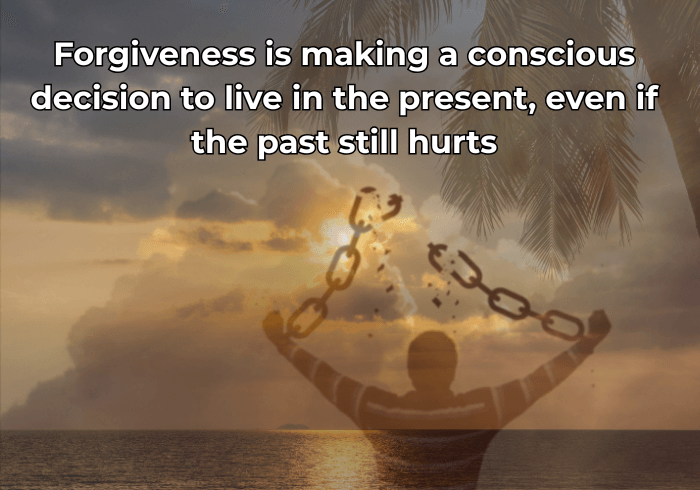
Forgiveness is not pretending it didn’t happen, excusing the abuse, giving him a place of love he did not earn, rewriting him as a good man.
Forgiveness is not for him.
It is strictly, purely, entirely for me.
Forgiveness means releasing the grip his actions still have on my nervous system, my identity, my decisions, and the parts of myself that still carry his shadow.
And I am screaming this from the mountain tops: “You will no longer control the rest of my life.”
So what do I owe him?
Nothing!!!
But I do owe myself peace, and sometimes peace requires forgiveness, not of the person, but of the power they once held. What I do with this now on my way forward is my responsibility.
This helps me to understand why Mom stayed. She stayed so that I could one day walk with courage. She endured silence so that I could one day speak without fear. Her silence also taught me how to listen, not just to others, but to the voice inside me that she helped preserve. She carried pain so that I could one day learn to heal, and in the process, her pain taught me that healing begins the moment you tell the truth about what made you.
And maybe that’s the greatest legacy she ever left me; the freedom to break the pattern without betraying her love. I could NEVER betray her love, because if it wasn’t for her, rewriting the story wouldn’t have been possible. Not by repeating her story, but by rewriting its ending.
Because of her, I can face my father’s shadow without letting it own me.
Because of her, I can acknowledge the poison in my blood without letting it spread.
Because of her, I can love deeply, without losing myself.
Because her patience taught me how to forgive, even when forgiveness feels impossible, I was able to forgive my father unconditionally. Not to erase the past, but to free myself from it.
Her quiet strength is still with me. It doesn’t leave. I try to carry it in every choice, every breath, every act of kindness I extend to the world. It is both my anchor and my compass, guiding me through the echoes of the past toward a life that is mine to live fully.
I will never stop wishing I had all her strength and endurance. But perhaps that is the point: her legacy is not that I repeat her life, but that I honor it by carving my own.
A Seedling Bent Before It Could Grow
But even with all of my mother's lessons, I still carry my father’s fire inside me; the rage, the impatience, the shadow of his anger that sometimes surfaces in ways I wish it wouldn’t.
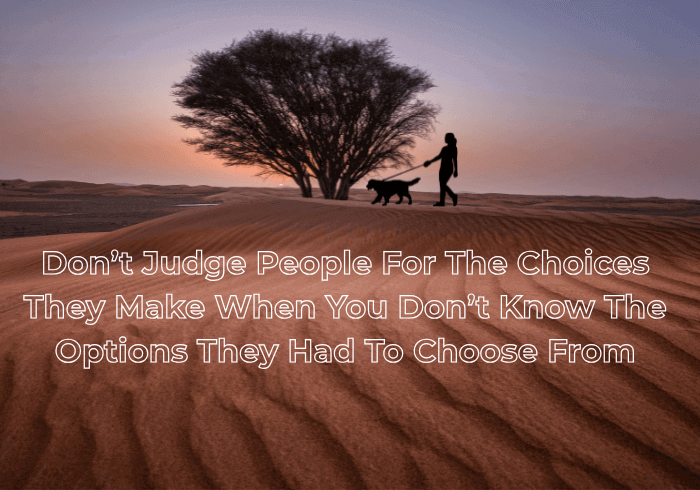
People hear my story and say, “But you had a choice. You could have been like your mother or your father.” And that is why I need to speak this truth: I did not have a choice.
Most people love to say that we all have choices in life, as if life starts fair and equal for everyone. They say it like it’s a moral law, but what they never stop to ask is when that choice became mine to make. The truth is, by the time I was old enough to “choose,” the damage was already done. The seedling was already bent and broken, long before I had the chance to grow straight and strong.
I absorbed trauma and fear before I could even name them. My choices were survival, observation, and endurance. That was all I had. I did not choose my father’s blood, and I could not choose the poison he poured into our home. All I could do was live, and hope, quietly, to one day find my own strength.
My voice is my own. I carry my mother’s strength, but I also carry choice. Where she endured, I will express. Many times, not very tactful like her, but I’m getting there. Where she feared endings, I will begin again. Where she stayed, I will move forward. In her love, I found the freedom to redefine my own. That’s the legacy she never spoke, but left written in my bones, a legacy of transformation.
The question I struggled with daily was, “Why is it that humans who are supposed to love, protect, and support me during my healing aren’t available to cheer me on?” This is an extremely lonely healing journey. I tried to figure it out on my own, questioning God: “God, why do I feel so lonely, why am I struggling so much, when You know what my heart’s desire is - to become whole again?”
Then, one day, God gave me these three scriptures:
Psalm 27:10 - “Though my father and mother forsake me, the Lord will receive me.” This verse hit deep - “ouch”, because it acknowledges the painful truth. Sometimes even those closest to us fail us, but God steps into that gap with a love that never leaves.
Psalm 34:18 - “The Lord is close to the brokenhearted and saves those who are crushed in spirit,” and this verse tells me that where people pull away from my pain, God presses in. So, I realized that my pain is not too complex to understand. It’s because most people don’t dare to look that deeply into darkness, not even when it belongs to someone they love.” Ouch”, this one hits even harder.
Isaiah 63:9 - “In all their distress, He too was distressed… and in His love and mercy He redeemed them.” This verse answered my question word for word. It tells me that God feels my pain. He is distressed because I am distressed, and yet, His mercy and love are so great that He put everything aside to help this helpless soul who can’t even help herself. I am 200% certain that God is not afraid of my darkness, my loneliness, and that He sits with me. I just don’t know where, because I don’t have a second chair in my office, but I know He is here. And yes, God does have a sense of humor in case you wondered.
I realize that some people, not all people, often avoid the darkness of others because it’s too heavy, too real, too confronting. After all, when you start healing, you stop playing the roles your family built around you. You stop being the one who acts out, you stop making snotty remarks, you stop joining the gossip group, you stop using foul language, and you stop pretending to be someone you’re not.
Lately, I found myself absorbing, enduring, forgiving, and staying quiet. I know that it terrifies people who’ve made peace with their own denial. They call it “choice” because it discharges them from facing what really happened. It’s easier to say, “You made your own bed, sleep in it,” or “Leave the past in the past” than to say, “We failed you when you were too small to protect yourself.”
So, yes. I can call it a choice, but it was never mine to make. When you grow up in a house where fear sleeps beside love, you don’t learn choice; you learn survival. You learn to read moods before words are spoken. You learn to silence your own pain so it doesn’t set off someone else’s rage. You learn that peace is something you must earn by shrinking yourself small enough not to be noticed. Those are not choices. Those are reflexes. And they are wired into you before you can even spell your own name.
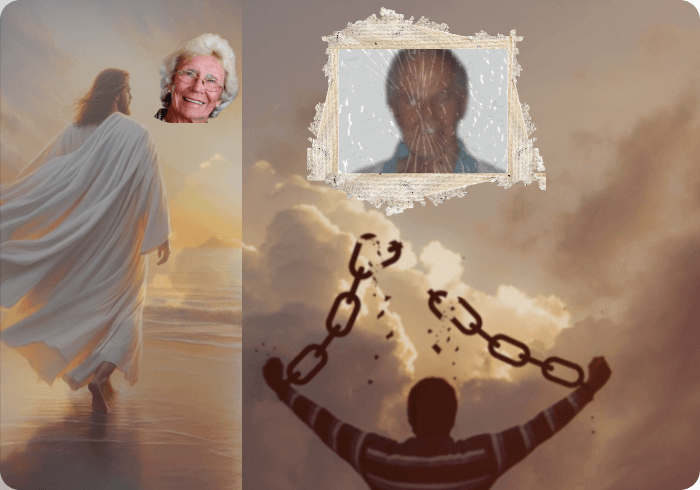
I did not choose my father’s DNA. I did not choose the anger that runs through it. I did not choose to inherit the poison that he poured into my life. And yet, I live with it - every day. It sits beneath my skin, waiting for a reason to rise. The only thing that keeps it from consuming me entirely is the part of my mother that lives inside me; her quiet strength, her gentleness, her ability to hold pain without letting it destroy her.
But that strength doesn’t come naturally. It’s a battle, one that happens in silence, every single day. Because no matter how much healing I do, I still feel him inside me sometimes. I feel the shadow of his temper, the sharpness of his tone, the impatience that he so often unleashed on my mother. And when it happens, I hate myself for it. I hate that I can still recognize him in me, in my voice, in my blood, in my reactions.
So, when people say, “You had a choice,” they don’t understand what it means to be born into a war you didn’t start. They don’t understand what it means to grow up in the crossfire and still be expected to come out whole. They don’t understand that when the soil is poisoned, the seed doesn’t get to choose which roots will grow stronger, only which ones might keep it alive.
I hear many people, including my family, talk about free will as if it’s a button you can just press. But choice only exists once you’ve learned what safety feels like. Once you’ve seen love that doesn’t demand your silence. Once you’ve experienced peace without fear. Until then, all you know is survival, and survival leaves no room for choice.
When I say “I had no choice,” it’s not an excuse. It’s a confession of the truth I lived. My childhood shaped me long before I knew what healing even meant. I was conditioned to endure, to absorb, to keep quiet, to forgive, and to apologize, just like my mother. But I also inherited his blaze, and that heat doesn’t always burn in the ways I wish it would. Sometimes it consumes me. Sometimes it powers me. Sometimes it reminds me that even poison can become strength when it’s acknowledged, not denied.
Breaking free isn’t about pretending I’m nothing like him. It’s about learning to live with and acknowledge what he left inside me, and still choose, every day, not to let it define or control me. It’s about honoring my mother’s endurance without repeating her silence. It’s about looking at the fire and the silence and saying, “You both live in me. But only one of you gets to lead.”
And that’s where choice finally begins, not in childhood, not in trauma, but in awareness. Choice begins the moment I stop denying the poison and start transforming it into something that heals instead of harms.
So, when people say, “You had a choice,” I finally understand, and I say, “Not then. But I do now,” and this time, I am choosing me, because after hundreds of days researching and struggling with God to give me answers, I finally reached the conclusion that survival can be turned into wisdom. And that’s enough, because now, choice exists for me in a way it never did as a child.
And that’s it for now… your voice makes the journey better! 💬 Comment below.
Author: Elmarie Heckroodt
Stay informed! A new chapter is released every week.
Your next chapter, “Kegan – A Special Boy Who Will Remain In My Heart Forever – Part 5,” will arrive in your email next week.
Keep an eye on your inbox so you don’t miss it.
© 2025 Elmarie Heckroodt. All Rights Reserved.