
The Cell That Heard My Story - Part 9
Inside these walls, my truth finally had a voice
"Everyone makes mistakes in life, but that doesn’t mean they have to pay for the rest of their life. Sometimes good people make bad choices. It doesn’t mean they are bad…it means they are human" - Unknown author
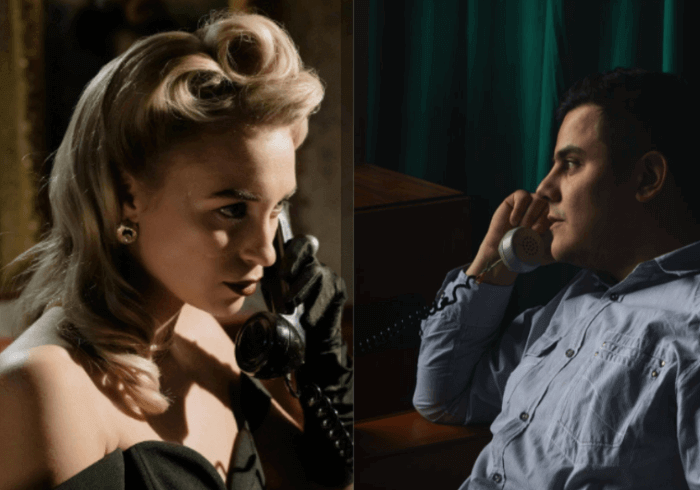
When I arrived at the Bellville police station, I was allowed just one phone call. My hand shook slightly as I dialed my mother’s number again. It was just before midnight. The moment she picked up, I could tell something had changed in her tone. Earlier, her voice had been soft, tender, filled with the comfort of a mother’s love. Now, it carried a heaviness I hadn’t heard before — weary, strained, fragile.
“Hi Mom, it’s me… I’m at the Bellville police station… please come down… I need you,” I said, my voice trembling, almost breaking.
She lived only a few minutes away, a three-minute drive that suddenly felt impossibly long. After I hung up, I stood by the large windows facing the station’s entrance. The place wasn’t strange or impersonal to me. I had walked these halls countless times before, as an employee, among people I knew.
My former colleagues had always been a part of my daily life; their voices and footsteps were familiar in every corridor. Yet now, imagining them seeing me here, on the other side of the counter, their eyes wide with shock and disbelief, made the moment surreal. How could the person they knew so well, the one they laughed with, trusted, and counted on, end up here, on the other side of the law? That thought pressed down on me heavier than the walls themselves.
Then I saw her. Her familiar vehicle turned into the police grounds, her silhouette framed against the dim light at the entrance. She looked… different. Older. Tired. Carrying a gravity that made my chest tighten. As she stepped out and walked toward me, I felt the urgency of a thousand unspoken words.
Without thinking, I ran to her and threw myself into her arms as though we’d been separated for a lifetime. I couldn’t simply rush out to meet her; I was under arrest, but I did, and the officers on duty mockingly shouted: ”We are watching you.” They knew me well enough to trust that I wouldn’t even consider escaping. Still, the moment I stepped outside, I closed the distance as quickly as I could and threw myself into her arms, as though we’d been separated for a lifetime.
We held each other tightly and cried. Not just tears of fear, but of relief, of sorrow, of love mingled with despair. Neither of us spoke. Words weren’t enough to capture the chaos in our hearts. And yet, beneath all the tears and the trembling, one question loomed silently for both of us: What will happen now?
We were led to a small, stark room. Normally, it was used to take fingerprints, a place designed for procedure, not comfort. One hard chair sat in the corner, the walls cold and unwelcoming. My mother sank into it as I approached. I dropped to my knees in front of her, then climbed onto her lap, wrapping my arms around her neck, resting my head against her shoulder. In that moment, I didn’t try to hold back. I let the tears fall like they had been dammed for years. I mourned not just what had happened to me, but the pain I had caused her.
She held me tightly, rocking me gently, just as she had when I was a child. Her embrace was familiar, grounding, a reminder that despite everything, there was still love. The world outside those walls felt distant, but here, in her arms, I felt the fragile thread of safety.
Finally, she spoke, her voice breaking slightly, weighted with all the emotion she had been holding back: “Please, my child, just promise me one thing, that you will never harm yourself in a way that could end your life. I love you, and I will stand by you through this entire ordeal.”
Her words struck me with a force I couldn’t have prepared for. Without hesitation, I whispered back: “I promise, Mom. I won’t harm myself. Don’t worry, I don’t want you to worry, because it makes you sick. I love you too much to let that happen.”
There was a long, heavy pause as we both let the weight of those words settle. I knew she needed reassurance, even as I struggled to keep my own emotions in check. Finally, I added quietly, “Go home now and try to get some sleep. We both need rest, and everything will be fine.”
But I knew, deep down, that the comfort I offered her was only temporary. Once she returned home, the walls of her house would feel just as heavy and empty as these. Sleep would be elusive. Her mind would replay every detail of the night, every possible outcome, while I remained here, trapped between fear and hope, counting the hours until the next step.
I stayed by the window a little longer, letting the silence settle, trying to prepare myself for what was coming. The police station, the cold floors, the echoes of a place I once knew so well. None of it mattered as much as the reality that my life had shifted. And yet, holding onto the memory of her voice, her arms, the way she rocked me, I felt a fragile sense of courage. I wasn’t alone. Not entirely.
After the rear lights of my mother’s car disappeared into the darkness, I stood still for a moment, listening to the distant hum of traffic and the echo of my own heartbeat. The air outside the charge office was cool and damp, and a strange silence settled over the police yard.
One of the female officers who knew me from before avoided my eyes as she motioned for me to follow her. We walked down the narrow passage along the side of the building, toward the back, where the holding cells were located, a place I had seen many times in a professional capacity, but never from this side of the bars.
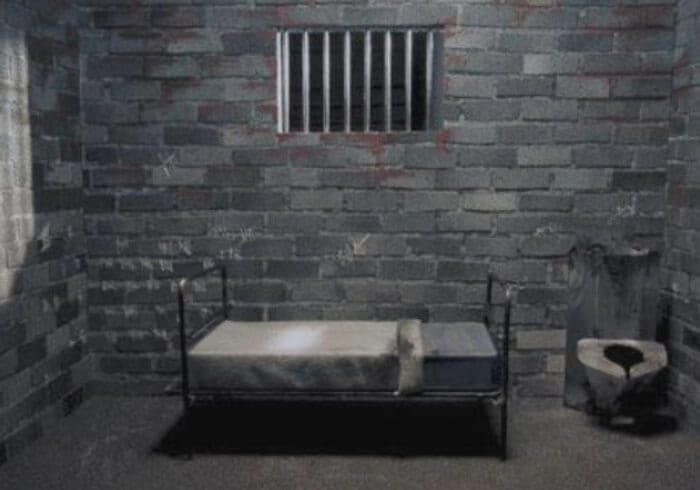
The heavy gate creaked as it opened, and the familiar scent of disinfectant mixed with something stale, sweat, metal, and despair. I was led into a small, single cell, its walls smeared with the faint traces of names and messages scratched by others who had once waited here, just like me. The cement floor was cold and rough beneath my shoes, and the single blanket folded on the steel bed offered no comfort.
Sleep was impossible. My mind was a storm of noise. Flashes of what had happened earlier, pieces of conversation, the sound of my mother’s trembling voice. I tried to focus on better memories, moments that once gave me peace, but every image seemed to dissolve before it could take shape. The faces, the laughter, even the sunlight of happier days, all blurred into the same dull haze of confusion and regret.
Hours passed in slow motion. The dim light that crept in through the barred window did little to soften the heaviness in my chest. I sat there with my Bible open on my lap, though my eyes didn’t follow the words. I wasn’t looking for a specific scripture. I just needed something familiar to hold onto, something that reminded me that God was still near, even there. The pages felt cool beneath my fingers, and I traced the lines without reading, whispering silent thoughts that weren’t quite prayers but came from that deep, broken place inside me.
By the time the morning shift arrived, the sounds of the station had begun to stir again, keys rattling, doors opening, voices exchanging greetings. I was still sitting there, in the same position, feeling the weight of the night in every part of me. The sun had risen, but inside that cell, the light felt dim, as though the world outside belonged to someone else.
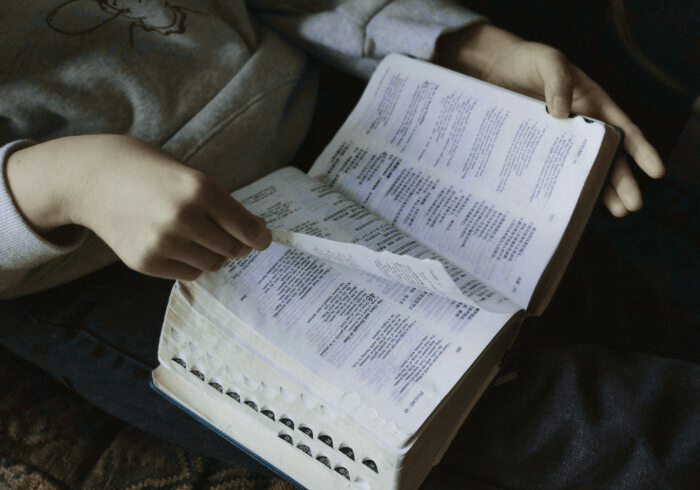
"I Searched For Peace In Pages That Blurred Beneath My Tears." - Elmarie Heckroodt
The Day Hope Knocked on Iron Bars
Later that Sunday afternoon, around 4:30 p.m., a man appeared at the cell door. He was neatly dressed, holding a small writing pad in one hand, and his expression carried a calm I hadn’t seen in days. “Hi, Elmarie,” he said softly, “I’m Alastair. How are you feeling?”
The kindness in his voice disarmed me. There was something about him, his gentleness, his steady tone, his patience, that made me feel seen, not judged. For the first time since my arrest, I felt a faint sense of safety. I took a deep breath before answering, my voice trembling: “I’m not okay... I’m frightened, emotionally drained, and very tired.”
He nodded, pulling the small stool closer to where I sat. “That’s alright,” he said with a calm certainty that felt almost foreign in that cold, echoing place. “I’m here to help. I have time. We’ll take it slowly.” He placed his pad and pen down as though to prove that listening mattered more than writing. “Let’s start from the beginning, from when you were a little girl. I need to know as much as I can, because I’m going to apply for bail for you.”
His words gave me a flicker of hope. I nodded, but before I could say anything, a constable stepped in briefly to tell him that Liz had already called the station. She had demanded that my bail be denied, claiming she feared for her life, alleging that I had assaulted her on the same night Lizette was shot. I closed my eyes as the words sank in. It felt like my world was tightening, one accusation at a time.
Al'astair waited quietly until the constable left, then turned back to me with that same calm presence. “Let’s start,” he said gently.
And so, I did. Step by step, piece by piece, I began to unpack a lifetime of memories that had been buried deep inside me, memories I had never dared to revisit, let alone speak aloud. I was thirty-three years old, and here I was, sitting in a cold cell, telling my life story to a man I had met only minutes ago. Yet something inside me broke open.
Once the first few words left my mouth, the rest came rushing like water bursting through a cracked dam. For years, I had learned to silence my pain, to wear composure like armor. But that day, everything spilled out: the fear, the confusion, the shame, the sorrow. It all poured out in a stream of half-formed sentences and trembling hands. Al'astair just listened, occasionally writing notes, but mostly giving me the quiet permission to speak.
I told him about my father. To the outside world, he was a respected man, a successful businessman with a degree in mechanical engineering who worked for South African Railways, later Spoornet. His career had taken us from Bloemfontein to Pretoria, then to Cape Town, Durban, and back again, where he eventually retired as Regional Manager for the Western Cape.
From the outside, we looked like a perfectly ordinary family; stable, decent, privileged even. But inside the walls of our home, the truth was much darker. My father’s temper was infamous among his employees. They feared him, whispered about his rages, his pride, his need to dominate. He was self-centered, impatient, intolerant, the kind of man who demanded respect, not love. He relished attention, thriving on admiration and control.
At five years old, I didn’t have the words to describe the tension that lived in our house. I couldn’t express what it felt like to walk on eggshells, to sense a storm before it hit. When my emotions became too heavy to contain, tantrums became my only language, my way of begging to be seen and soothed.
Even then, I noticed things I wasn’t meant to notice. My father had a charm that drew people in, especially women. He was handsome, charismatic, and all too aware of the power that gave him. The way women’s eyes lingered, the way he smiled back. It left me uneasy, though I couldn’t understand why. There was always someone else hovering in the background, a woman waiting in the shadows, hoping to replace my mother. I sensed it long before I could name it.
And though my parents’ marriage never collapsed, the cracks were always there, silent, invisible, and widening with time.
As I spoke, the air in the cell grew heavier with every memory that surfaced. The weight of the past hung between us, thick, silent, unrelenting. I watched Alastair occasionally glance down at his notes, his pen moving steadily across the page, yet his presence never felt rushed or distant. He listened with the kind of attention that didn’t need words.
I wasn’t done, not even close. My story was spilling out in fragments, circling between pain and recollection. Decades of buried truth were only beginning to take shape, and somehow, in that cold concrete room, I found myself wanting to tell it all.
Alastair simply nodded from time to time, offering quiet reassurance without interrupting. His eyes told me that he understood, and I could keep going. And so, I did.
What my father failed to see, or maybe saw all too clearly but chose to ignore, was that his infidelity wasn’t just a betrayal of my mother. It was a betrayal of us, his children. Every time he sought another woman’s attention, he tore something sacred inside our home, something that children shouldn’t have to understand.
By then, I was old enough to know the difference between right and wrong. And I knew that what he was doing was wrong, deeply wrong. I couldn’t comprehend how a man could look his family in the eyes while keeping such secrets hidden behind them. I wondered if my mother ever truly believed his promises, or if, like me, she simply learned to live with the ache of pretending everything was fine.
I may never fully understand the depth of my mother’s humiliation, the private pain she carried in silence, or the way betrayal eats away at a woman’s spirit. But I can speak for myself. I felt it too, the anger, the shame, the confusion. I felt embarrassed, even though I hadn’t done anything wrong. I carried the guilt of someone else’s choices, too young to name it, too loyal to let it go.
That should have been the season in my life when everything felt pure and untainted. The world should have been simple, safe, and full of wonder. My heart should have been light. My eyes should have sparkled with joy. The scent of flowers should have filled the air with joy. My laughter should have come easily. I should have been running barefoot through the grass, chasing rainbows and believing that the world was good, that people were good.
Instead, I learned that love could fracture. That trust could fade quietly, and suddenly, like mist in the sun.
There was a time when I still believed in everything magical. I believed the Tooth Mouse would leave coins in the shoe beneath my bed, and that Father Christmas would somehow find his way down our chimney. I believed in stories, in goodness, in love that stayed.
I believed I was loved.
But beneath those childhood dreams was a quiet ache, a feeling that something precious was slipping away, even before I could understand what it was.
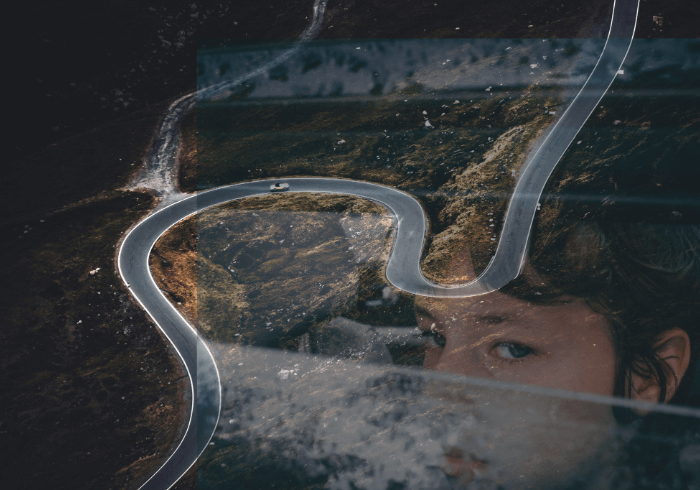
"Some Memories Don't Fade; They Echo In The Silence Of Who We Became." - Elmarie Heckroodt
Reality struck hard - everything changed in the blink of an eye
It was 1969. I was five years old, and what started as a joyful family outing turned into a nightmare I would carry for the rest of my life. I can’t remember whether we were on vacation or simply traveling somewhere, but I’ll never forget how fast everything happened, too fast for my young mind to make sense of.
We were driving through a winding mountain pass, the kind that twists and bends like a snake. The road was narrow and dangerous, hugging the cliffs with no barriers to protect from the drop below. My father was at the wheel. My mother sat beside him. My younger brother and I were in the back seat, legs barely reaching the edge of the seat, still small enough to believe our parents could protect us from anything.
But that day, everything I believed about safety shattered.
It began with my mother accusing my father of having an affair with a woman named Anna. That name would haunt me for decades. Even as a child, I could feel the sharp edge of her words, like broken glass scattered across the air. I don’t remember their exact conversation, but I remember her voice, hurt, desperate, trembling, and my father’s response, filled with anger and denial.
Anna. That name would echo through my childhood like a curse. It would resurface over and over again, until it became part of the soundtrack of my life. My mother’s dying lips would still whisper it while on her deathbed, and for years, I couldn’t hear the name without feeling a wave of hatred. Later, when I was older, I’d find photographs of her in a bikini tucked away in my father’s garage. She had black hair, exactly as my mother had described.
Back then, I didn’t understand infidelity or betrayal. I only understood fear.
My father’s voice rose, sharp and cruel. He called my mother “neurotic,” accusing her of making things up. I didn’t know what the word meant, but I knew it was something terrible. My mother’s pleading tone grew more desperate, begging him to slow down, to stop yelling, to just listen.
But he didn’t.
Instead, he pressed his foot harder on the accelerator.
The car lunged forward, speeding along the narrow mountain road. The bends were sharp, each one tighter than the last, but he seemed determined to test fate. Johan and I clung to each other in the back seat, our small hands trembling. I buried my face in his neck, trying to block out the chaos around us. I wanted to cry, but the fear was too deep for tears.
I remember whispering, “Please stop, Daddy. Please stop hurting Mommy.” I begged my father to stop tormenting my mother, but he seemed oblivious to our fear.
He didn’t answer. He just kept driving faster. An adrenaline junkie’s worst nightmare.
My mother was terrified, her voice breaking with panic. “You’re going to kill us!” she screamed. Her words only seemed to fuel his anger. He was like someone possessed, speeding recklessly along the treacherous road.
He accelerated harder, taking the corners with reckless speed, the car swaying dangerously close to the edge.
The road twisted like a living thing, snaking through cliffs that dropped hundreds of meters into rocky, jagged ravines that were “smiling with bared teeth”. There were no barriers, no guardrails, only open space and death waiting below. I could feel the car tilting slightly as we hit each curve, the tires gripping desperately to the tar. My stomach turned with every bend.
I remember feeling lightheaded, the kind of dizziness that comes when fear grips your body so tightly you forget to breathe. I held my brother tighter, his small body trembling against mine. He was only three years old, too young to understand, too scared to even move.
Through my fingers, which tried to cover my face, I watched my father’s knuckles tighten around the steering wheel, his jaw locked, his face red with rage, veins bulging in his neck. My mother sat rigid, hands gripping the dashboard, her eyes wide and full of terror. Looking back now, as I am writing, that moment feels as vivid as if it happened yesterday.
Then, it happened.
As we approached another sharp turn, my father finally slowed down, his focus momentarily fixed on the curve ahead. And that’s when I saw movement, sudden, shocking, impossible to process. My mother opened her car door.
First, everything happened in slow motion, and then time seemed to freeze.
For a moment, all I could hear was the roar of the wind rushing into the car. My heart pounded so hard it felt like it would burst through my chest. She was leaning out, her body half outside the moving car. I remember the sound of her scream, the panic in her voice, the blur of the mountains whipping past.
Before I could even process what was happening, my father’s hand shot out. He grabbed a handful of her clothing and yanked her back inside with brutal force. The door slammed shut, and silence followed, a silence heavier than anything I had ever felt.
Only years later, in retrospect, do I understand what that moment truly was. I see that moment differently through the eyes of a 61-year-old adult. It wasn’t madness, recklessness, or a desire to escape. It was instinct. A desperate, calculated act to force him to slow down, to shock him into his senses when words and desperate pleas no longer worked. It was a last, desperate attempt to force him to slow down, to break through his rage when nothing else could. That was her way of protecting us, of saving my life and my brothers’ lives.
By then, I was hysterical.
I can’t remember the rest of the journey, only flashes. My mother’s sobs. My father’s silence. The car was moving steadily again, the mountains fading into the distance behind us. My hands were still shaking as I held onto my brother, too afraid to let go.
We eventually made it home, though the word "safe" no longer meant what it used to. That day didn’t just end when the car stopped. It stayed with me. It etched itself into the corners of my memory, shaping how I saw love, fear, and trust for years to come.
I was five years old, and I learned that even the people who are supposed to protect you can be the ones who destroy your sense of safety forever.
That day, I lost my childhood innocence, and I would never, ever forget it.
"I Learned To Breathe Through Smoke When I Couldn't Breathe Through Pain." - Elmarie Heckroodt
From that day, my life was never the same again. Something inside me shifted; something fragile and innocent broke quietly, without anyone noticing.
At just ten years old, I had already started smoking cigarettes in secret. To others, it might have seemed like childish rebellion, a way to appear older or daring. But for me, it was different. Smoking wasn’t about impressing anyone. It became my sedative, my way of numbing what I couldn’t escape.
Each draw from a cigarette filled my lungs with a false kind of calm. The sting in my chest felt strangely comforting, as though the smoke could smooth over the chaos that lived inside me. For those brief moments, I could silence the noise, the shouting, the fear, the tension that filled every corner of our home. The act itself became ritualistic: the flick of a match, the glowing tip, the exhale. Each puff was a tiny rebellion wrapped in self-preservation. It was my way of saying, you can’t control this part of me.
My father’s temper had grown darker by then, sharper, more unpredictable. Every day felt like walking barefoot through broken glass, careful not to make the wrong move or say the wrong thing. He believed himself to be flawless, the only one entitled to anger, the only one allowed to speak. As the eldest, I understood what was happening more than my brother ever could, but understanding didn’t make it easier. I had learned that expressing anger was dangerous. My mother knew it too.
Whenever his voice rose, cutting through the walls like a whip, my mother would simply turn away, retreating to her bedroom to cry. She never fought back, never raised her voice. Her silence was both strength and surrender. I used to listen through the thin walls, hearing the muffled sobs she tried to hide, my small fists clenched in helpless rage. I wanted to scream for her, to protect her, but I knew better.
My father ruled our home with the arrogance of a man who believed he was always right. His word was law, and any challenge was treated as rebellion. He used humiliation as a weapon, cutting us down with words that left deeper scars than his hands ever did. And yet, when he did strike without warning, without reason, the physical pain almost came as a relief. It was proof that the emotional torment was real, that I wasn’t just imagining the cruelty that lived in him.
The older I grew, the more I saw the truth of who he was. The charm he showed the world was a mask. Behind it was a man consumed by control, infidelity, and ego. He demanded loyalty from everyone, yet betrayed the very people who loved him most. His affairs weren’t just an insult to my mother; they were a wound that bled through our entire family. I remember the whispers, the phone calls, the hushed conversations that always ended the same way: with him pretending nothing happened.
Many years later, I reached a breaking point and decided that enough was enough. Not only did I witness the verbal and emotional abuse towards my mother, but I also experienced it firsthand. However, it didn't stop at verbal and emotional abuse; he also physically abused me. For any reason, and sometimes for no reason at all, he would violently slap me across my face.
While my mother may not have expected anything from my cheating father, I held onto hope but also harbored many fears. I wondered what would happen if she discovered his continuous affairs. Was she really sure about it, or was she suspecting it? I told him I am going to tell her the truth. I told him I knew about the women, that I’d overheard his phone calls, that I’d found the old box in the garage filled with black and white photographs, two women, both strangers to me, posing in bikinis. None of them was my mother.
His response came like lightning. The slap across my face burned hot, searing into my skin and pride alike. My cheek stung for hours, but what I remember most was the look in his eyes; rage mixed with fear. Not fear of me, but fear of being exposed. He grabbed me by the shoulders, his words like poison. “If you ever tell her,” he hissed, “I will kill you.”
That moment changed something fundamental in me. He didn’t just threaten my life; he shattered my voice. He manipulated me, making me believe that my rebellious outbursts towards him were irrational and that he couldn't understand why I would act in such a manner. From then on, I learned to swallow my words, to trap my truth behind clenched teeth. I was forced to wear a mask of obedience, even when my insides screamed. I began to feel like a prisoner in my own home, confined in a psychological straightjacket of his making.
His sexual activities and lascivious behavior felt like a personal insult to the entire family. He coerced me in various ways, instilling a deep fear within me to keep his actions a secret from my mother. This burden of guilt was unwarranted and led me to conclude that marriage is nothing but a facade, and love is merely an act filled with pretenses.
The cigarette became my escape, and my rebellion was no secret. When I couldn’t scream, I smoked. When I couldn’t cry, I smoked. Each puff was a quiet protest, a way to claim a small piece of control over a life that felt like it didn’t belong to me anymore.
Over time, my father’s behavior only worsened. His emotional abuse of my mother continued relentlessly. He belittled her, mocked her, and dismissed every word she said as insanity. “Crazy,” he called her. “Neurotic.” Words that cut her down until she barely recognized herself. And I, powerless to stop him, watched the light fade from her eyes.
It was a slow erosion of hope. The man who should have been our protector became our tormentor, and the home that should have been safe became a battlefield where silence was the only shield we had left. Smoking was the only comfort I had, a habit born not of rebellion, but of survival.
Losing my father to other women, despite the unhappiness he caused, was devastating. By then, at the age of ten, I acted out my rebellious behaviour by seeking refuge in the only things that made me feel good and confident: alcohol, smoking, and a circle of friends who shared these forbidden behaviors. Those habits didn’t come from a place of rebellion, but from a desperate need to survive. Smoking was the only comfort I had, a small act that gave me a sense of control when everything else felt lost.
I often had nightmares that presented me with two bleak options. One was to accept that I was “left out in the cold,” betrayed by my father, and to hope that my rebellious behavior might somehow earn his love and attention; the love I so desperately sought. The other was to express my anger, hatred, and frustration, risking even more neglect or abuse from him. Looking back, I realize I sank into depression, though at that time, it was not acknowledged that children could have such feelings. Consequently, I became known as the “problem child,” the stubborn one with a supposed mental defect, frequently labeled a moron by my father. Tragically, this is a label he branded me with, one that has stuck with me to this day.
By the time I reached my teenage years, the damage had already been done. I had learned to mask pain with indifference, to hide tears behind laughter, and to build invisible walls around myself that no one could climb.
I envied other girls who could run into their fathers’ arms for protection or talk to them about their dreams. I didn’t even know what that kind of closeness felt like. In our house, affection was a weakness, and weakness invited punishment. Every morning felt like a gamble; never knowing what mood he’d wake up in or what would trigger his next outburst. Sometimes it was the way I looked at him. Other times, it was because I didn’t look at him at all. Even the smallest mistakes could ignite his fury. If someone left a light on after leaving a room, he would erupt, barking orders and berating us as if the electricity itself had committed a crime. If the toothpaste tube wasn’t squeezed correctly, pressed from the bottom to the top instead of anywhere else, he would shout, grip the counter, and lecture us on the proper method as if our lives depended on it.
My two brothers, Johan and Steyn, would always plead innocence, pointing at me as if it were my fault, and I would silently bear the blame, knowing it didn’t matter who was guilty; his anger always found me.

"I Carried The Weight Of Every Accusation Until It Became Part Of Who I Was." - Elmarie Heckroodt
These incidents may seem trivial to an outsider, but in our house, they were evidence of incompetence, of failure to obey, and we felt the weight of his wrath with every minor misstep.
Even now, this consciousness is permanent. A light left on unnecessarily sends a jolt of anxiety through me, and I straighten every toothpaste tube from the bottom, making sure nothing is “wrong.” It is a constant, unshakable reminder of the environment I grew up in, where nothing was ever good enough, and every tiny detail was scrutinized, measured, and judged, and where blame always seemed to land on me. His rage didn’t need a reason; it only needed a target. I became that target far too often.
From the age of five, I was constantly exposed to the verbal and degrading violence between my parents. This tumultuous environment eroded my sense of self-esteem and warped my values. My father’s unpredictable and harsh reactions to my behavior further damaged my self-worth. Trying to be a "good girl" was met with disapproval, and any attempt to draw attention resulted in a severe beating. I grew up believing there was nothing I could do right in his eyes.
School offered little relief. I was restless and distracted, unable to focus when my mind was a storm of fear and confusion. Teachers called me difficult and defiant. They didn’t see the bruises you couldn’t photograph; the ones that hid behind my silence. No one did. At home, my father’s words carved deeper wounds than his hands ever could. “You’ll never amount to anything,” he would spit out with venom, his face twisted with disgust. The more he said it, the more I believed it. It became my truth; a lie I carried like a shadow into every corner of my life.
And yet, even in those dark years, there were fleeting moments when I still hoped he might change. That maybe one day, he’d look at me and see his daughter, not his disappointment. But those moments never lasted. They were illusions I clung to, like a child reaching for a butterfly through the rays of sunshine.
This incessant conflict made me feel responsible for the never-ending arguments between my parents, further lowering my already fragile self-esteem. I felt like nothing, as if I were unwanted. Looking back, I realize I wasn’t just fighting for his love; I was fighting for a sense of worth that he had taken from me. The little girl inside me still believed that if I could just be good enough, quiet enough, or invisible enough, maybe the shouting would stop. Maybe he’d notice me for the right reasons. But love in our house was conditional, and peace was a privilege we never earned.
As a child, I trusted and loved my parents, but that trust was shattered time and again. The constant arguments, the emotional manipulation, and my father’s threats to leave, or his actual departures, destroyed any faith I had in him. I could never trust him again. From an early age, I made it my responsibility to protect my mother, to shield her from his rage with every ounce of my being. I often wished for his death or that he would simply never return, because his presence meant walking on eggshells. I never knew when he would erupt in emotional, verbal, or physical abuse, and that uncertainty became a constant, gnawing anxiety in my young heart.
Many times, after the abuse, he would attempt to make amends. Gifts, ice cream, or sweets were given to me like a bandage over a wound, or some fleeting gesture to restore calm, temporarily winning back my trust, only for the cycle to resume. For a brief moment, I would allow myself to trust him again, to believe maybe, just maybe, he cared. But the cycle was relentless. The chaos never ceased, and the tension was perpetual. He was always looking for a fight, for any reason, and the constant dread made it impossible to relax.
I doubt he will ever truly comprehend the depth of the pain his behavior caused. He will never, until his dying day, realize how much damage he inflicted, not only physically, but to my soul as well. I was vulnerable to his abnormal, erratic outbursts and powerless to change a single thing. I grew up under his dictatorship, dependent on him in ways that only made my hatred grow stronger. I despised him not only for his cruelty but for the hold he had over me; the knowledge that I was financially dependent on him, because he was the one who put food on the table. I needed him, and he knew it. He permanently had a smirk on his face when he told me that as long as I live under his roof, I will do as he says.
Where I had once been a child admired at school for good behavior, relatively good grades, and an excellent hockey and tennis player, I began misbehaving, deliberately picking fights, testing boundaries, and acting out in ways that were incomprehensible to others. The problems at home left me frustrated, overwhelmed, and powerless. I had no outlet for the turmoil inside me, no safe place to express anger or sadness. My anger simmered inside, unspoken, except with my mother.
Yet even then, I felt the need to protect her from my pain, not to add to hers. That lack of trust, that constant need to guard myself and her, filled me with an almost unbearable anger. Watching my mother be verbally assaulted, feeling helpless as a child, pushed me further into confrontation with the world.
I started picking fights with girls my age for no particular reason. Boys, I distrusted entirely, because in my innocent mind, they were just men, and men were untrustworthy. It was safer to express my anger verbally than to confront the monster at home. Yet, the fear and rage were constant companions.
When I began slowly withdrawing from everything I had once loved, sport, friendships, studies, everything fell away. My father, of course, misinterpreted this withdrawal as laziness, boredom, or deliberate rebellion. When I reached Standard 7 (Grade 9), at the age of 14, he decided to send me to boarding school. He framed it as an opportunity for discipline, for academic supervision, for a better future. But deep down, it was a dismissal: he didn’t want to deal with my anger or my rebellion. It was another reminder that I was unwanted, unloved, and rejected. I had never felt so isolated in my entire life. Despite making hundreds of phone calls and pleading to come home, he insisted I stay there.
At boarding school, I fought with everything I had to escape that suffocating reality. I sneaked out at night to visit a friend down the road; I skipped classes; I pulled extreme pranks on the hostel mother. When the hostel’s doors were locked at 10 pm, I would tie sheets together and use them as a rope to lower myself from the first floor to the ground. None of it worked.
Weekend leave, which should have been a relief, became another bitter reminder of my father’s control. While other girls packed their bags with excitement to see their families, I was repeatedly told I could not come home. My father’s instructions were absolute: no weekend visits. Each failed attempt to catch a lift to our home, each plea that was ignored, and each telephone call without a “Yes, my child, you can come home for the weekend”, reinforced the cruel reality: I was trapped, powerless to reclaim the family life I had been denied. I watched helplessly as joy and family warmth were delivered to others while I remained trapped.
During my nine months there, only two of us remained in the entire building on weekends. The other girl was from Namibia, far too distant to visit home. And me? I was only an hour’s drive from my parents, my mother, my siblings, but the home door was firmly closed.
The sense of injustice, the feeling of being abandoned, fueled a deep, smoldering anger. My rebellion intensified, but so did the despair. I felt forgotten, sidelined, as if my presence in the world didn’t matter.
Every decision my father made, every denial of my longing for family, chipped away at my self-worth, carving scars that would remain long into adulthood. I learned early that fairness was a concept foreign to my father. I had to navigate every day with vigilance, carefully measuring every word and gesture. My father’s unpredictability became the rhythm of my life, an oppressive soundtrack that left me hyperaware, hypercautious, and perpetually tense.
Finally, after nine long months at boarding school, and just a month before the final year-end exams, I begged my mother once more to come and fetch me. I had exhausted every ounce of patience, hope, and endurance I had left. I had reached my breaking point. The emptiness of the hostel during weekends, the silence in the corridors, was unbearable, echoing with loneliness each weekend as everyone, except the Namibian girl, left to go home. I could no longer bear the feeling of being the child no one, except my mother, wanted around. When my mother finally agreed, I could hardly believe it. It felt like a small victory in a world where I had known mostly defeat.
I remember the drive vividly. The drive home took less than an hour, but it felt longer than all the months I had spent away. My mother and I sat mostly in silence, the weight of unspoken truths filling the space between us. She knew exactly what my return would mean, and so did I. Neither of us wanted to say it out loud, but we both understood that the moment we pulled into the driveway, peace would end, and although we didn’t admit it to each other, we were scared shitless of the consequences awaiting us.
Still, sitting beside her, I felt safe again, even if only for a brief moment, and still, I let myself imagine that maybe, just maybe, things would be different this time. That perhaps my father would see how much pain he had caused, how much I just wanted to be home, to be loved without fear.
But reality never took long to remind me where I stood. That evening, as expected, all hell broke loose. The shouting, the accusations, the familiar echo of slammed doors; it was all there, right where I had left it. My father raged about being disobeyed, about my mother’s interference, about both of us undermining his authority, and about my supposed ungratefulness. I stood there silently, absorbing his anger as I had so many times before, numb to the words but still stung by their weight.
That night marked something deeper in me, a quiet understanding that nothing I could ever do would be enough to change him. The illusion of reconciliation was shattered completely, replaced by the cold truth that returning home didn’t mean belonging. It only meant returning to the same battle I had been fighting all along.
"The Worst Thing Than Rebellion Is The Thing That Causes Rebellion." - Frederick Douglas
As the years went by, I grew into someone I barely recognized; plagued by anger, confusion, and an overwhelming sense of not being enough. I became aggressive without provocation and was eventually labeled as the rebellious daughter, the problem child.
I grew into someone plagued by anger issues, causing turmoil in all my relationships. When I entered my first relationship, I soon realized that I had internalized my father's abusive traits and began mistreating my partner. Having witnessed my mother being constantly berated, criticized, and verbally abused, I had come to see such behavior as normal. It was the example set for me from childhood, and I believed it was the only way. I became an abuser, and predictably, none of my relationships lasted more than a few years. I turned into a bully and a rebel, indulging heavily in alcohol, which inevitably led to physical abuse. Deep down, I knew this wasn’t who I truly was, but it felt like I was possessed by some relentless demon. This force held me tighter than the tightest straitjacket, binding me in unbreakable chains. No matter how hard I tried, I couldn’t break free.
My emotions became unpredictable, and I lashed out without reason. I was constantly at war with myself and everyone around me. Arguments erupted over the smallest things, and my temper became my armor. Despite being labeled the rebellious daughter, the problem child, no one ever stopped to ask why. No one tried to understand the pain behind my behavior. To them, I was just difficult. To them, I chose to be rebellious, stubborn, and have anger issues. But deep down, I was a young girl still fighting battles no one could see.
No one, except my mother, knew the pain I was carrying inside or how torn I felt between two worlds. I knew love existed, but I also learned the reality of hatred. I didn't want to live in a world where anger, impatience, and aggressive behavior reigned, but I felt like a prisoner to my own ugly, socially unacceptable, and rude actions. I didn't know how to break free. I carried my father’s very same traits inside me.
I felt trapped inside a body that betrayed me; an emotional prisoner to patterns I didn’t choose but somehow inherited. I hated the person I was becoming, but I didn’t know how to stop. I didn’t know what peace felt like.
Depression crept in slowly, disguising itself as fatigue, irritability, and isolation. However, all these signs and symptoms stuck out their ugly necks years earlier, and I had no idea what depression was. No one ever spoke about depression during the 70’s. It was a curse, a shame, a word that resembled profanity, and primarily because of the significant social stigma, viewing mental health as a taboo subject and a sign of weakness. It was easier to label the word with a big red sticker that said “top secret”. There wasn’t a word for the heaviness that sat in my chest or the emptiness that swallowed my days. I just knew something was deeply wrong with me, something I couldn’t explain or fix. I began having regular suicidal thoughts, not because I truly wanted to die, but because I didn’t know how to live anymore.
I swung between extremes. Some days, I acted out; loud, recklessly, and provocatively, pushing every boundary I could. Other days, I became overly compliant, desperate to please everyone around me. I thought if I could just be “good enough,” maybe my father would finally see me, maybe my mother would finally stop worrying, and perhaps I could finally stop feeling like a mistake. But no matter what I did, I could never win.
Many times, I overheard my mother talking to my father about my behavior, her voice lined with worry. His response was always the same: dismissive and cruel.
“She’s just plain naughty,” he would say. “She needs more discipline. Look at the other children, they don’t give us any problems.”
It was easier for him to call me disobedient than to admit that the environment he created was toxic. He couldn’t see that I was reacting to the pain he caused. He refused to face that truth. In his eyes, I was the defective one, the embarrassment, the daughter who brought shame instead of pride.
If there’s one thing I can give him credit for, it’s that I never saw him physically hit my mother. But I became his outlet, his scapegoat. Every unspoken frustration, every ounce of guilt he carried, he poured it into me. It was easier to punish me than to face his own failure as a father and husband. He could destroy me and still convince himself he was righteous.
This environment left me incapable of handling life's simplest challenges. It doesn’t raise strong children; it raises broken ones who learn to survive by suppressing themselves. My concentration was shot, and school became impossible to navigate. Stress consumed me, and my mind felt like a battlefield. Panic attacks, nightmares, and phobias became part of my everyday life. But no one noticed. My parents were too preoccupied with their own chaos to see mine.
At that stage, we were 5 siblings. Inside, I was screaming, “Help me. This is not who I am.” But my cries were met with silence. There was no comfort, no understanding; only punishment.
Although my mother had known my pain, she had her own pain too, and 4 other kids to take care of. Looking back, I think the way she dealt with her own pain was by offering private piano lessons after school and by doing so, finding a way to distract her mind from all the chaos. She loved and lived music her entire life. That, and her own children, and her piano pupils at school, and after-school piano pupils, gave her purpose, kept her standing, but above all, she NEVER lost confidence among all the chaos in our home. The gratitude from her pupils' parents gave her a sense of self-worth, a sense of being noticed as someone extremely good at what she does. Meanwhile, I learned to hide my pain behind anger because it was safer than showing weakness.
As I grew older, I began to ponder on a thought that has plagued many of us: “Why is it that the people we love most are often the ones who hurt us the deepest?” Above all, we find ourselves vulnerable and defenseless against the actions of our parents, for from birth and throughout our upbringing, we are entirely at their mercy. I couldn’t make sense of it. Parents are supposed to protect their children, but my father was the one I needed protection from. A child’s love is unconditional; even when that love is met with cruelty, we keep giving it, hoping one day it will be enough to make them change.
But children are also powerless. We live under our parents’ roof, follow their rules, and depend on them for survival. When that foundation is poisoned by fear, love becomes confusion, and safety becomes an illusion. I learned early on that I could never rely on my father’s version of love. It was conditional; measured, sharp, and always withheld when I needed it most.
And that’s how I grew up; caught between love and hate, yearning for the affection of a man who broke me, and protecting the mother who couldn’t protect herself.
As I sat in that small, dimly lit cell, the walls heavy with the stories of others before me, I felt mine pressing to escape. Allastair sat across from me, his legal pad resting on his lap, but he wasn’t writing; he was listening, really listening. His eyes didn’t wander or judge; they stayed on me, calm and steady, almost inviting the words out of me. He wasn’t just hearing a client’s background; he was witnessing the roots of my pain, the broken little girl still trapped inside the woman sitting before him. I had been silent for so long, holding my pain behind years of rebellion and misunderstood rage. But now, here I was, stripped of everything but my truth, and for the first time in years, I felt heard. Not judged. Not blamed. Just heard.
"The World Saw Rebellion; God Saw A Wounded Heart." - Elmarie Heckroodt
Sitting across from Allastair in that cold, echoing cell, I began tracing back to where it all started, those early years when I believed my father could do no wrong. During my toddler years, I vividly recall adoring and cherishing him with all my heart. He was my hero in every sense, and I placed my complete trust in him. But somewhere between those years of blind love and the ones where I learned to fear his footsteps, something inside me broke. The man I once saw as my protector became the source of my deepest wounds.
As time went on, that trust shattered piece by piece, until I doubted every word that left his mouth, even when it was disguised as kindness. What hurt the most wasn’t only what he did to me, but what he did to my mother. Watching her be humiliated, diminished, and stripped of her dignity by the man who was supposed to protect her left scars that never faded. It wasn’t just her being betrayed; it was us.
Each inappropriate, disgusting, degrading, and derogatory remark forcefully expelled from his mouth into my face: “You moron,” “You piece of shit,” “You good-for-nothing piece of rubbish,” “You whore,” “You idiot,” and the one that stuck for reasons I still don’t fully understand, “You behave yourself like a Langverwacht maid.” I can only assume it was meant as something shameful, something meant to degrade me. Each word hit like a whip across my face.
Every insult felt like he was branding me, pressing a heated iron into my skin and searing his hatred into my soul. His tongue had no bones, but it could break me more completely than any hand ever could. Each time he spat those words, it was as if he was carving away another piece of who I was meant to be, leaving behind only the hollow, trembling shell of a girl who once loved her father.
He never showed remorse. Not once. The few times I dared to meet his gaze, I saw satisfaction, almost pleasure, in knowing he could crush me. I would lie awake at night, staring at the ceiling, wondering how someone could take joy in another person’s pain, especially their own child’s. There were moments when the hatred inside me boiled so hot, I imagined a world without him in it. I won’t pretend those thoughts didn’t scare me; they did. But they were also the only place I felt free.
Still, I couldn’t let him win by destroying what was left of me. Somewhere deep inside, I realized that his cruelty said more about his emptiness than my worth. He was not a father, not in the sense the word was ever meant to mean. He was simply the man who helped bring me into the world. The title of “father” carries love, safety, and guidance. He carried none of that. He was just a vessel; one that passed down pain instead of love.
Those constant attacks, physical, verbal, and emotional, stripped away the last remnants of confidence I had. He seemed to take pride in provoking me, pushing and prodding until I snapped, just so he could punish me for it. The moment I raised my voice or swore back, he had his excuse. His hand would fly across my face, not once, but over and over, until I stopped fighting. I learned that silence was safer, but even silence couldn’t save me.
There were countless nights I went to bed hungry, my stomach twisted in knots, not just from the lack of food, but from fear. I would pull the blanket over my head, trying to block out the echoes of his voice from the next room. He thought he was disciplining me. What he was really doing was teaching me to disappear, to shrink, to apologize for existing, to believe I was unworthy of love or peace.
I don’t think he will ever understand the depth of what he took from me. He didn’t just rob me of a childhood; he robbed me of my sense of belonging in this world. By the time I reached 16, the hatred I felt toward him had hardened into something I couldn’t chip away, no matter how much I wanted to. It became a wall; thick, cold, and unbreakable; standing between me and every bit of happiness that tried to reach me.
That wall kept me from trusting anyone, even the people who cared. It stopped me from believing in kindness, in friendship, in love. When boys tried to show interest, I didn’t know how to respond. Part of me wanted to be seen, to be loved, and another part recoiled in fear, convinced it would all end in humiliation. I was trapped between longing for affection and rejecting it before it could ever hurt me.
And there I sat, years later, in that cell, a grown woman, aged 33, recounting a childhood that never really ended. I was still that little girl, sitting there with his words burned into my skin, trying to understand how love could feel so much like hate.
"When The Words Finally Came Out, They Weren't Curses, They Were The Ashes Of Everything He Destroyed." - Elmarie Heckroodt
After years of suppressing his yelling, cursing, and the endless stream of degrading names, something inside me finally snapped. It wasn’t a gradual loss of control; it was an eruption. A volcano that had been simmering for years, pushed down and sealed under the weight of fear and humiliation, finally exploded. All the pain, anger, and hatred I had carried for so long surged through me like wildfire. Nothing could stop me. Nothing could silence me.
For the first time, I didn’t care about the consequences. I didn’t care if he hit me or if he tried to destroy me the way he always had. The only thing that mattered was that he heard me, really heard me, and understood just how much I despised the cruelty he had inflicted on me all my life.
He started another argument, his voice rising, filled with that familiar venom. My soul felt hollow, stripped of everything except raw fury. I met his gaze, feeling a terrifying calm inside me. And before I could think, the words burst out; words I had heard a thousand times before but had never dared to return:
“Fuck you! Fuck you! Fuck you!”
Then I slammed my bedroom door in his face.
For a brief, electrifying moment, silence filled the room. I sat on my bed, heart pounding, my body trembling. I could hardly believe what I had just done. The man I had feared all my life, the man who had controlled every breath I took, had finally been told exactly what I thought of him. A strange sense of victory washed over me, fleeting but powerful. It felt like winning a marathon I had been running since the day I was born.
But the silence that followed wasn’t peace; it was the kind that comes before a storm.
Moments later, he came crashing through the bedroom door, his belt in his hand, eyes burning with rage. “Get up and bend over,” he shouted. “Tonight I’m going to kill you with this belt.”
He meant it. I could see it in his face; the sick pleasure, the twisted justification that somehow this was discipline, that somehow I deserved it.
The first blow landed hard, then another, and another. I felt the sting of leather, the bite of the buckle as it caught my skin, tearing at me. But I didn’t cry. I didn’t scream. I didn’t move. I just stood there, bent over, gripping the duvet so tightly that my knuckles turned white. The room filled with the sound of his counting; cold, methodical, inhuman. “One… two… three…” He counted as if keeping score, as if each strike was proof of his authority.
I lost track of the numbers somewhere between the pain and the rage. My body burned, my skin throbbed, and my mind drifted into a place beyond feeling. Somewhere deep down, I promised myself that this would be the last time he broke me.
I don’t know what made him stop. Maybe it was my mother’s voice, trembling as she entered the room. “Stop,” she said softly, but desperately, “You’re going to kill her.”
He turned toward her, his breathing heavy, his shirt clinging to his back with sweat. Then, without a word, he dropped the belt and stormed out, slamming the door so hard it rattled on its hinges.
The moment he left, I broke. Every emotion I had buried came flooding out; anger, hate, grief, humiliation. Through sobs and shaking breaths, I screamed after him, “Fuck off, you bastard! I hope you rot in hell!”
For two weeks, I couldn’t sit down. I couldn’t go to school. My mother would bring ice packs, pressing them gently against the swollen bruises on my thighs and hips. She dabbed Betadine on the raw spots where the buckle had torn my skin. Her hands shook as she worked, but neither of us said a word.
When I finally returned to school, the bruises had faded to faint shadows. One of the teachers asked my mother what had happened. Without hesitation, she said I had tripped over the handlebars of my bicycle. I stood nearby, pretending not to hear, pretending to believe it was better that way.
But my youngest sister, barely three years old at the time, didn’t understand the weight of silence. Tugging at my mother’s dress, she said softly, “That’s not true, Mommy. Daddy hit her with a belt.”
To this day, I can still see the look on my mother’s face; the shame, the humiliation, the helplessness. It was the same expression she wore every time he hurt us, a silent confession that she, too, was trapped in the same nightmare.
One day, when I was nineteen years old, I came home from a morning shift and found an eerie stillness in the house that I had never felt before. Mina, our domestic worker, stood in the kitchen with her hands trembling, her whole body wrapped in a fear that made the air feel thin. I knew in my bones something was wrong; not just wrong, but dangerous. My chest tightened, and I shouted her name, then demanded to know where my mother was. My voice probably sounded like a knife; I didn’t care. I needed answers.
I tore through the house, checking every room the way someone checks for a missing child. The rooms were the same, the furniture the same, but something invisible had shifted. My stomach turned over with every empty doorway. When I returned to the kitchen, Mina was still there, barely able to speak. She looked at me as if the mere act of breathing was an effort. Finally, in a voice so small it could have been a whisper, she said the words that knocked the ground from under me: the “Baas” had forbidden her from telling me where my mother was.
That should have been enough to make me freeze. Instead, something fierce and wild rose inside me. I grabbed the bread knife from the sink. I remember the weight and the cold on the handle as if it were an anchor that steadied the storm I felt inside. I held it out and, with the kind of desperation that has no place in a nineteen-year-old, I threatened Mina if she didn’t tell me. It was ugly and loud and pure panic, but it worked. She broke. Words stumbled out like broken glass; the “Baas” had taken my mother to the ("malhuis,") a mental institute. He had said she was (“mal,”) crazy, and needed treatment.
Mina’s eyes were white around the irises, a look that would haunt me forever. She covered her face as she whispered the name of the hospital: Karl Bremer. The name struck me like a physical blow. I didn’t think, I moved. I set the knife down on the table like I was setting aside the only thing I had to threaten with, hugged Mina quickly because she looked as if she might fall apart, and then I ran out the front door.
I was still in my uniform, jumped into my car, and drove like the world was on fire. Speed didn’t matter. Only one thing mattered: getting Mom back. The thought of my mother in some cold, locked ward, of her being called mad, made my stomach roll. There was no way I’d leave her there for one night. Not while my lungs are still filled with air. Not while I still had a voice.
When I reached the hospital and found her, the sight of her eyes is something I will never forget. Fear lived in them like an animal. She turned to me and whispered words that chilled my blood: my father had told her he would kill me if I tried to take her away. For a second, the world tilted. But I hadn’t come that far to be terrified by threats. I told her plainly I wouldn’t leave without her. Even as she begged me to let her stay, to spare me, I refused. I told her I wasn’t afraid of him, that he could do what he liked only after she was safe out of that ward. The reality of what he had done, admitting his wife to a place like that to hide her away, made me physically sick.
Hatred for him rose like bile. I wanted him gone. I wanted him punished. I wanted the cowardice of that action to be exposed. But more than that, I felt a hard, protective certainty: I was the one who would bring my mother home, whatever the cost. I braced for the storm that would come when my father returned that evening, and I didn’t care. All I knew was that I wouldn’t let him keep her in a place to erase her.
Inside the ward, the other patients were a painful study of lost lives. There were five others in the room with my mother. Their faces were empty mirrors of something I couldn’t name: brokenness, exhaustion, the kind of loss that lives in people who have been forgotten. I saw in their eyes a thousand small tragedies, and it made the hair on my arms stand on end. The nurses and the ward sister moved between us like they were used to stopping people who barged in. They stepped forward, hands held out in warning.
I didn’t have patience for their procedure. I warned them, low and hard, that they would not stop me from leaving with my mother. The words came out of a place I didn’t recognize: steady, dangerous. I wouldn’t be argued with. I walked her to the car park with a kind of single-mindedness that kept time from rambling into panic.
A nurse then asked if my mother could sign a release form, saying she was leaving at her own risk. Something in me snapped. I lashed out like a struck animal. I told her to take that paper and wipe herself with it. I asked, bitter and loud, whether my mother looked even remotely crazy. I told them that my mother had never been “mal” in her life, not even once; that the pills she took were for surviving the daily violence of a man who enjoyed humiliating, degrading, and belittling her. I made the words hit the room like a boulder.
Then, quietly, I turned to my mother. She fell into the car like a child. Her sobbing was huge and broken, and I remember feeling two things at once: a burning sorrow and a savage, cold hatred. I took her hand, felt how small it was, how much she had carried alone, and said, “Come on, Mom. Let’s go home.”
We left the hospital together. I knew the evening ahead would bring confrontation; I knew there would be consequences. But in that moment, nothing else existed. From the first time since I had learned what fear looked like on my mother’s face, I felt like I was where I needed to be; between her and the monster who thought he could take her away.
When my father came home that evening and learned I had fetched my mother from the hospital, he exploded. I knew that I was going to pay the hard way, but I didn’t care. The house filled with a violence that had nothing to do with furniture or noise — it was a pressure that pressed on your ribs and made your breath uneven. He accused me of undermining his authority to admit Mom into a mental institute and shouted and raged in ways that felt older than the years he’d lived. I stood my ground because there was nowhere else to go. I remember saying it out loud, sharp and cold: if he so much as lifted a finger against mom or me, I would kill him.
Saying it felt like trying to summon courage from somewhere empty. But for once, he listened. I think that was the first and only time he truly took me seriously. Maybe he heard the hunger in my voice, the way I spoke as if it were a promise I couldn’t break. Maybe it was because he knew that I am a police officer now and carry a firearm at all times. Still, even with the flame of his attention, I felt hollow and powerless inside. Saying the words didn’t fill the space where fear lived. It didn’t change how small I felt in a house ruled by a man who believed himself beyond reproach.
Sometimes, when I replay that day in my mind, I wonder if I could have done more. Maybe if I had been stronger, if I had stood up to him sooner, he would never have dared to admit her to a mental institute. The thought tormented me for years. It wasn’t just guilt; it was a deep ache that settled in my bones, whispering that somehow, I had failed her. I had saved her that day, yes, but I couldn’t save her from the years of humiliation, the emotional bruises that ran deeper than anything visible. I was just a girl trying to fight a monster who wore the face of my father.
I began to blame myself; that quiet, poisonous thought that if only I had been stronger, cleverer, kinder, maybe she wouldn’t have been taken there in the first place. Laughter became rare. Joy was a strange visitor I no longer recognized. The tears, when they came, were the kind that broke you open and left you raw.
There was a deeper betrayal than losing a father to other women. It was the betrayal of watching the man who was supposed to be my protector choose himself and his pleasures over us. He became someone I barely knew: diminished, selfish, absurd in his attempts to hide the truth. Knowing without a doubt that he was spending time with those other women, knowing he traded respect for cheap thrills, it felt like watching my hero disintegrate. Each time he returned to us after one of those disappearances, he seemed smaller and more shameless, and I felt my faith in people torn in half.
Because of that fracture, every kindness later in my life carried the weight of suspicion. When someone said something gentle, my first reaction was to look for the hook, the hidden motive. Trust, once broken at such an early age, is a bridge that never feels safe to cross again. That suspicion hardened into a small, constant wariness I carried with me like armor.
Shortly after the mental institute incident, another night found its way into my memory like a live coal. I was twenty-four. My mother and father had another of those fights about the woman he was seeing. He left in anger after leaving her a note saying he wanted a divorce, not even having the decency or courage to tell her to her face. It was as if the 25 years she had given him, having 4 more kids after me, the sacrifices she had made, and the pain she had endured meant absolutely nothing. Just a few cold, heartless words scrawled on a piece of paper were enough for him to walk away from the life he had built with her.
It was late, about ten at night, and my mother ran after his car in her pajamas, calling after him in the dark: “Please don’t leave me… I need you… Our youngest child needs you.” The tail lights disappeared into the night. Her voice dissolved into the cold air.
When I finally reached her, she was kneeling in the middle of the road, a figure folded in on herself, not sure how to stand again. I had never seen anyone so utterly broken. She begged me to make him come back, to convince him that he was making a mistake. I wanted to scream at him, to force him to hear her. But I knew it would do nothing. He was so entangled with his new life that no plea from the roadside would reach him. You can shout until your throat feels like a shredder, and it will still be nothing to a man who has decided to leave.
So I did the only thing that made sense in that moment: I lifted my mother, small and shaking, and I put her back into my arms. I told her, “Steady,” because I had to be steady for both of us. “Mom, let him go. He is not worthy of you. He never was.” Part of me wanted to roar, to banish him forever from our lives. But I kept that for myself because I knew he wouldn’t hear it. He never heard the things that were real.
When I held her that night, I was protecting more than a body. I was protecting the small girl that still lived inside me, the one who had believed in magic, who had believed that parents could fix anything. I wanted to reassure that little girl and her mother that none of what had happened was their fault. The blame belonged to the man who chose his own pleasures over the family he promised to protect.
Mom and I had always been close, but during and after the divorce, our bond transformed into an unbreakable friendship. From then on, our relationship shifted into something fierce and necessary. We never called it a pact aloud, but there was an unspoken agreement between us: I would stand as her shield, and she would stand for me in ways a mother does when the world has narrowed to two people clinging to each other. Our bond became a tether that pulled us through the years, through silence, through the messy paperwork of divorce, through the days when love became something complicated by fear and betrayal. For reasons unbeknownst to me until today, is that my four siblings were oblivious to all the havoc and hurt he has caused. Just the thought of it wrecks my brain.
Even then, tucked in a cell while Al'istiar’s pen scratched quietly across his notepad, I could feel that knot of memory tighten. He looked up from time to time, eyes soft, waiting for the next detail. The scratch of his pen was a small, steady thing amid the noise in my head. His presence was both a comfort and a reminder: I am here, telling this, and someone is listening, recording, holding the facts of my life on paper. It made the memory both real and unbearably present.
I did everything I could to keep her safe from him, even after their divorce; from his bravado, from his cruelty, from the ridiculous, poisonous belief that he could break us and then sit back unaffected. I kept watch like a sentinel at the edge of a fragile home, ready to step between my mother and the man who had chosen to become a monster. It didn’t make me brave. It just made me unwilling to let her be alone.
Until the day she left this world, our hands found each other in the dark. We were a small, stubborn force against the erosion he wanted to cause. I would have gone to any lengths to protect her, and in the shadows of that cell, I still felt the echo of that promise, as real now as it was then.
Sitting in the cell, Allistair’s pen scratching quietly between my sentences, I told him this part as if I were watching it happen again; raw, loud, and impossible to forget.
I was twenty-five the first time I formally met the woman my father would call his fiancée. What I didn’t know then, though I would come to learn it later, was that he’d been seeing her for years already.
By then, despite being in the police force, my life had slipped into a dark rhythm: I drank too much, I chased nights I couldn’t remember, and I’d fallen off the track I’d been meant to walk. Gay bars, promiscuity, numbing myself with alcohol, and socialising with so-called “cool” friends were how I tried to forget what lived at home.
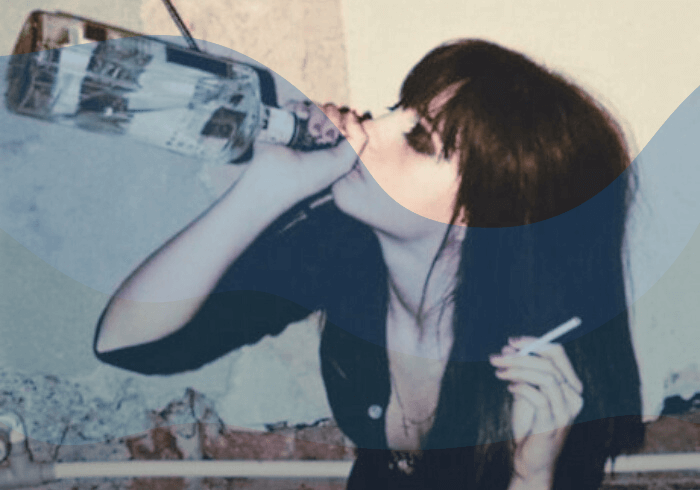
"The Bottle Never Judged Me; It Quietly Just Listened While I Broke Quietly." - Elmarie Heckroodt
That night, I’d been drinking more than usual. I don’t remember the drive clearly; memory fragments stitch together the rest. I pushed open their front door, furious, determined, and mean in a way only alcohol could free me to be. I had no kindness in me that night. I intended to confront. To wound. To make them feel, even if it killed me later.
I stepped into the room and introduced myself formally, though my introduction was a show. My words were sharpened by liquor and years of bottled-up rage. I remember pacing that small space with my chest tight, the alcohol making me braver than I had any right to be. But the anger had wings that day, and I let it fly.
She was sitting in the familiar TV room on the couch like she owned the place, as she belonged there by right. The first look she gave me felt flat - complacent, smug. It set my teeth on edge. First impressions last, people say, and mine burned into me like acid. From the moment I saw her, something in me hardened. I felt disgust, contempt, and a desperate, ugly jealousy. She looked like someone who wanted the easy parts of life without any of its history or cost. Fake. Hypocritical, and almost 2 decades younger than my father.
I looked at this "sorry excuse for a human being" and wondered, "What does she have that my mother doesn't?" I couldn't even begin to comprehend it. The word "fake" was written all over her pathetic face, and in fact, I pitied her for knowing that she could never measure up to my elegant, loving, caring, understanding, and supportive mother.
She embodied everything that my mother was not, and the more she tried, the more artificial she became. Her appearance was both sickening and laughable at the same time. I felt an overwhelming desire to make her vanish, to remove her from the face of the earth. All the words came like knives. I stepped forward and pointed my finger in her face, looking straight at my father as I spoke, my voice raw and furious.
"How do you forgive someone who smiles while standing on the ashes of your family?" - Elmarie Heckroodt
“Are you honestly planning to marry this slut?” I shouted. “Do you really expect me to be overjoyed with your engagement to her?” pointing at the woman like she was a stain he’d brought into the house. My words came in a torrent. I accused him of marrying a slut, of abandoning my mother, of replacing what was whole with something cheap. I told him their engagement would never mean the same to me as it might to him.
“Our family, whatever it may be called, our future, if there is one, and our past are forever altered,” I said, the words tumbling out like a dam finally breaking. “I will handle it at my own pace, but don’t be surprised by my actions. Don’t expect me to like your new fiancée, and don’t be so arrogant as to assume that this entire fuck up you caused is significant.”
He barked something indistinct, the kind of sharp, surprised sound he made when his authority was challenged. He took a step toward me, all threat and thunder. “Get out of my house,” he growled. “And if you come back drunk like this, I’ll have you arrested.”
“Remember,” I yelled back, cutting across him, “my perspective is different from yours - it always has been - and so is my view of your newfound love. To me, this is an insignificant event. You divorced my mother; don’t expect me to feel the same way you do.” “To you, she may be the newfound love of your life,” I went on, “but to me, she is just another intruder, another object of your sexual desires. Don’t expect me to remain unaffected and celebrate because you divorced Mom. It hurts… it hurts so much.”
“Leave, get out,” he hissed venomously. “And never come back like this.” I refused. "I’m not done yet - you will listen to me now," I said bravely, but I knew it was the alcohol speaking. I knew I was intoxicated enough that I might not have said half of it sober. But the truth was hidden under the booze: years of humiliation and betrayal boiled up inside me and needed an outlet. The speech felt like ripping scaffolding away from a rotten building; everything inside collapsed into anger and hate.
In an instant, my father turned. I’ve seen him rage before; a predictable, terrifying tide. That night, he became pure violence. He moved faster than I could think. Before I could reach the front door, he had grabbed my arm and hurled me across the kitchen floor like I was a thing he no longer wanted to touch.
I crashed hard into the cupboards, breath knocked out of me, the room spinning. Pain flashed, sharp and electric, and for a second, I wondered if the booze had slowed me down or made it worse. Then the slap came, a burn across my face that echoed the sick weight of everything he’d done by his hands and by his betrayals. I tasted bile, sour and bitter.
I remember the fiancée’s voice somewhere between sobs and pleading; she begged him to stop, to calm down, not to make a scene. But he spat words at me, full of venom, and told me to leave his house and my profanity-laced condemnation of his future wife. He warned me again that if I ever came drunk to his house again, he’d have me arrested.
I stumbled out, dazed and angry, my head spinning as if reality had a loosened hinge, got into my car, and left. I drove back to my flat with hands that shook and a head that was heavy with rage. I wanted to punish him by shrinking back into nothing, by licking my wounds with more alcohol until I could no longer feel. I continued drinking until I blacked out. I drank to wash away the image of my father’s rage, the foul smell of his breath, his spit in my face with every word that came from his mouth, the slap, the sudden impact against the cupboards, the fiancée’s pathetic face; all of it stamped on the inside of my skull.
“She sat there like a stain on our family’s history, and every time I looked at her, all I could see was a shit stain, ugly and misplaced, reminding me of everything she had destroyed.” - Elmarie Heckroodt
But even in my drunken, unconscious state, the memory did not leave me. In the morning, the ache was still there, the same gnawing knot where anger and helplessness sat together. I had wanted to be the defender for my mother, to be the person who would face him down and make him see the damage he caused. Instead, I had delivered words fueled by alcohol and then been made a spectacle of for my weakness.
If anything, that night reinforced what I already knew: he was dangerous, and the house was not a safe place.
Even then, telling Alastair this in the dim of the cell, I could feel that night like a live wire under my skin. The pen paused and scribbled as I talked, capturing the facts in ink, but it couldn’t hold the tremor in my hands. I felt both ashamed and proud of that moment: ashamed for letting alcohol loosen my tongue, proud that, however clumsy or imperfect, I tried to stand between my mother and him.
Standing up to him never brought the neat resolution I wanted. It brought blows, threats, and humiliation. It also brought a fierce knowledge that I would not be the one to back down when my mother needed me.
I would learn to fight differently after that; smarter, quieter, more protective, but I never forgot the rawness of that night. Throughout my life, it was with a shock that I realised that I can’t fight smarter or quieter. My father’s demon-possessed aggression was woven into my DNA. I resented it a million times. I tried to approach confrontations properly, but somehow the aggression always found its way through the cracks. I hated myself for allowing aggressive outbursts because deep inside, I knew that it wasn’t me.
That night taught me two things: that my father’s violence could not be bargained with, and that even in my worst moments, my instinct was to defend my mother, no matter the cost. That instinct held me steady through a life that often felt hollow and betrayed, but also a life that continued with a demon that I hated with every fibre of my soul.
"He Replaced The Woman Who Built His Life With One Who Only Wanted To Live In It." - Elmarie Heckroodt
It didn’t take long before my father’s fiancée moved into our house permanently. His other lovers slowly disappeared into the background, but his flirtatious nature never changed. He still had that restless charm, that constant need to be admired, and she, Nini, seemed determined to indulge it. In September 1989, less than a year after divorcing my mother, he married her.
He was in his early fifties; she was in her late thirties, but they carried themselves like lovers in their early thirties, trying to perform youth and passion as if age were only a costume. As sick as it made me feel, it was actually one big joke. She was considerably younger than him, almost childlike in the way she clung to his every word, desperate to prove her worth as the new “Mrs.” in his life.
The wedding planning was an event in itself, staged with a ridiculous ceremony. The color scheme was cerise pink and white, and they insisted it be on the beach, all bright and polished, like some glossy magazine spread. Each of us five children was given a task. Mine was to hand out pamphlets at the church door as the guests arrived. A special dress was made for me by a professional dressmaker, and shoes were bought from a wedding outlet. Nini paid for my dress and shoes. Everything had to be perfect. You could have sworn it was Lady Di’s wedding, complete with choreography and show. Imagine me, a gay as can be, in a dress and high heels. The chances of me reaching the church door were slim - I would have definitely broken an ankle on those high heels.
From the moment she arrived, she tried her best to win my favor. Her attempts were almost unbearable. She called me “my child,” as though I was still a little girl in need of her motherly affection, even though I was twenty-five and long past the point of tolerating such condescension. Sometimes she’d call me “Riekie”, a shortened version of Elmarie, or worse, “Riekie child,” with that syrupy sweetness that made my skin crawl. My sister Bernadette became “Bonesy,” and my youngest sister Nadine was called “Dinke-ricks.” My two brothers, Johan and Steyn, were the only ones spared from her ridiculous pet names, perhaps because even she knew better than to push them too far.
What infuriated me most was the way she spoke about us in public. At their endless social gatherings, pretentious, polished events where everything sparkled except sincerity, she would smile proudly and refer to us as “my five children.” Every time I heard those words, something inside me clenched. We were not her children, and she was not our mother. I despised every inch of her existence and was genuinely alarmed at how much hatred I could feel toward another person.
Despite her carefully constructed kindness toward me, I saw through her from the beginning. I resented her tales of how she and my father had met, stories she told as though they were characters in some grand romance, one that conveniently ignored the devastation she had caused. I still remember the moment she professed her undying love for him, her voice dripping with sentiment. My stomach turned. I wanted to vomit, to scream at her, “You damn idiot! Do you honestly believe that claiming to love my father justifies the chaos you’ve caused?”
The wedding felt like another blow, another form of betrayal, rejection, total disregard for us who used to be a family, despite how fucked up we as a family were. I recall my youngest sister, Nadine, who was 8 years old at the time, telling him that she was okay with the divorce, but that he must promise her that he would never marry again. He promised he wouldn't. Needless to say, how she must have felt when he broke that promise.
The thought of standing there as part of their spectacle made my stomach turn. The evening before the wedding, I phoned Nini and told her I had decided to spend the day with my mother instead. I didn’t elaborate; I didn’t have to. She answered bluntly, a half-sarcastic “thank you for informing me on such short notice,” and the call ended. When I hung up, a huge weight lifted off me. The idea of attending their wedding felt like stabbing a knife into my mother’s back.
Instead, my mother and I spent the day together at a casino near her house, a small, bright place where she could forget, even if only for a while. She loved to gamble; the machines gave her little pockets of joy and distraction. We laughed in a quiet, private way that felt forbidden after everything that had happened. For a few hours, the world was only her smile and the clatter of the machines. I would have turned the world upside down to keep that light in her eyes.
My mother never truly forgave my father for marrying another woman, no matter how many times she said she had moved on. The wound ran too deep. And when she eventually found a new partner, years after the divorce, I found myself feeling strangely abandoned by both of my parents. They had each found someone new to fill the void, but what did I have? My siblings had their own spouses and children. Life continued for them. Soon after, I realised that my mother deserves a man like Dudley through and through. He adored the ground she walked. For once, my heart was smiling again. My mother's broken heart began taking the shape of happiness and joy.
My siblings and I never spoke openly about our emotions. On the rare occasions we tried, the conversations quickly dissolved into disagreements and shouting matches. I genuinely cared about how they felt, but it often seemed they didn’t share my concern. Maybe the age gap between us was too big, or maybe they didn't share the same feelings I had. We were all just trying to survive the aftermath in our own ways, fragmented pieces of what used to be a family. There were no consolation prizes for us, just the quiet ache of something lost forever.
But time, as it often does, revealed unexpected truths. It didn’t take long for me to realize that Dudley, my mother’s new partner, was more of a father to us than our own father had ever been. He didn’t need to prove himself or play a role. He was simply present, calm, grounded, and kind. For the first time in years, I saw what genuine care looked like, and it struck me how much I had missed it all along. Everybody loved Dudley.
Years later, he even dared to utter the words, "Remember, you will be labeled as a murderer for the rest of your life."
Often, I find myself wondering if my father ever contemplates the repercussions of his actions. Alas, I will never know.
As I matured and entered into relationships, a haunting and persistent thought plagued my mind: "When will she betray me?" This thought grew to such an extent that it fueled unwarranted jealousy and abusive behavior, ultimately leading to the demise of the relationships.
No one willingly remains in an abusive relationship. Quietly, I would ponder if my father's abusive conduct during my childhood was the root cause of the short-lived nature of my relationships. Despite my utmost efforts to make them work, I continued to perceive that my ability to trust others had been marred and that dishonesty prevailed more often than honesty among people. It was only during my mother's illness and following her passing that I realized that, regardless of whether I was five, fifteen, or fifty-five years old at the time of my father's infidelity, I was left grappling with unresolved psychological issues that tormented me throughout my life.
Irrespective of my age, I have frequently experienced intense emotions of anger, anxiety, guilt, shame, sadness, and confusion. My actions were completely unacceptable to society and to my parents. I felt an overwhelming pressure to regain the love of my unfaithful father, but I devoted more effort to caring for my mother. Ultimately, my father served as the perfect role model for infidelity.
It was incredibly challenging for me to refrain from reacting, and navigating the complexities of dating proved even more arduous. Throughout my teenage years, as I’ve mentioned, I sought solace through rebellious behaviors such as smoking and alcohol abuse. I defiantly resisted any form of discipline, viewing it as a desperate plea for help. My psychologist suggested that my dismissive behavior may stem from a longing for guidance and affection from loving parents or other caring figures of authority. While the disruptive nature of my actions may have been evident, he also explained that my rebellious behavior likely persisted due to an inability to manage my emotions in alternative ways.
Each family is unique, and every child possesses distinct personality traits, which explains why each child reacts differently upon discovering that one or both of their parents have been unfaithful. Thinking back now, I most definitely didn’t get the short end of the stick - I got no stick at all.
Around 23:00, another man entered the cell, introduced as Hendrik, a psychiatrist. He exuded a calm and serious demeanor, radiating compassion differently compared to Alastiar. He sat quietly, attentively listening, while intermittently discussing with Alastiar the strategies for the bail application. I proceeded with recounting my life story.
Growing up, I had been accustomed to the notion that the love and drama between my parents were normal, and the impact it had on me didn't linger for long after I left my dysfunctional home.
I came to understand that emotional, verbal, and physical abuse can manifest in various forms of cruelty and brutality. However, this knowledge alone proved insufficient. I was plagued with numerous questions and an intense longing to uncover answers, enabling me to comprehend the symptoms of the abuse I endured as a child. Desperately, I yearned to ascertain if I, in any way, deserved such abusive treatment. Even as a child, I could never truly fathom it, but I recognized its inherent wrongness and the immense pain it inflicted upon me.
Developing a rebellious streak was effortless, as no training or education was required to become a rebel. Being rebellious provided a sense of satisfaction, as I had discovered a means to garner extra attention. Though it may not have been love, at least it was attention. Being rebellious became my sole defense mechanism. I had reached my breaking point with my father's constant psychological undermining. I could no longer tolerate his ceaseless and unfounded accusations, whether they were perceived, fictitious or genuine. I grew weary of being the target of his frustration and anger.
For years, I lived in a state of denial, attempting to convince myself that I couldn't hold him responsible for the choices I made and the actions I took. People often assert that we possess the capacity to differentiate between right and wrong, and subsequently act on that understanding. They also argue that we mustn't attribute our actions, way of life, and mindset to others. However, I disagree. Undoubtedly, our upbringing and the experiences we encounter as children leave a lasting impact on us, whether positive or negative.

“There are moments when you realize how unprepared you are for the world, and the silence of your own ignorance is deafening.” - Elmarie Heckroodt
I must admit, I was indescribably foolish and naive.
When sex education classes commenced at school, I found myself utterly clueless about what the teacher was discussing. Being a year younger than most of my classmates, I observed them chuckling and whispering amongst themselves whenever the teacher turned her back. I sat there, completely oblivious to what was so amusing. It made me feel like a complete imbecile.
The truth is, my mother never broached these subjects with me. Perhaps she still viewed me as her little girl, or maybe she sought to shield me from such matters. I genuinely don't know her motive or intention.
During one of our school sessions, a representative from Kotex arrived with a box of sanitary pads and brochures about menstruation. I had no idea what this word meant, but I recognized the pads as the ones my mom used when she had her monthly period, which she referred to as "ouma." "Ouma" would arrive unexpectedly every month, but I didn't understand who or what "ouma" actually was.
The woman who brought the box of pads proceeded to educate us about a woman's uterus, menstruation, and the changes that occur in a girl's body as she grows up. For a brief moment, I felt relieved because I was still a little girl, not yet a grown-up. Since I wasn't as old as my mother, I believed I didn't need to know all these things just yet.
The speaker also explained that boys have a penis and experience changes as they grow up.
"Oh, now things started to make sense...my father is going through changes, and that's why he has so many girlfriends," I thought to myself.
The speaker went on to explain that babies are created when a husband's sperm enters his wife's uterus. "Wow, that's fascinating! Then I must have other brothers and sisters too...maybe that's why my mother gets upset whenever my father comes back from one of his girlfriends," I pondered.
Suddenly, and quite abruptly, the class ended for the day.
On the way home, a few classmates and I discussed how the sperm actually gets from the man to the woman. We explored every possible explanation, giggling all the while, but remained clueless as none of us could figure it out.
"Okay, we know they have to be married," one of the girls asserted confidently. "That's a fact." Another girl chimed in, "My sister got pregnant before she was married. Explain to me how THAT happened?" The first girl responded assuredly, "The man who got her pregnant must have been married. How else could she have become pregnant?"
That afternoon, when I returned home, I couldn't contain my curiosity and eagerly asked my mom how sperm gets into a woman's uterus. She insisted that she would tell me when I became a big girl. I tried to convince her that I already was a big girl, but she remained firm in her response. "Mom, how will I know when I am a big girl?" I asked hesitantly. With a soft tone, she replied, "You will know, my child. You will know." She gave me a reassuring hug, then turned around and walked away.
A few months later, I found myself at tennis practice in school when I suddenly experienced intense stomach cramps. Despite the discomfort, I pushed through because my goal was to become the number one singles women's tennis player at the school. I had a deep love for sports.
In the next moment, I felt a strange warmth between my legs. When I looked down, tears welled up in my eyes as I saw a thin line of blood running down my inner thigh. I began crying silently, tears streaming down my face. I hurriedly made my way to the bathroom, grabbed my sports bag, unzipped it, and hastily put on my tracksuit pants.
Pedaling as fast as I could, I rode my bicycle home. Through tear-filled eyes, I watched as my entire being seemed to dissolve into the asphalt road beneath me. Everything became a blurry vision of nothingness. I had never felt such humiliation and shame in my life.
As soon as I arrived home, I rushed into the house, desperately calling out for my mother. She guided me to the bathroom and instructed me to wash up. When she returned, she held a pad and a piece of elastic in her hand. Handing them to me, she demonstrated how to thread the elastic through the loops at each end of the pad and how to wear it. Then, she told me that I was now a big girl and had to stay away from boys. Nervously, I asked, "But why, Mom?" My mind immediately wandered to the boy in my class who had asked me to be his girlfriend.
"Just stay away from the boys and don't let ANYBODY touch you there," my mother pointed towards my private parts. I mumbled, "Okay, Mom," and retreated to my room, closing the door behind me.
Confusion flooded my thoughts. Why did I have to wash? Why did I have to avoid boys? What made my mother think that I would allow anyone to touch my private parts? Was she afraid that a married man would touch me and I would become pregnant? Is this why I now have to wear this contraption between my legs? How long would I have to wear it, and how would I manage to bathe? I was only twelve years old.
Was this what it meant to be a big girl? Reduced to something dirty, something repulsive, something foul and unpleasant? Something unclean that needed to be avoided and discarded down the drain?
After supper, my mother approached me as I sat doing my homework and instructed me to bathe, handing me another pad. Curiously, I asked if I had to do this every time I washed myself. She glanced at me briefly, seemingly uncomfortable about the challenges of transitioning into womanhood, and explained that I should do it after using the toilet and after bathing.
"Wrap the used ones thoroughly in toilet paper and dispose of them in an outside bin," she added. "And don't tell your father, brothers, or sister. This is something only mothers and big girls handle. They wouldn't understand."
Following my bath, I said goodnight to everyone before retreating to my room. Restless and unable to sleep, I tossed and turned, feeling as though I was flowing down the street, slipping into the gutter where I felt I belonged. Silent tears streamed down my face as I begged my soul to escape the confines of womanhood and drift far away, out to sea. Eventually, exhaustion overtook me, and I fell into a fitful sleep.
My mother never broached the topic of tampons with me, a discovery I made accidentally when rummaging through my friend's sports bag after she asked me to pass her a towel one day during tennis practice. Walking around with a bulky pad the size of bread was the worst thing imaginable. It never occurred to me that there might be an alternative.
I believed that once you became a big girl, you had to wear pads every day for the rest of your life. So, ten days later, when I asked my mother for more pads, she responded with surprise, "Are you serious? Are you still bleeding?" Relieved, I assured her that I wasn't, and we shared a moment of relief.

"I chased desire because it was loud and immediate, not realizing love is quiet and never leaves you hollow." - Elmarie Heckroodt
Having grown up without a framework for what healthy affection, boundaries, or emotional safety looked like, my understanding of intimacy was shaped long before I ever had the language to question it.
What I witnessed became what I normalized, and what I normalized quietly informed the choices I would later make, often without conscious awareness.
Having grown up in a world where sex and flirtation were chaotic and destructive forces, I transformed into a young woman who engaged in flirtation and sexual encounters with anyone, regardless of their marital or relationship status.
After all, I had the most powerful “teacher” in the world.
The newfound power I felt fueled my desire to be even more flirtatious. I possessed knowledge of every trick in the book to entice someone into bed. It was easier than I could ever comprehend, and yes, that made me feel wanted. Little did I know I was mistakenly thinking it was love. But, deep down, something was amiss. The lust, the sex, the flirting were great, but afterwards I felt hollow.
In those quiet moments that followed, when the attention faded and the validation dissolved, I was left alone with an ache I couldn’t name yet. I kept returning to the same patterns, not because they fulfilled me, but because they distracted me from confronting the deeper absence within myself. It would take years before I understood that what I was searching for had never been desire at all; it was safety, recognition, and something real enough to stay when everything else fell away. In some odd way, it was also a form of being in control.
My recollection of that night in the cell, together with Alastiar and Hendrik, abruptly ended there, leaving behind vast chunks of my childhood. The memories that remain are etched with fear and a sense of hopelessness. Finally, at 01:00 a.m. on Monday morning, Alastiar and Hendrik departed, leaving me behind.
Our consultation had been a grueling, emotionally charged experience for all three of us. At times, I felt as if I was thrust into a battlefield, although I had never actually been on one. Yet, I could vividly imagine the intensity and chaos.
The relentless hours of questioning drained me completely, but I appreciated that Alastiar was attuned to my emotional state, pausing the conversation whenever the subject matter became overwhelming.
I sensed the importance of adhering to their guidance and answering each question to the best of my ability, as even the minutest detail could hold significance for my future. The unfolding events evoked a tumultuous mix of thoughts, swinging between a desperate desire to escape and reveal my true self to the world, and a nagging self-doubt that whispered, "I don't belong here, I don't deserve this."
By that point, sleep had eluded me for four days. In an attempt to pass the remaining night, I forced myself to find slumber, but it eluded me. Eventually, I turned to prayer, but the words that escaped my lips resembled those of an innocent child, unable to articulate the right phrases. "Father, please grant me the gift of sleep... I am so tired... I need rest and energy to face the court this morning... Please grant Allistiar and Hendrik the wisdom and knowledge to use the right words, because Father... I don't want to go to jail... I am frightened and exhausted... Please, Father, you alone understand my needs at this very moment, and I trust in your ability to care for me... Amen... And, oh yes, please watch over Mom... I love her... Do not let her leave this world yet... Amen."
Suddenly, on the unsteady, squeaky bed, nestled in the corner of a room surrounded by icy walls, adorned with graffiti and vulgar language, I reached a point where I could no longer keep my eyes open. Gradually, I succumbed to sleep, drifting away from consciousness.
The Man Who Heard My Silence
With gratitude, decades later, for the moment that quietly changed everything.
Dear Alastair,
There are things I didn’t understand then that I understand now, and things I never said that I wish I had.
You were so down to earth, so quietly steady, with that sharp, unexpected wit that could lift the weight of a moment and remind me that I was still human. Sitting together in that dimly lit, filthy cell, where the air felt heavy, and dignity seemed to seep out of the walls, you never made me feel small. Your humility softened the space between us. You were serious when it mattered; unwavering about my case, clear in your belief that justice didn’t have to mean destruction, yet you were never distant. You met me as a person first, and in doing so, gave me back a piece of myself I didn’t know I had lost.
I still listen to the very first CD you gave me while I was out on bail. Your songs have stayed with me through the years you were never physically present, yet somehow always close. They speak straight from the soul, some touching places that still ache, others making me smile because suddenly I recognize the moment, the place, the feeling you’re singing about. Anyone who listens closely will hear not just music, but a life honestly observed.
You believed in my case. You believed wholeheartedly I could be found guilty of a lesser charge, that the truth could still find its way through the system. I wish I had been brave enough to follow you there. I wasn’t. And I want you to know why.
It was never that I didn’t trust you. I did. Completely!
What I didn’t trust was the legal system itself. I was afraid of it, of what it had already taken, of what it might still take, and too worn down to risk asking for mercy again.
I’m sorry I never said that to you. At the time, I didn’t have the words or the strength to separate my fear of the system from my faith in the man standing in front of me. I can see that clearly now. I can see you clearly now.
What you gave me went far beyond legal representation. You listened when listening was rare. You carried my story with respect when I could barely carry myself. And without trying to fix or soften it, you affirmed something I had lost sight of: that I was still a person worth understanding.
If I could speak to you today, I would tell you this in your face, personally:
You didn’t just hear my case. You heard me. And even though I was too afraid, too emotional, and too broken then to show it, a part of me began to heal in that cell, simply because someone finally heard my silence. A total stranger believed in me.
Thank you, Alastair. For your belief. For your humanity. For your music, and for the way you stood with me when everything else felt impossible. I carry that with me still.
With all my love and great respect,
Elmarie
Those who wish to hear more of Alastair’s voice beyond the courtroom can find his music at rockntjank.co.za — songs that speak honestly from the soul, some tender, some quietly joyful, and deeply human.
That’s a wrap for this post… I’d love to hear what you think! 💬 Comment below.
Author: Elmarie Heckroodt
Stay informed! A new chapter is released every week.
Your next chapter, “30 Days Behind Locked Doors In A Psychiatric Hospital - Part 10,” will arrive in your email next week.
Keep an eye on your inbox so you don’t miss it.
© 2025 Elmarie Heckroodt. All Rights Reserved.