My Mother - My Inspiration - Part 3
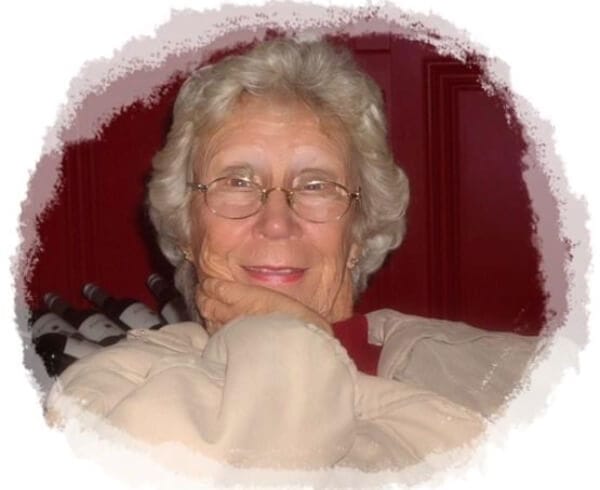
She Held Me When the World Let Me Go
The Night That Changed Everything
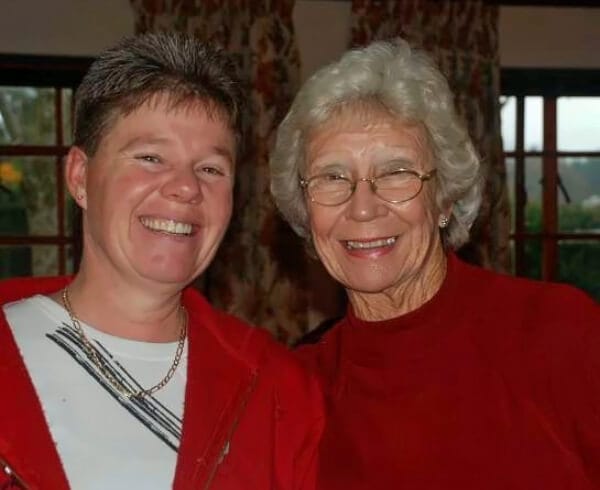
"Her smile makes me smile. Her laugh is infectious. Her heart is pure and true. Above all, I love that she is my mother." – Unknown author.
This is not just a tribute to my mother. This is a chapter in my journey. A journey of rebuilding from the ground up.
I own my past without letting it define my future. Honoring the woman who never gave up on me and using her love as the fuel to never give up on myself.
It’s not just a story about a mother. It’s about momentum. About how love, real, honest, selfless love, can save a person.
I don’t write this for sympathy. I write this so you know you’re not alone.
Maybe you’ve messed up. Maybe you carry shame. Maybe you think it’s too late to turn things around. I thought so too.
But love, real love, doesn’t care about what you’ve done. It only cares about who you’re becoming.
They say you don’t know how strong you are until being strong is your only choice. I never imagined that strength would come to me in the form of a prison cell, through a glass window, or from the trembling hands of a mother who never stopped believing in her child, even when the world gave up on me.
I still remember that night in January 1997 as if it happened last week.
The clanking of keys, the cold, musty smell of the police station, and the crushing silence of shame pressing on my chest like a boulder.
Mine collapsed on the 25th of January, 1997, the night of my arrest. That night is burnt into my memory.
I’ll never forget the way they looked at me that night, the policemen who had once been my colleagues. Men I had stood next to in uniform. Men who knew my face, my voice, my name, my rank. But that night, something in their eyes changed. They didn’t see a fellow officer anymore; they saw a suspect—a criminal.
Their silence was louder than any words. Some couldn’t even look me in the eye. Others stared as if they were trying to make sense of what was happening, like they couldn’t believe the same woman they had shared so many police experiences with, not just on duty, but off duty as well, was now sitting in handcuffs. It was disbelief, yes, but also quiet judgment. And maybe even a trace of pity.
I felt naked under their gaze, exposed in a way no police uniform could ever make me feel.
That night, everything I had built, everything I had been, collapsed, and I could see the rubble reflected in their eyes. I still hear the cold echo of my own silence as I sat waiting, handcuffed, ashamed, and terrified.
I was granted one phone call, and I didn’t hesitate. I called the only person I could still trust: my mother. Her number was stitched into the deepest part of my being. She didn’t ask questions. She came.
I was 33 years old, scared, broken, and numb. But in that sea of fear and confusion, there was one thing I knew for sure: I needed my mother. And not just for comfort, but because she was the only person who ever truly saw me. Not the rebellious child. Not the child who suffered at the hands of her abusive husband. Not the daughter whom she’d seen as drunk as a skunk so many times. Just me.
When she arrived, I was allowed a few private minutes with her in the fingerprint office. There was only one chair in the room, but it didn’t matter. I didn’t need a chair. I needed her lap, her arms, her heartbeat. I sat on her lap like a little girl and wrapped my arms around her neck. My face buried into her shoulder. The tears came in waves: hot, bitter, and unstoppable.
She rocked me. Sixty-one years old and holding her adult daughter like a baby. For a brief moment, I was no longer an accused criminal. I was just her little girl again.
“Please, my child,” she whispered. “Just promise me one thing... never harm yourself in a way that will cause your death, too. I love you, and I will stand by you through this whole period.” Her voice trembled. Her words were not dramatic. They were not poetic. But they were real. They were raw, and they wrapped around my heart like a safety net.
Her words, spoken softly and slowly, cracked through the numbness inside me. In that moment, I realized this was not just the beginning of a long road for me: it was the beginning of a long, painful road for her too.
When she left, I was taken to a single cell. Alone with my thoughts, I didn’t think of my crime. I didn’t think of the future. All I could think about was her. That brave, soft, loving woman who sat in a police station and held me without judgment. She was the only reason I kept living.
My mother. My safe place. My reason to keep breathing. They say you only know who truly loves you when your world falls apart.
Bail Application
When my bail hearing came up, it was on a Monday, the 27th of January 1997, and the courtroom was full. I was petrified. My nerves were shot. The courtroom was packed, the air thick with judgment. I couldn’t think, couldn’t speak, couldn’t feel anything except fear.
Just before the judge walked in, I turned my head to find my Mom, and there she was. Sitting quietly in the front row, trying to look brave, her eyes had a soft, reassuring smile. She smiled at me. A smile full of pain, but also full of love. I knew she was afraid, too, but she radiated a kind of strength no textbook can teach. That’s the kind of love only a mother can give. I returned a weak smile, but I knew she could see the terror in my eyes. She always could.
Bail was set at R1000 on the condition that I be admitted to Stikland Mental Institute for 30 days for evaluation to establish if I would be fit to stand trial. Among the other bail conditions, I had to stay with Mom. And that’s exactly what I did after my 30 days at the Mental Institute.
Other bail conditions included employment requirements, travel limitations, prohibition of drug and alcohol use, prohibition of owning a firearm or visiting people who possess firearms, clinical psychiatric treatment, no contact with Liz or Kegan by any means, or being anywhere near them. I had to report to the police station three times a week between 08:00 and 17:00 to sign the bail book.
From then on, I had to appear in the local Magistrates' court once a month, only to hear that the case had been postponed for another month, and so it continued for the following eighteen months, until finally a Supreme Court date was set.
For almost two years, while I waited for my trial at the High Court in Cape Town, Mom took me in, not just into her home, but into her heart, again and again, despite everything. I moved back home, not as the daughter she once raised, but as a woman broken open by shame and uncertainty.
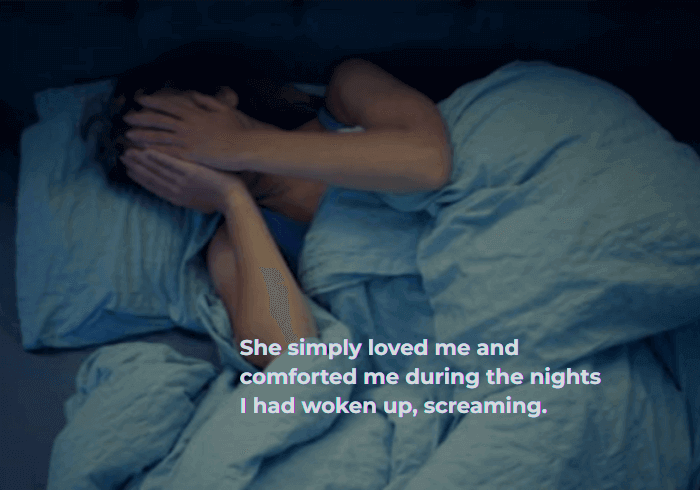
And for nearly two years, to be exact, 18 months, while I awaited my trial date, she never wavered. She never asked for explanations. She never lectured or made me feel worse than I already did. She simply loved me and comforted me during the nights I had woken up, screaming, because I had a nightmare.
Every morning, without fail, she brought me coffee in bed. And every morning, she’d say the same words: “Good morning, my child. Did you sleep well?”
She said it with the kind of love that makes even the darkest room feel warm. I knew she was tired. I knew she cried when she went to bed. But you’d never know that from the way she greeted me each morning, with a sparkle in her eyes and strength in her voice.
The Trial, the Sentence, and a Silent Goodbye
The trial lasted three and a half excruciating weeks. She was there every day. Brave. Present. Loving. She sat through every minute. Even when the weight of what was being said crushed her spirit, she never looked away. She was brave. Braver than I ever could be. But I could see the toll it was taking on her.
At night, I’d hear her cry in her room. I could hear her quiet sobs through the wall, trying to be quiet, trying to protect me from her own heartbreak, but I knew she was breaking inside. Still, she kept showing up for me every single day.
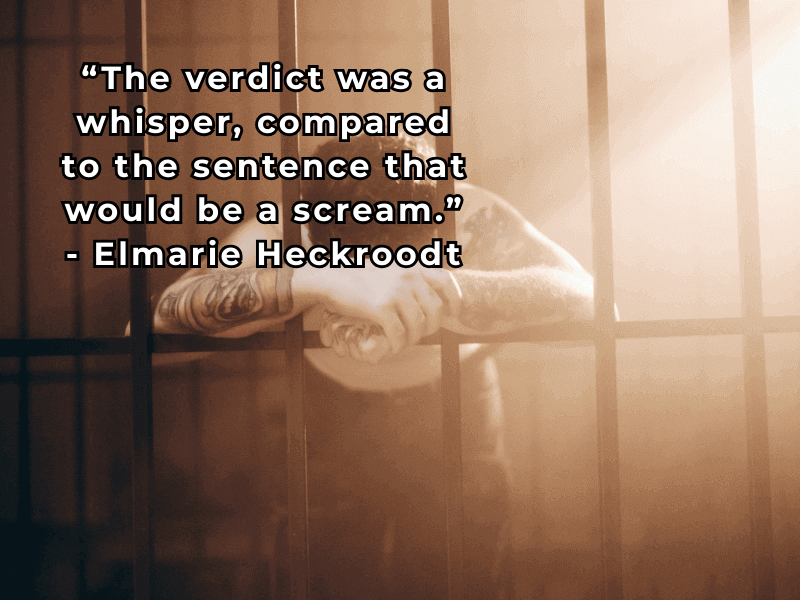
The day of sentencing arrived like a thunderstorm. “Guilty as charged”. “Return tomorrow at 09:00 for sentencing.” The courtroom was chaotic. The judge pounded his gavel, calling for silence, but the uproar swallowed his voice. The courtroom had erupted the moment the sentence was read: gasps, whispers, even muffled cries. He raised his voice, sharp and commanding, but the chaos only deepened as the journalists and flashing cameras flocked towards me like a swarm of killer bees, chasing the sensation. Looking back now, it’s baffling how some journalists treat someone else’s heartbreak as entertainment. I lived it firsthand: cameras flashing, microphones shoved in my face, every detail of my pain dissected and turned into sensation, as if I didn’t even exist as a person. At that moment, it felt like the trauma of the past three weeks was a product for them to consume, each one competing to publish the best headline.
What must have been barely two minutes of noise felt like a lifetime to me. Time stretched unnaturally, as if the walls themselves were echoing the shock. I stood frozen in the center of it all, numb and weightless, as if the floor might give way beneath me. The world was spinning, but my ears rang with the haunting stillness of disbelief.
Amongst the chaos, I didn’t hear a sound. Instead, my eyes searched for my mother. When I found her, amongst the uproar, our eyes locked for a brief moment. There were no tears in our eyes, just sadness. We didn’t cry. We didn’t speak. We just knew. And in that knowing, I found a strange kind of peace. Because no matter what the judge said, no matter what the newspapers would write, I had something no prison cell could take away: her love.
The long, exhausting wait was finally over. But not her love. That would never end. I didn’t know how many years I would be behind bars. I didn’t know how I’d survive it. But I knew one thing: she would never abandon me. And she didn’t.
That night, fear didn’t just whisper, it screamed inside my chest. I sat in my mother’s home, surrounded by the familiar comfort of her walls, yet nothing felt safe. Everything felt borrowed. Every breath, every blink, every moment suddenly carried a weight I couldn’t hold.
Tomorrow, the judge would decide how many years would be carved out of my life—and I had no control over it. Would it be five? Ten? Twenty? Could I survive it? Would I ever be free again?
While sitting at the kitchen table, the scent of her cooking, the sound of the clock ticking, these ordinary things became sacred, painful reminders of what I might lose. It wasn’t just anxiety. I knew that this was my last night of freedom. My last night outside prison bars.
My last night as “me,” before the system swallowed me whole.
I didn’t sleep. I couldn’t. Because how do you rest when your world is about to end?
I didn’t sleep.
I couldn’t.
Because how do you rest when your world is about to end?
Love Through the Glass
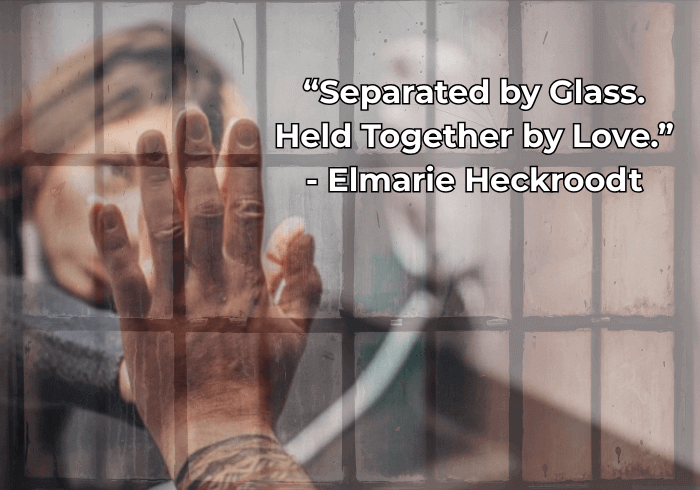
The first six months of my sentence were the worst. As a B-group prisoner, I wasn’t allowed physical contact with visitors. Every Sunday, Mom came to see me. We sat with a thick glass window between us, me on one side, her on the other, separated by metal, glass, and short intervals of silence. I would press my hand against the glass, wishing I could touch her. She’d sit on the other side of that glass window, smiling, telling me stories about her week, her bowling events, the neighborhood gossip.
And me? I sat there, nodding, smiling, portraying an image that I was fine, but in reality, I was dying inside.
I longed to reach through the glass, to hold her hand, to say the words I couldn’t seem to speak. “I’m sorry.” “Thank you.” “I love you.” But those words sat heavy on my tongue, refusing to come out. They got stuck in my throat every time, as if something was choking me. I couldn’t speak them, not because I didn’t mean them, but because the shame was too big, too loud, too real. I wanted to tell her I was sorry. That I loved her. That I would give anything to undo what I had done. Instead, I sat and I listened, watched the sparkle in her eyes when she spoke of her bowling trophies, and she’d won another bowling championship.
Oh, how her eyes lit up when she spoke about bowling. It was the only time I saw the same joy in her that she used to have before my incarceration. It gave me hope. It made her seem alive again. And still, every time she talked, my heart shattered a little more, because I knew I had taken so much from her, and felt the ache in my chest grow deeper. I wanted to hold her, to protect her from the hurt I created. But I couldn’t. All I could do was watch her love me through a wall of glass and a flood of guilt.
Every Sunday, she drove 80 kilometers, no matter how tired, no matter how sick, no matter how many others told her she was doing too much. Her loyalty was unwavering. She was tired. Drained. My siblings had already started complaining that she was neglecting them. And truthfully, she was falling apart.
A year in, I told her to stop coming every Sunday. It broke my heart to say it. But I knew it wasn’t fair to expect her to visit me every single weekend. So I made the decision. I told her to visit once a month. Not because I didn’t need her, not because I didn’t want to see her. I wanted to see her more than anything, but because I couldn’t bear the cost involved anymore: not the petrol, not the physical toll, not the emotional pain. She had already given up so much for me. I needed to set her free, even just a little.
She agreed, reluctantly. But I saw the pain in her eyes; I could see it crushed her when she said, “Okay.” That kind of sacrifice, the letting go, the pulling back for survival; it’s a kind of love that deserves a word bigger than “love.”
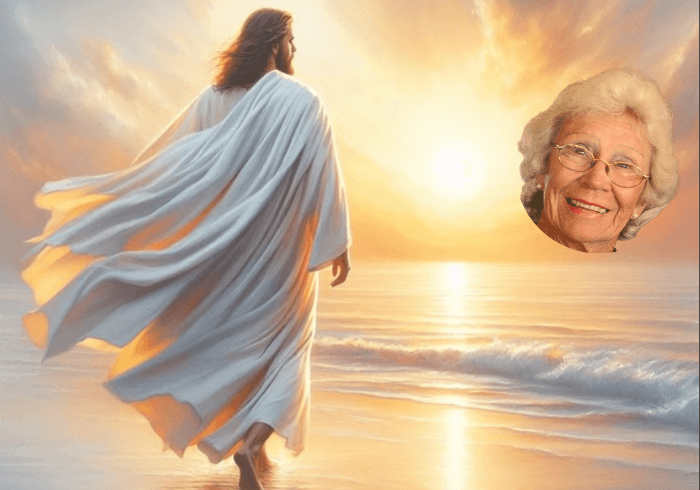
There’s a memory I hold close; a sunny afternoon from many years before prison. My mother, my eldest brother, and I were sitting around the kitchen table. This brother, always the spiritual one, looked at our mom and said, “Mom, you are just as beautiful as Jesus.”
Before we could react, my younger brother ran through the kitchen, heard the comment, and shouted, “Poor Jesus!” before bolting out the back door.
We laughed until our bellies hurt, but the truth was clear: she radiated something holy. Something rare. And through the years, even when the world labeled me a criminal, she loved me the same way Jesus would; unconditionally, relentlessly, and with arms wide open.
That moment stuck with me. Because, in my eldest brother's words, I saw truth. And in my younger brother's, I saw love through humor. Both were right. Our mother was as beautiful as Jesus, and no matter how heavy life got, she still found ways to smile, to give, to carry on.
Even during prison visits, she brought me creams for my skin. I remember her saying, “I’m past the stage of trying out all these fancy creams, but you still have to look after your skin.” She wore the same clothes year after year, just so she could put money into my prison account, buy me toiletries, and other small luxuries that were allowed.
She gave everything, expecting nothing in return. I know her love for me was without a doubt infinite. She guided me towards being the best of what I can be. She pulled me up in times of trouble and hugged me when I was scared. She never stopped trying to keep me safe at all times, even when she realized she had to let go once I was ready to live my own life.
She was my pillar of strength and my door towards a safe haven when my relationships fell apart. And in return, all I did was break her heart…so many times. Not once did she ever break my heart. Looking back now, I realize that in spite of the strength and courage she showed, she was fragile, but never showed it.
I know I loved her with all my heart, regardless of what the rest of my family thinks or says. No words will ever be enough to express the unconditional love that she had for me. I also know the most difficult part of being a mother was when she saw me making the wrong choices in life. Many times, I disrespected her, I broke her heart, she lay awake many nights, crying over me and praying desperately for me. But at the end of the day, she was always there to comfort me and be my strength when it felt as if my whole life was falling apart.
Even now, as I write this, I feel the weight of all the things I never said. I so badly wish that she were still here so that I could pluck every gray hair from her head, especially the ones I caused. I want to wrap her in my arms and stop time, just to feel her heartbeat again.
But time doesn’t stop. And mothers don’t live forever.
I see now that being strong doesn’t mean never breaking. It means breaking and still showing up. That’s what she did. Every single day.
The world will forever label me as a murderer, especially my father. That’s a reality I’ve had to come to terms with. But to her, I was always her daughter. Her child. Her girl. Her firstborn.
And she? She was more than a mother. She was my miracle.
There are no awards for mothers like mine. No trophies. No medals. Just wrinkles earned through tears, hands weathered by sacrifice, and a heart that somehow kept on beating no matter how many times it was broken.
There’s an Afrikaans song that says, “Moeder, liefste Moeder, vir u sal ek nooit nie kan betaal, hare soos silwer en hande soos goud…” And it’s true. I could never repay her in this life. Maybe I will have the honor of doing it in the afterlife.
But I can tell her story. I can let the world know that even in the darkest corners of this earth, there exists a light so pure, so relentless, it can carry you through hell and back. That light was my mother.
And now, as I try to build momentum in my life, brick by brick, moment by moment, I do so because of her. Because she taught me that broken things can still be beautiful. That even those of us society casts away are worthy of love, redemption, and hope.
She gave me all three.
So yes, I made mistakes and I still do. Yes, I carry guilt, a guilt that will stay with me until the day I die. But I also carry her love, her lessons, her strength.
And that is more than enough to keep me going.
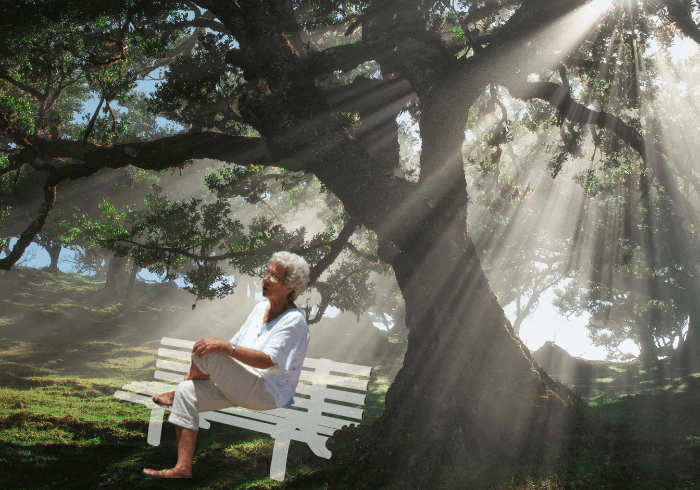
Author’s Note:
If you’ve ever felt unloved, lost, or unforgivable, I hope my story helps you see that healing is possible. That even after rock bottom, there is still a road, sometimes long, sometimes lonely, but always worth walking.
Build momentum.
Keep going.
You are more than your worst day. You are the sum of all your moments, especially the ones where love shows up and refuses to leave. Just like my mother did.
Beyond Words.
She made me laugh when I wanted to die. She held my shame with grace. And she loved me without condition, even when I was labeled a murderer.
She’s never been on TV. She never won any Nobel Prizes. But to me, she’s the greatest woman who ever lived.
I wish I could wrap all these words into a single sentence and hand it to her as a thank-you card from my soul. But no sentence is strong enough. No language is deep enough.
All I can say is this:
“Mom… thank you.”
Thank you for being stronger than you needed to be.
Thank you for holding my brokenness when it threatened to destroy us both.
Thank you for believing in the version of me that I couldn’t even see.
You were not just my mother. You were my miracle.
Even though you’re not here anymore, I know you can feel every sentence echoing through a place where souls understand what words can’t say. You probably nudged God, saying, “Look, that’s my girl,” as these words found their way to you. I hope these words reach you, Mom, soft, warm, and wrapped in the love you planted in me.
To Anyone Still Reading…
If you’ve ever made mistakes so big you felt unworthy of love, this story is for you.
If you’ve ever had someone stand by you when you didn’t deserve it, hold on to them.
If you’ve lost faith in redemption, please, believe me when I say: it’s real.
I’m not writing this for likes or algorithms. I’m writing this because I’m alive, and loved, and still healing, and all of that because of one woman who never gave up on me.
Her love built the momentum that carried me out of rock bottom. Her love is why I keep going.
And if you’re crawling your way back from a dark place, let this be your reminder:
You can rebuild.
You can heal.
You can rise.
One day, one moment, one heartbeat at a time.
That’s a wrap for this post… I’d love to hear what you think! 💬 Comment below.
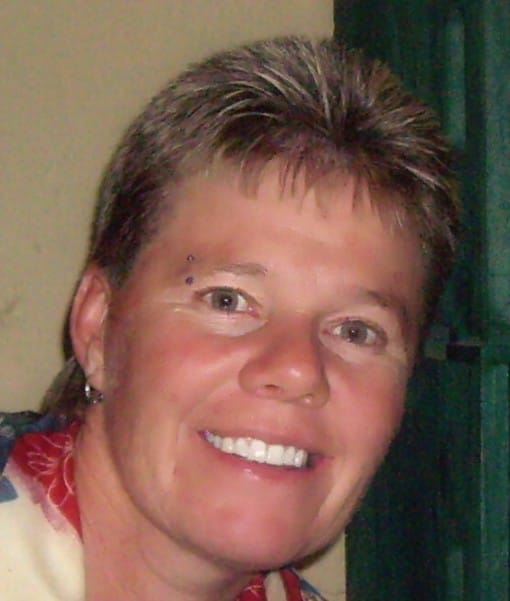
Author: Elmarie Heckroodt
Stay informed! A new chapter is released every week.
Your next chapter, “The Fire and The Silence I Inherited – Part 4,” will arrive in your email next week.
Keep an eye on your inbox so you don’t miss it.
© 2025 Elmarie Heckroodt. All Rights Reserved.