
Jailtime - Part 12 (Section 4)
Transferred to a prison for long-term inmates, I entered a harsher world where time moved slowly, and survival meant adapting fast. This chapter reveals the fear and reality of stepping into a place built for years behind bars.
A disturbing rumour began circulating through the prison. At first, it moved quietly from one inmate to another, but soon it was being discussed openly in the corridors and cells. It was something many of the long-term prisoners had expected for months, yet no one wanted to believe it would actually happen.
By the time I had served six months of my sentence, the rumour became reality. All long-term female prisoners were to be transferred to Worcester Female Prison, approximately 137 kilometres from Pollsmoor. The decision came without warning and without room for negotiation. It was announced as the next step in the Department of Correctional Services’ process.
For the inmates, however, it meant far more than a logistical move. It meant separation.
By that time, Bari and I had already faced many obstacles together. Prison life constantly tested relationships, faith, and emotional endurance. Throughout it all, we believed that God had carried us. Looking back at everything we had already survived, we convinced ourselves that we would not be separated. We spoke about it often.
We told each other that if our relationship was truly meant to be, God would not allow us to be divided by something as powerless as prison bureaucracy. And if separation did happen, then we would have to trust that God had a purpose beyond what we could see. Our faith became the anchor we held onto.
We reminded each other that our love was the one thing prison could not take from us. In a place where almost everything else had been stripped away, that love became both our comfort and our strength. It was all we had, yet somehow it felt like everything.
Bari, however, struggled more deeply with the uncertainty.
She admitted that she had been praying constantly, begging God not to let us be separated. The tension of not knowing what would happen was slowly consuming her. Some days she tried to remain strong, reminding herself of God’s promises and trusting that everything would work out as it should, but doubt has a way of returning when fear is close.
Again and again, the worry crept back into her thoughts. The possibility of losing the daily presence of someone you love inside prison walls can feel overwhelming, especially when that person has become your main source of comfort and stability.
Eventually, she looked at me with a quiet acceptance that broke my heart. She told me that she knew I would probably have to go. The transfer, she said, would not change how she felt about me. Her love, she insisted, would remain the same, but the fear in her eyes was impossible to hide.
“I will always love you,” she said softly. “And I will always be loyal to you… no matter what happens.”
When she said those words, I could see how deeply she meant them. At the same time, a wave of fear rose inside me. “I believe in your love and your loyalty,” I told her honestly. “But I’m terrified of losing you.”
The morning of March 18, 1999, finally arrived, and with it, the transfer list. For months, there had been rumours, speculation, and quiet hope about who would be moved and who would stay behind. When I looked at it, my heart immediately began to race. My name was there, but Bari’s name wasn’t.
For a moment, I just stared at the list, convinced I must have read it wrong. I checked again, slowly tracing the names with my finger, hoping that somehow I had overlooked hers. But it wasn’t there. A wave of anxiety rushed through me. I could not believe that this was happening. After everything we had been through together, after all the prayers and hope, it felt impossible that we would be separated like this. Why would God allow things to turn out this way? Part of me felt betrayed. I could not understand how God could allow this. Yet somewhere, deep inside my heart, a small voice kept whispering that it was not over yet. “It’s not too late… God works miracles in magnificent ways.”
As I began packing my belongings, that same quiet voice continued to speak to me. “Stay calm… don’t despair.” It almost sounded like a reprimand. “Where is your trust? Where is your faith? Didn’t you say that you believe with all your heart, soul, and mind?”
But at that moment, I was too overwhelmed to listen and pushed the thought aside. My thoughts were consumed by one thing only: how devastated Bari must feel. I exited my cell and went next door to hers, but I found the barred gate locked. She was standing helplessly behind the gate with tears building up in her eyes. “What are we gonna do, my Sunshine?” she asked with a broken voice. I knew I had to stay strong for her. I used every bit of strength I had left to reassure her, telling her not to worry, that I loved her, and that I would wait for her no matter what happened. We both knew how uncertain everything was.
Tears streamed down our faces as we held onto each other through the locked safety gate. The cold metal bars were the only thing separating us, yet we clung to each other as if our lives depended on it. Neither of us wanted to let go.
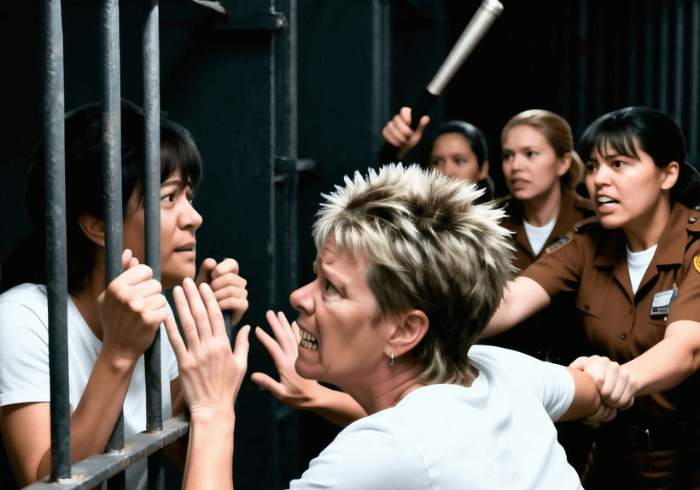
While we were still holding onto one another, a warden approached me from behind. She gently touched my shoulder and told me it was time to go. Still gripping the bars of the gate, I turned my head directly at the warden and shouted, “Don’t fucking touch me! You all had this planned. I’m NOT leaving without Bari!”
Several inmates nearby witnessed what was happening. Some of them began shouting for help because by that point, I was completely beyond reason. I refused to let go of the gate.
The warden tried to pull me away, but I held on with every ounce of strength I had. It felt as if my entire body had turned into pure resistance. I gripped those bars as though my life depended on them. I was no longer thinking rationally. I had become like a wild animal protecting the only thing that mattered.
One warden alone was not strong enough to pull me away. Within seconds, three more wardens appeared, trying to calm the situation. My hands were locked around the icy metal bars. I could feel them going numb, yet I refused to release my grip. My knuckles burned with pain, feeling as if the skin might tear open at any moment.
Then one of the wardens lifted her rubber tonfa and began striking my hands, trying to force me to let go of the bars. The pain was sharp and immediate, and forced me to let go.
Instinctively, I released the bars. In the same moment, I spun around, exploding with rage. “If you hit me one more time,” I screamed at her, “I will fucking kill you!”
The four wardens backed away and left, warning that they were going to call enforcement and would do whatever was necessary to separate me from Bari. In the sudden silence that followed, Bari spoke quickly. She said she would immediately write a report, formally requesting a transfer to Worcester as well. Time was against us.
The other eighteen prisoners who were scheduled for transfer had already packed their belongings. They were waiting to see the prison doctor before being moved to the reception overnight cell, where we would spend the night before leaving the following morning.
Although Bari was also a long-term prisoner, I knew the chances of her request being approved were extremely small. The prison relied on her skills in the hair salon where she worked as a qualified hairdresser. On top of that, she still had to complete a welfare course she was required to attend every Thursday. The sessions were run by the prison’s social worker for inmates who had committed fraud, and Bari still had four sessions left before completing the program.
All of that made it unlikely they would approve a sudden transfer. Despite knowing all of this, I turned inward and pleaded with God one more time.
“Please, God,” I prayed silently, “let this report be approved. Give the person who reads it the insight and understanding to say yes. I leave everything in Your hands… but please hurry. There isn’t much time left.”
Strangely, I did not feel guilty about the outburst with the wardens. In my mind, they got what they deserved. For six months, I had kept quiet while they belittled, degraded, humiliated, and deliberately provoked me. I had endured it without reacting.
But that morning, something inside me finally broke. I had reached the point where I simply could not tolerate another moment of unfair, humiliating, and degrading treatment.
Exactly twenty minutes later, Bari came running to the doorway of my cell while I was still packing my belongings. She stopped in front of me, both thumbs raised in the air, and shouted, “I’m going to Worcester!”
The relief and happiness on her face were impossible to miss. Her whole expression lit up. I immediately understood what that meant for both of us.
Overcome with emotion, I dropped to my knees right there in the cell. “Thank you, Jesus… thank you,” I said over and over again. The words kept coming as the weight of the moment settled over me.
After a few moments, Eileen gently tapped me on the shoulder and said with a soft smile, “Elmarie, it’s enough. I think God heard you the first time.” Tears were streaming down my face as I looked up at her. “I can’t believe this,” I said. “God really loves me. He answered my last desperate prayer.”
The other inmates in the cell had been watching everything unfold. Instead of resentment or jealousy, emotions that were common in prison, there was only genuine happiness for us. The atmosphere in the entire cellblock shifted in a way that is difficult to describe.
In that moment, everything felt different. There was a deep sense of peace among everybody, and I truly believed the presence of the Holy Spirit was moving through that large, crowded space. For a brief moment inside those prison walls, hope replaced despair.
That night in the overnight reception cell, Bari and I experienced something we had not been allowed for five months. For the first time since our relationship had begun, we were permitted to be together legally, without hiding or constantly fearing that someone might discover us.
The cell was quite large and bare with its cold cement floor, but to us it felt like a rare moment of freedom. In the corner of the cell, we pushed two single mattresses together and arranged them as neatly as we could, creating what felt like a comfortable double bed. It was a simple arrangement, yet it meant everything to us in that moment.
We lay there in each other’s arms, finally able to relax without the constant pressure we had lived under for months. The closeness and passion between us felt overwhelming and indescribable after such a long period of secrecy and restraint. Time seemed to pass without either of us noticing. During that night, nothing or nobody could stop us. Two souls became one. The lovemaking was very intense, but also very emotional.
The restraint and secret visits during the past few months all erupted into one moment of ecstasy, intensity, overwhelming pleasure, and pure bliss. I can only describe it as a rapture of deep intimacy, characterized by a feeling of temporary loss of self-control, altered perception of time, and profound emotional and physical release, bordering on a trance-like or spiritual experience.
Eventually, at around four o’clock in the morning, we realized that we had not slept at all. Reluctantly, we agreed that we should at least try to get some rest. Before closing our eyes, we held hands and prayed together, something that had become deeply important in our relationship. After a gentle kiss, we fell asleep in each other’s arms.
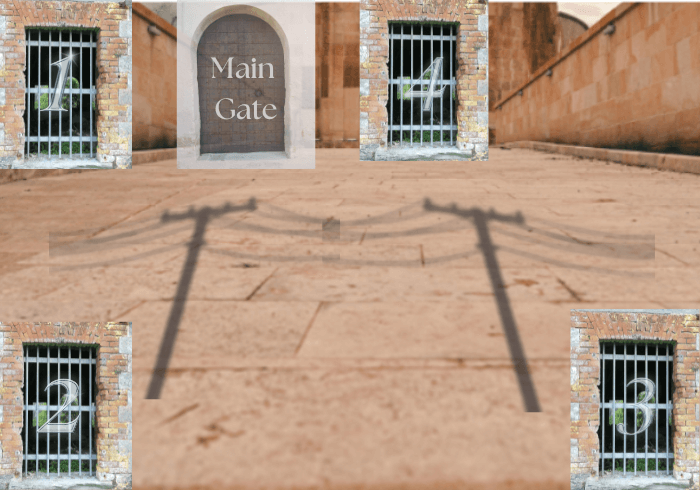
The image shows the small concrete courtyard where inmates spent their daily one-hour break. The space was surrounded by very high walls, creating a closed and heavily controlled environment. The courtyard itself was roughly 300 square meters in size and contained a simple washing line where inmates could hang laundry.
Once you entered through the main gate, the layout became clear. Four communal cells faced into the courtyard. Two of the cells were positioned immediately on either side of the entrance gate: Cell 1 on the left and Cell 4 on the right. Directly opposite them, at the far end of the courtyard, were the other two communal cells, Cell 2 and Cell 3.
This courtyard was the only outdoor space available to inmates in that section during their scheduled break time. Every day at 11:00, inmates were allowed one hour in this area.
Daily routines were strictly structured. Lunch was served at 13:00. Inmates who worked during the day would leave their work areas and line up at the mess hall to collect their food. They could either sit at the tables inside the mess to eat or return to their workstations afterward. Lunch break lasted 45 minutes.
Inmates who did not have assigned work or refused to work were required to eat in the mess and then return directly to their cells once they had finished.
In the image, the mess hall is located along the right-hand wall of the courtyard. This area also served as the passageway leading to several prison work areas. These included the prison school, a very small classroom with approximately twenty desks and chairs; a large sewing room equipped with roughly fifty sewing machines; a large laundry facility featuring industrial washing machines and dryers; and a medium-sized crochet room where inmates worked on handcraft projects.
This same passage also led to the A-Visitors Area, where inmates who qualified were allowed contact visits with family or loved ones. Unlike the concrete courtyard, this visiting area was much larger and more open. It was also designed as a courtyard, but the ground was covered with grass, and the space was approximately the size of a rugby field.
Together, these spaces formed the central environment in which daily prison life unfolded: high walls, strict routines, and small areas where inmates worked, ate, and briefly stepped outside their cells.
The following day, 19 March 1999, we arrived at Worcester Prison. After the formal admission procedures were completed, we were escorted to the clothing store where new arrivals received their prison uniforms.
Each of us was issued two sets of clothing: a denim dress skirt, which I immediately declined, and received a pair of denim pants instead. In addition, we received a denim jacket, a jersey, a navy tracksuit, a vest, a long-sleeved spencer, and a single pair of underwear. Some personal items were still allowed. We could wear our own shoes, white T-shirts, socks, pyjamas, and underwear.
The bedding we were issued was far from comfortable. Each inmate received one rock-hard stuffed pillow, two sheets, and a grey blanket that felt as rough as steel wool.
Despite the rigid routines of the new prison, Bari and I were fortunate enough to spend another night together. No one in Worcester was certain about our relationship yet, except the inmates who had arrived with us from Pollsmoor Prison.
Still, we both understood that it would only be a matter of time before others figured it out. In prison, same-sex relationships were far more common than many people outside might imagine, and secrets rarely stayed hidden for long.
That evening gave us an opportunity we had rarely had before. We spent hours talking, really talking, in a way we had not been able to do in Pollsmoor. Back there, our visits had always been brief and risky. Every meeting carried the constant fear of being caught, because inmates were strictly forbidden from entering sections other than the one where their own cells were located.
Because of that, our conversations had always been rushed and incomplete.
That night, for the first time, we could share the deeper things we had both been carrying inside. I spoke openly about the experiences I had had with God during those months in Pollsmoor prison, moments that convinced me of His constant love and grace in our lives. I reminded Bari of several incidents that, to me, showed clearly that God had been present and supportive throughout our relationship.
Speaking about these things made me feel deeply vulnerable. Whenever I talked about God and His goodness, I was reminded of how imperfect I was. Despite my efforts to live as His child, I knew that I would always fall short. I often found myself asking the same question: “Who am I to deserve so much love and mercy?”
All I ever wanted was to please Him, yet at the end of each day I would often feel disappointed in myself, aware of the many small ways in which I had failed. I knew I was only human…and a sinner. As we lay there together, those thoughts overwhelmed me, and tears began to run down my face.
Bari held me closer and spoke quietly, trying to comfort me. “We have to hold on to our love for God,” she said gently, “and to our love for each other. He means so much to us, and we need Him in our lives all the time. He deserves all the honour and praise, and we owe that to Him.”
She paused before continuing. “What we have is something we have been searching for for a long time. Now we have to protect it, even under these abnormal circumstances. I believe God has a purpose for us. Maybe He is strengthening us so that one day, when we are free, we will truly appreciate and cherish what He has given us: our love for each other.”
As I lay there listening to her speak with such sincerity and tenderness, one thought kept repeating in my mind. How could something so beautiful possibly be wrong?
I felt a sudden urge for her, pulled her closer, and kissed her. What began as a simple moment of affection quickly deepened as we held each other, grateful for the rare opportunity to be together in the same cell for a second night, and soon we were making love again.
"Being judged for who you love cuts deeper than most people realize. It’s not just an insult: it’s a daily reminder that others think your very existence is wrong, and when authority joins in the humiliation, the pain cuts even deeper, but surviving it proves a strength that hatred can never destroy." - Elmarie Heckroodt
Although we had only just settled into the routine at Worcester Prison, it did not take long for us to experience how strictly everything was controlled.
Every morning at 7:00 a.m. and again at 3:00 p.m., all inmates had to be counted. At the sound of the call, we would line up outside our cells while the wardens carefully counted each person to make sure the numbers matched the official register. These counts were part of the daily routine and were taken very seriously.
The morning count also provided inmates with a brief opportunity to address certain practical matters. If someone needed medical attention, she could inform the warden that she wished to see the prison nurse and briefly explain the reason. It was also the time when inmates were allowed to raise complaints if they had any concerns about their treatment or living conditions.
On the morning of 20 March, Bari and I followed the routine like everyone else. We stood outside our cell with the other inmates, waiting to be counted. What we did not know at that moment was that someone had already reported our relationship to the prison authorities.
After the count was completed, a warden approached me and told me to return to the cell and pack my belongings immediately. The instruction came without much explanation at first, but it quickly became clear what had happened. The prison management had been informed that Bari and I were involved in a relationship, and under prison regulations, same-sex relationships between inmates were prohibited. As a result, they decided to separate us.
Bari was allowed to remain in Cell 4, while I was ordered to move to Cell 3, which was located on the opposite end of the courtyard. The two cells faced each other from across the yard, roughly thirty metres apart.
Although we were still within sight of each other, the message from the authorities was clear: our relationship had been noticed, and from that moment on, they intended to keep us apart.
In women’s prisons in South Africa, same-sex relationships are generally prohibited under institutional rules that forbid sexual activity between inmates. These restrictions exist despite the country’s constitutional protection against discrimination based on sexual orientation.
Prison authorities enforce these rules largely to maintain order and discipline within the institution. Sexual relationships between inmates, whether heterosexual or same-sex, are typically considered violations of prison regulations.
Within the prison environment itself, informal inmate codes and social dynamics often reinforce these restrictions. In many female prison sections, consensual same-sex relationships may still be viewed as misconduct and can lead to disciplinary consequences, even though such relationships are widely known to occur.
Another factor influencing these attitudes is the presence of deeply rooted social and religious beliefs among both inmates and staff. In some cases, same-sex relationships are labeled as inappropriate or “deviant,” reflecting broader cultural attitudes rather than legal standards.
Safety concerns also play a role in how these relationships are perceived.
While many relationships between inmates are consensual, prison officials sometimes associate them with risks such as jealousy, conflict, or coercion. These concerns have historically been used to justify strict control over any form of sexual relationship inside correctional facilities.
In addition, prison environments often operate within a strongly heteronormative framework. Relationships that fall outside traditional gender expectations may therefore be viewed as disruptive to the established social order within the institution.
As a result, even though South Africa’s Constitution protects individuals from discrimination based on sexual orientation, correctional facilities continue to enforce regulations that prohibit sexual relationships between inmates in an effort to maintain institutional control and discipline.
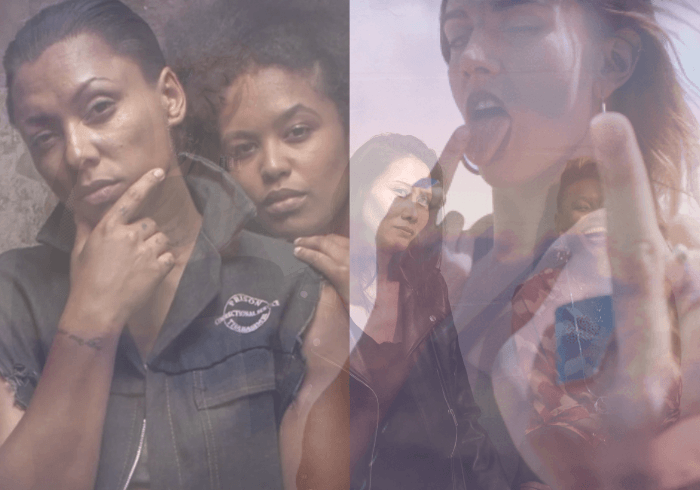
It did not take long for Bari and me to realize that we did not fit comfortably into the new environment we had been placed in. Of course, the word “comfortable” hardly belonged in a place like prison. We were fully aware that we were inmates serving a sentence, and prison was never designed to offer comfort.
Its sole purpose was confinement, discipline, control, and rehabilitation. The daily routines, the strict rules, and the constant supervision made it clear that any expectation of comfort was unrealistic.
At best, an inmate could hope to find small ways to cope and maintain some sense of dignity within the harsh conditions.
The conditions and atmosphere at Worcester felt very different from what we had experienced before. It was as if we had suddenly been dropped into what many inmates themselves described as a modern-day “Sodom and Gomorrah.”
It was as if we had suddenly been placed in a world governed by an entirely different set of unwritten rules.
I soon got the impression that certain inmates held power over other inmates and certain members as well. Whether this influence stemmed from fear, intimidation, or even sympathy, I could not say with certainty.
What became clear, however, was that some individuals seemed able to get away with behavior that went far beyond the prison's official rules.
Almost immediately, we began hearing other inmates talk openly about something they called “playing slanga.” At first, the phrase meant very little to us, but it did not take long before we began to understand exactly what it involved.
In Pollsmoor, we had already encountered what inmates referred to as “slanga girls,” but the situation in Worcester seemed far more extreme.
What we saw and heard there shocked us deeply. The behaviour we witnessed represented, in our view, the most vulgar and degrading form of same-sex activity. To us, it bore no resemblance to the kind of committed relationship Bari and I shared.
Many of the women involved spoke openly and without shame about these arrangements. There was no sense of emotional commitment or affection between them. Instead, the relationships were often purely transactional. They referred to it as “pushing time,” meaning it was simply a way of passing the endless hours of prison life.
Typically, one inmate would choose another who was willing to enter such an arrangement. In other cases, women who refused were pressured, bullied, or intimidated until they eventually gave in. The targets were often inmates who received regular visits from family or friends, because that meant they had access to supplies. By forming these relationships, the dominant partner could keep her locker stocked with items such as coffee, sugar, tobacco, and toiletries.
These arrangements would often continue for months while the women shared a cell.
Eventually, wardens would discover them having sex and separate them into different cells. Yet even then, their lustful and vulgar behaviour never stopped. Some simply moved their activities to other hidden places in the prison, such as the toilets in the tailor shop.
One day, I asked one of the inmates directly how she could live that way. I knew that she had a husband and children waiting for her outside prison, and I could not understand how she could reconcile that with what she was doing.
“How can you possibly live like this?” I asked her. “You have a husband and beautiful children waiting for you.”
Her answer shocked me.
“Prison can be the end of the road,” she said quietly, “but it can also be the start of something else. For some people, it’s a hard time. For others, it’s a time of difficult choices. Life doesn’t stop just because you’re behind bars. Lust and relationships continue. In prison, there are rules made by the authorities, but inmates also live by their own rules.”
She went on to explain that many inmates try to serve their time in whatever way makes life more bearable. “They scheme. They hustle. They do whatever they can to make prison more comfortable,” she said. “But the truth is that anyone who gets caught up in that game soon learns there’s always a price to pay.”
Her voice remained without emotion as she spoke, but I could see a deep sadness in her eyes.
“They don’t care about me,” she added. “No one comes to visit me. So why should I care about anything? There’s no real rehabilitation in prison. By playing slanga, I keep myself busy. At least the time passes faster.”
For a moment, I could not even respond. I looked at her and felt a deep sense of pity, especially for the family waiting for her outside.
Finally, I said quietly, “Do you know what I do instead? I go down on my knees and pray. I ask God to help me and give me the strength to survive these circumstances. That is my form of rehabilitation: to stay focused on Him and not allow the prison system to destroy who I am. Just because you are in prison doesn’t mean you have to become something you are not.”
She shrugged dismissively. “I don’t get on my knees,” she replied bluntly. “I don’t believe in God. And I’m not willing to discuss it any further.”
With that, she turned around and walked away, leaving the conversation unfinished.
Among many of the inmates, jealousy had become a substitute for love. Relationships were often defined by control, anger, and violence rather than affection. Those who depended on others to supply their lockers were fiercely protective of their “sponsors.”
Arguments frequently escalated into physical fights, shouting matches, swearing, and smashed windows when things did not go their way. Threats were common as well. Some inmates would even threaten each other with mugs filled with boiling water.
After afternoon lock-up, when everyone had been returned to their cells, the shouting would begin across the courtyard. Women screamed at each other from opposite cells, their voices echoing between the high walls. The language was so vulgar that it felt like a knife cutting through the night's silence.
Sometimes they would describe in graphic detail the sexual acts they had performed with each other while the rest of us were forced to listen. There were nights when the behaviour made me feel physically sick. More than once, I found myself praying quietly, “God, please forgive them, because they do not know what they are doing.”
The criminal world, the criminal mindset, was something entirely new to me. During my years in the police force, I believed I had seen the worst of human behaviour. I had dealt with crime, violence, and the harsh realities that came with it. But this… this was different. Experiencing it from inside a prison exposed me to a side of human nature I had never truly understood before. What I witnessed there went far beyond the scenes, cases, and reports I had dealt with as a police officer. At times, it was deeply disturbing, yet strangely fascinating to observe. Never before had I seen so clearly how destructive behaviour could overpower what was good in people.
Under those circumstances, the contrast between inmates who tried to hold on to their dignity and those who openly embraced cruelty became painfully clear. Some women still attempted to behave with respect and restraint, while others lied, stole, threatened, assaulted, and insulted without hesitation. To survive among them, a person almost had to strip away the qualities that made her decent and adopt the same harsh instincts within herself and descend to the same level of aggression, intimidation, and hatred. Even then, it was difficult to stand your ground to compete with them: not that it was a competition anyone in their right mind would want to win. Their world was one where the loudest voice, the roughest behaviour, the hardest fist, and the most ruthless attitude dominated everything.
They operated by a code of their own: one that had its own rules, values, and moral logic. To them, it was perfectly normal. Yet from the outside, it appeared deeply distorted, and what made it so frightening was the way evil radiated so much arrogance.
What made the situation even more disturbing was that Bari’s and my relationship was viewed by the authorities in the same way as these “slanga” arrangements. Our sincerity, loyalty, and commitment meant nothing to them.
We realized this from the way certain wardens began speaking to us. There was little respect in their tone. Some claimed they had never encountered what they called a “real” lesbian relationship before. Yet they showed no interest in understanding ours either.
Bari and I soon became tense and constantly aware that we were being watched. Wardens and inmates alike seemed to keep their eyes on us. In some cases, the attention felt almost hostile, while at other times it seemed mixed with curiosity.
It was no secret that some inmates admired us for being different. Our relationship was built on tenderness, trust, loyalty, and genuine affection. There was no manipulation or violence between us. Yet in prison, happiness was something few people were willing to allow others.
The prevailing attitude was simple: you are a prisoner, nothing more than a number.
“You’ll be treated like one,” some would say bluntly.
One warden even remarked one day, “In twenty-five years working for Correctional Services, I have never seen a genuine lesbian relationship in prison.”
I stood there wondering whether she truly believed what she had just said. After twenty-five years of working inside a prison, she had undoubtedly seen every form of human behaviour imaginable, yet the idea that two women could genuinely love each other seemed entirely beyond her comprehension.
Slowly, it became clear to me that I was being judged and targeted because of my sexuality. Certain wardens seemed determined to undermine the relationship between Bari and me. Through subtle remarks and manipulative behaviour, they appeared to be working toward a single goal: convincing Bari to abandon our relationship.
To be continued...
That’s a wrap for this post… I’d love to hear what you think! 💬 Comment below.

Author: Elmarie Heckroodt
Stay informed! A new chapter is released every week.
"Section 5 of Jailtime“ continues and will arrive in your email next week.
Keep an eye on your inbox so you don’t miss it.
© 2025 Elmarie Heckroodt. All Rights Reserved.