
Jailtime - Part 12 (Section 3)
“Prison taught me many kinds of pain, but none as sharp as removing half of my soul without a final touch, like it was never meant to exist.” - Elmarie Heckroodt
I often found myself identifying with the psalmist in Psalm 13, where he asks, “How long, O Lord? Will you forget me forever? How long will you hide your face from me? How long must I wrestle with my thoughts and day after day have sorrow in my heart?” Those words captured the restlessness I carried inside.
Then I would return to the quiet instruction in Psalm 37:7: “Rest in the Lord and wait patiently for Him.” And finally, the reassurance in Psalm 40:1 became a steady anchor: “I waited patiently for the Lord; He turned to me and heard my cry.”
These scriptures slowly shaped my perspective. I began to understand that patience could start in the ordinary, everyday moments. I tried to be grateful for small trials: the delays, the disappointments, the aches, the continuous tension with fellow inmates, the open and blatant victimization from the wardens, the separation from Bari, and the constant missing of each other. Whatever the circumstance, I tried to see it as something I could bring before God.
My prayers became more deliberate: “Lord, I don’t understand this setback or frustration. It hurts, but I choose to trust that You will bring something good from it.” I told Him that even when my emotions resisted, my will chose to trust. That distinction helped me move forward when my feelings lagged.
Over time, I realised that learning to give thanks in every situation might be one of the most demanding aspects of the Christian life I wanted to live. Yet I also sensed it could become one of the most meaningful and transformative.
Eventually, circumstances shifted, and Bari and I found ways to spend time together again. She would quietly make her way to B-section whenever she could, often on her days off or during weekends. Sometimes we just talked. Other times, we held each other in silence, while making love quietly. Prison walls always have ears. Our connection felt steady and deeply personal, and those stolen moments carried us through the long days apart.
On New Year’s Day, I waited anxiously after hearing she was on her way. When she stepped into the small and cozy single cell, and I saw her, her feet barely touched the ground. I rushed to her, lifting her into my arms and holding her tight as we embraced and kissed. We were so relieved to be together again. The love we made was warm and filled with passion. After she got dressed, she sat beside me, where I was still lying naked under the covers. She looked at me with a softness I will never forget and said she felt she had just received the most precious gift. After she left, I whispered into the quiet room that I loved her: words she could no longer hear, but that I needed to say.
What we shared was difficult for others to understand. It felt simple and genuine to us: something grounded in honesty, loyalty, and care. She often called me “Precious,” saying I made our relationship feel easy and safe. We believed that even in those early months, what we had was real in all forms of sincerity, honesty, loyalty, and commitment.
We missed the ordinary routines we once shared in E-section: the evening conversations, the laughter, the sense of normalcy, and small moments of pleasure. I would remind her to hold on to patience and faith, believing that somehow we would be placed together again. She would respond with equal conviction, saying she trusted that God knew it was time for us to experience love and happiness despite the obstacles.
Looking back on those weeks, we saw how much stronger our love for each other had become, and we knew that God was watching over us. We often encouraged each other through scripture, especially during moments when one of us felt discouraged. One day, she told me that through our conversations, her faith had deepened. Hearing that filled me with quiet joy. I felt certain that something meaningful was unfolding in both our lives. I loved her even more because I could see the love of God radiating from her.
At the same time, I was trying everything I could to be transferred back to E-section. By then, I had spent three months in isolation in B-section, and the separation weighed heavily on me.
During this period, some wardens questioned Bari about her relationship with me. They asked whether she felt afraid because of my conviction and suggested that I was possessive or difficult. Bari tried repeatedly to explain that I was not the person they imagined: that I was kind, sensitive, and caring, but their opinions were shaped by what they had read in the media, and they showed little interest in knowing me personally. She would tell them that they must talk to me and get to know me, but they would claim that it’s not part of their job.
I never gave anyone any reason to make these derogatory statements about me. My eyes would have the look of pain that tore at Bari’s heart, and she would pull me close and hold me tight, whispering: “I will never hurt you this way.” Many other humiliating statements were made, but Barineze said that it’s too sickening to repeat.
At one point, the assistant head suggested to Bari that I was manipulating her emotionally. Afterward, Bari would always tell me what had been said about me. Hearing about these comments left me deeply shaken. I had never intended harm, yet I felt judged by a narrative I could not change. I would often retreat into silence, the hurt visible even when I tried to hide it. Bari would hold me close and reassure me that she knew who I truly was and that she would never see me through the same harsh lens.
There were other remarks she chose not to repeat because they were too degrading. Even so, those moments strengthened our resolve to hold on to what we knew about each other: beyond the labels, beyond the assumptions, beyond the walls that surrounded us.
During this period, I reached a point where I felt I could no longer remain silent. I decided to write a formal report to the South African Human Rights Commission, detailing every instance in which I believed I had been treated unfairly.
It was not a decision I made lightly. For months, I had tried to keep my head down, follow the rules, and avoid conflict, but the pattern of behaviour toward me had become impossible to ignore.
Wardens often spoke to me with open hostility. Their tone was dismissive, at times degrading, and I struggled to understand what I had done to deserve it. Other inmates would quietly tell me that the treatment was undeserved, that I should not be spoken to or handled the way I was. Hearing that gave me some reassurance that I was not imagining it, yet it also highlighted how visible the humiliation had become.
In my report, I tried to remain factual and composed. I wrote that all I wanted was to be treated with basic dignity: nothing more, nothing less. I explained that I respected the staff and complied with the rules, yet I felt mentally and verbally targeted. I questioned whether the hostility stemmed from my sexuality, my past as a police officer, my race, or a combination of all three.
Being openly lesbian in prison placed me under constant scrutiny. Same-sex relationships between inmates were often treated as a disciplinary issue rather than a human one, and they could quickly become a justification for separation, monitoring, or isolation. Instead of being seen as part of an ordinary human connection, our relationship was framed as disruptive.
At the same time, my identity as a former police officer carried its own stigma. In prison culture, ex-officers are frequently viewed with suspicion or resentment, both by staff and inmates. To some wardens, I represented a reversal of roles: someone who once held authority now subject to it, and I sensed that this made them less sympathetic to my situation. I felt caught between two identities that each, in different ways, marked me as an outsider.
In the report, I wrote plainly that I was not asking for special treatment or privileges. I simply wanted to serve my sentence under the same conditions as any other inmate. I stated that the ongoing treatment did not feel rehabilitative; instead, it felt as though my sense of self was being gradually eroded.
After posting the report, I waited. Weeks passed, then months, and eventually it became clear that the document had never reached its destination. Whether it was lost, withheld, or ignored, I never received acknowledgment. The silence felt like another form of dismissal: as though my attempt to speak through official channels had been quietly erased.
By the time four months had passed, I had been moved twice and remained separated from E-section. I spent long stretches alone in single cells, trying to make sense of the situation. Throughout this time, I never openly challenged the wardens about their behaviour. I told myself that keeping quiet would prevent further conflict, but the emotional cost of that silence kept growing. And while I quietly accepted my isolation, I could feel that I was heading towards a breaking point.
My only real outlet was Bari. Talking to her became my way of coping, even though she felt just as powerless to change the circumstances. There were days when words failed us, and we simply held each other, overwhelmed by frustration and sadness. We could not understand why the system seemed determined to keep us apart, nor did we know how to challenge it effectively.
Eventually, I reached the breaking point that was brewing inside of me for months of isolation. I needed clarity, even if it hurt. I approached one of the wardens who had consistently treated me with visible impatience and severity. Summoning the courage to speak, I asked her directly why I had been moved to B-section in the first place.
At first, she avoided the question, but I persisted. I explained that I needed to understand why, because the uncertainty was becoming unbearable.
Her response was brief and matter-of-fact. She said the transfer had been due to tension and emotional instability among other inmates related to my relationship with Bari.
Hearing it stated so plainly was both clarifying and devastating. It confirmed what I had suspected: that our relationship, rather than any misconduct, had become the central issue.
In that moment, I realised that the system viewed our connection not as something personal and private, but as something to be managed and controlled.
That conversation marked a turning point for me. It forced me to confront the reality that the discrimination I felt was not imagined or accidental; it was rooted in attitudes about sexuality, power, and identity that extended far beyond any single interaction. And yet, despite that realisation, I still had to find a way to endure, to hold on to who I was in an environment that constantly tried to define me otherwise.

“After four months alone, you don’t fear losing your mind — you fear realizing it’s already gone.” - Elmarie Heckroodt
I then asked why they had not simply moved me to a single cell within the same section. She replied that there were no single cells available at the time. I knew immediately that this was not true.
Single cells were almost always available, allocated either as incentives for good behaviour, for inmates who worked while incarcerated, or for those who were studying or required quiet time for religious reflection. They were positioned opposite the communal cells, so you could still see other faces and talk with them through the barred gates.
Still, I chose not to challenge her. Arguing would not have changed anything; it would only have prolonged a conversation that was already going nowhere. There are eighty-five single cells in the facility, and their allocation is part of the daily management routine.
Knowing this, I prepared my final question, unsure whether it was worth continuing but needing clarity nonetheless. I asked why they had not moved me to the larger communal cell next to the one I had originally occupied. Her response was immediate, blunt, and devoid of any sensitivity: they believed I would simply continue my “lesbian activities” there.
The remark landed heavily. I felt the sting of humiliation before I even processed the words. My eyes filled with tears as I turned away. Never before had my identity been reduced to something so crude, so dismissive of my humanity. As I walked back toward my cell, I kept replaying the comment in my mind. I had spent my adult life in long-term, committed relationships with women. My relationship with Bari was serious, loving, and grounded in mutual respect. To hear it described as if it were merely misconduct was deeply painful.
As I tried to make sense of the conversation, the explanation became clear. During our exchange, the warden had said they could not distinguish between those who engaged in what they called “slanga” and those in genuine lesbian relationships, because, in their view, both situations reflected behaviour that made inmates “worse.”
The word "slanga" in prison referred to transactional same-sex relationships. These were arrangements driven not by love and affection but by survival or advantage.
Two women, sometimes three, would become involved in lustful and vulgar sexual activities, primarily for access to necessities: soap, coffee, tobacco, or food. When one partner was released or transferred, the arrangement would simply end, replaced by another. The same applied when they were caught sleeping together and were separated into different cells. Both inmates would simply find themselves another partner. It was sickening. Not even animals behave in such a manner.
For some inmates, these relationships also served as protection in an environment where violence and scarcity were constant threats. Aligning with someone perceived as stronger could mean fewer confrontations and better access to resources.
Within that context, the system viewed all same-sex relationships through the same lens, unable or unwilling to recognize the difference between survival strategies and genuine emotional bonds.
For Bari and me, this generalisation erased the reality of our relationship. It reduced love to misconduct and commitment to a management problem. The institutional inability to acknowledge that distinction became another form of discrimination, reinforcing the sense that our relationship was not only unwelcome but fundamentally misunderstood.
When I reached my cell, I sat down immediately and began writing another formal report, this time addressed to the Area Manager. Much like the report I had previously written to the Human Rights Commission, I detailed the discrimination I had experienced and included a record of the conversation with the warden. I handed the report to the Head of the section for forwarding, knowing there was no guarantee it would reach its destination.
Nineteen hours later, I was informed that I had been granted permission to return to E-section. The decision came without explanation, abrupt and almost casual, as if the months of isolation had been inconsequential. The report, however, never reached the Area Manager.
That night, lying on my bed in the communal cell next to Bari’s, I struggled to believe that I was truly back in E-section. For four months, the fight against what I experienced as unfair treatment had felt endless: each day marked by isolation, uncertainty, and the constant effort to hold onto hope. Now, the reality of being back felt almost unreal, as if I might wake up and find it had only been wishful thinking.
At times, I wondered whether the move had simply been administrative, perhaps a matter of space (an isolated single cell was required for an inmate who had Aids), or convenience, but my faith led me to see it differently. Bari and I had prayed consistently, holding onto the belief that, in time, a way would open. To us, returning to the same section felt like an answer to those prayers, the result of patience that had been tested over and over again.
We were deeply grateful. Being in the same section meant we could see each other during the day, moving between cells when allowed, sharing ordinary moments that felt extraordinary because of what we had endured to have them. We kept largely to ourselves, conscious not to draw unnecessary attention, and valued the simplicity of just being together, talking quietly, laughing, or sitting in comfortable silence.
At the same time, the relief was accompanied by a lingering awareness of how fragile our situation remained. The possibility of separation never fully left our minds. We knew how quickly decisions could be made within the system: transfers, disciplinary moves, administrative changes, often without warning or explanation. Occasionally, we would discuss what might happen if one of us were transferred to another prison. These conversations were difficult and infrequent, but necessary. Avoiding the topic entirely felt unrealistic, yet discussing it too much was painful. It forced us to confront the uncertainty that hung over our future.
One afternoon, Bari told me she had made a personal promise to God: that she would never intentionally hurt me or walk away from our relationship. Her words were sincere, and I could see the vulnerability behind them. Despite her courage, she carried a quiet fear: the fear of loss, of circumstances beyond our control, of the possibility that one day we might be separated by forces neither of us could influence. She worried that I might be transferred, that time might change us, or that prison realities could interfere with what we were building.
I understood those fears because I carried them too. When I reassured her, I spoke carefully, wanting my words to convey not just comfort but commitment. I told her I would remain loyal and patient, regardless of how long we had to wait or what obstacles might come. My sentence was longer than hers, but that fact did not weaken my resolve. If anything, it strengthened my determination to make every moment count and to remain steady in what I felt.
We held each other and allowed ourselves to be vulnerable in a place that rarely permitted softness. The tears we shared were not only about fear; they were also about gratitude: for having found connection and understanding in an environment where both were scarce. Loving someone in prison meant constantly negotiating between hope and realism, between emotional closeness and institutional constraints. It required resilience, patience, and an acceptance that nothing could be taken for granted.
Faith remained central to how we navigated everything. We involved God in our decisions, our plans, and our reflections. When things went well, we expressed gratitude. When difficulties arose, we prayed for guidance and strength. This shared spiritual framework gave us a sense of stability, a way to interpret events that might otherwise have felt arbitrary or overwhelming.
Our relationship was not without disagreements, but we approached them with a willingness to listen and resolve issues calmly. In a setting where tensions often escalated quickly, this ability to communicate became one of our greatest strengths. We learned to respect each other’s differences, backgrounds, personalities, and coping styles and to see those differences not as threats but as opportunities to grow in understanding.
Over time, some wardens and inmates began to acknowledge the sincerity of our relationship. While acceptance was not universal, there was a gradual shift among certain individuals who recognized that what we shared was not disruptive or manipulative, but grounded in mutual care and respect. The broader legal context also played a role. The constitutional protections that affirmed equal rights for homosexual individuals created a framework, at least in principle, that discouraged overt discrimination.
Although practice did not always align perfectly with policy, the existence of those protections mattered. It meant that, slowly, attitudes in our immediate environment became less openly hostile.
For us, this period felt like a fragile equilibrium: an earned space where we could simply exist as partners, even within the limitations of prison life. The months of uncertainty had taught us not to take stability for granted, and that awareness deepened our appreciation for the ordinary moments we shared.
Being back in E-section did not erase what had happened, but it gave us room to breathe again, to rebuild a sense of normalcy, and to continue nurturing a relationship that had already proven its resilience under pressure.
“Prayer isn’t always words; sometimes it’s just breathing and hoping heaven hears.” - Elmarie Heckroodt
In the cell, I shared space with a close Christian friend whose presence became an important part of my daily life. We spent many hours talking about faith, reflecting on Scripture, and sharing personal experiences. In an environment that often felt harsh and unpredictable, those conversations created a sense of grounding. We found comfort in recognizing what we believed were small, everyday miracles, moments of kindness, protection, or unexpected peace that reminded us we were not alone.
Eileen knew about my sexual orientation from the beginning. She accepted me as a person, perhaps partly because she had a gay brother and had already navigated those realities in her own family.
At the same time, she remained committed to her interpretation of the Bible and would sometimes gently remind me of passages she believed condemned homosexuality. What mattered to me was that she never used those beliefs to reject or humiliate me. Our friendship held space for disagreement without hostility, which was rare and valuable in prison.
During that period, I came across a book titled "Revelation of Eternity." At first, I read it out of curiosity, but as I progressed, a growing sense of unease took hold. The narrative described a woman who claimed to have been shown visions of hell by Jesus. The imagery was graphic and disturbing, portraying suffering in vivid detail. The book presented these visions as literal truth, describing specific punishments assigned to different groups of people.
As I continued reading, my anxiety intensified. Part of me wanted to stop, yet another part felt compelled to finish, as if not knowing the ending would leave me even more unsettled. By the time I reached the sections that condemned homosexuals to eternal punishment, I felt overwhelmed. The descriptions were absolute, leaving no room for mercy or nuance. Instead of providing spiritual insight, the book triggered a deep fear that I struggled to shake.
When I finally finished it, I felt physically shaken. My thoughts raced, and my breathing became shallow. I got out of bed and went to Eileen, who was lying at the far end of the cell. I dropped to my knees beside her bed, crying uncontrollably. For a few moments, I could barely speak; only fragments of words came out between gasps. The fear I felt was raw and immediate. I was terrified of condemnation, terrified that something about who I was might separate me from God forever.
Eileen tried to comfort me, speaking softly and reassuring me that I was loved and saved through grace. She spoke with kindness and conviction, but despite her words, the fear lingered. What I longed for was certainty, something unmistakable that would quiet the turmoil in my mind. Instead, I felt trapped between competing voices: faith telling me I was loved, fear insisting I was condemned. I struggled to discern which voice reflected truth.
That night, our conversation turned deeply personal. I spoke openly about knowing from a young age that I was attracted to women. My first experience happened when I was fourteen, and from that point onward, my sense of identity developed alongside a constant tension between my faith and my sexuality. I had tried to conform at different times, dating men, seeking guidance from pastors, speaking to psychologists, but the fundamental reality never changed. My emotional and physical attraction to women remained consistent, as did my desire to live a life that honored both love and spirituality.
This internal conflict had followed me for years. Each time I entered a relationship, I wrestled with guilt shaped by religious teachings I had absorbed. Yet I also knew that my longing for connection, acceptance, and love was genuine. I never blamed my parents for who I was. In fact, I had grown up in a family that understood more than most. My mother, especially, had always known my heart. Her acceptance was quiet but unwavering, and it gave me a sense of dignity even when I struggled to accept myself.
As I spoke, thoughts of my mother filled my mind, and I felt another wave of emotion. Prison had intensified my appreciation for her in ways I had never fully expressed before. I thought about the countless Sundays she had spent driving long distances to visit me, regardless of weather or exhaustion. I thought about the sacrifices she had made while I was on bail, opening her home to me during one of the most difficult periods of my life.
Regret surfaced alongside gratitude. I wished I could undo the worry my choices had caused her: the sleepless nights, the visible strain that had etched itself into her face. More than anything, I wished I could hold her, to thank her properly and tell her how deeply I loved her.
Whenever those thoughts overwhelmed me, I would pray quietly, asking God to watch over her, to keep her safe and healthy until the day I could be present in her life again.
Those prayers became a ritual of both comfort and longing, a way of staying connected across the physical and emotional distance that prison created.
In that moment, sitting on the cold floor beside Eileen’s bed, I realized that my fear of judgment and my longing for reassurance were inseparable from my need for belonging: belonging to God, to my family, and to myself. It was a realization that did not resolve the conflict, but it gave me language for what I was experiencing: not just fear, but a profound desire to be accepted fully, without conditions.
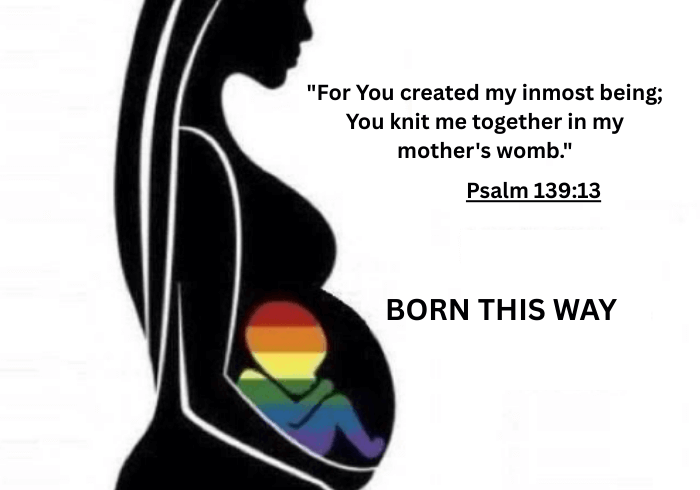
I never blamed the community. There were times when I felt they could be insensitive or dismissive toward people who were homosexual, but I also understood that their views were shaped by their beliefs and experiences. If I expected respect and understanding from them, I felt I had to extend the same in return.
I tried to take responsibility for changing who I was, believing that if I just had enough faith or discipline, I could overcome the conflict within me. But no matter how hard I tried, I couldn’t simply change. In my prayers, I often said, “I trust You. I love You." "I believe the plans You have for my life are better than anything I could plan for myself.”
For a time, I attempted to silence the inner voice that reminded me of my struggle. I avoided situations that forced me to confront it, hoping that distance would bring peace. Sometimes this worked, at least on the surface. Other times, the guilt returned just as strongly, leaving me emotionally drained. There were moments when I felt as if God was allowing me to wrestle endlessly without relief, and I didn’t know how to make sense of that.
Many nights ended in tears. I felt discouraged and confused, questioning how love and suffering could exist together. Yet I never completely lost my faith. I continued studying the Bible, and often I would come across passages that renewed my strength and reminded me that I was not abandoned. As I spent more time reading and reflecting, I began to notice something that both comforted and challenged me.
Many passages in Scripture do not condemn homosexuality, and quite a few that point in another direction entirely, toward love, covenant, faithfulness, and inclusion, without addressing sexual orientation at all.
At the same time, I also came to understand an important truth: the Bible does not contain a verse that explicitly says that same-sex relationships are approved or formally blessed.
However, this is where much discussion happens. There are verses that many Christians believe do not condemn loving, committed same-sex relationships, because they argue those passages refer to specific practices (like exploitation, idolatry, or abuse) rather than modern consensual relationships.
Here are the main passages often discussed in the Old Testament - Leviticus 18:22 and Leviticus 20:13. These verses prohibit a man lying with another man “as with a woman,” and the two of them shall surely be put to death; their blood is upon them. At the same time, I wrestled honestly with the passages most often used to argue the opposite. Some theologians believe Paul may have been referring to exploitative relationships such as temple prostitution, abuse, and pederasty, not lifelong consensual partnerships. The cultural context of the Roman world was very different from lifelong, loving partnerships as we understand them today.
The concept of the New Testament, as seen in passages often cited, such as Romans 1:26–27, 1 Corinthians 6:9–10, and 1 Timothy 1:10, is viewed as condemning same-sex sexual behavior in traditional readings. Progressive theologians argue that the Greek words used (such as arsenokoitai and malakoi) are subject to debate.
At the same time, I wrestled honestly with the passages most often used to argue the opposite.
What became increasingly clear to me was that nowhere in the Bible are there any verses that directly address homosexuality in the modern sense of orientation or loving, same-sex marriage. Some Christians point to broader biblical themes instead and refer to 1 Samuel 16:7, where God does not look at people based on outward appearance or physical stature, as humans do, but rather looks directly at the heart.
Nothing can separate us from the love of God. (Romans 8:38–39). These verses don’t speak about homosexuality specifically, but they are often used in arguments about inclusion and grace. So the honest answer is: There is no explicit Bible verse that affirms same-sex sexual relationships. There are a handful of verses traditionally interpreted as condemning same-sex acts. There is significant theological debate about how those verses should be understood today. These truths do not resolve every theological debate, but they create a framework centered on grace rather than fear.
One of the most striking realizations for me was that Jesus Himself never mentions homosexuality in the Gospels. What He does speak about, repeatedly and consistently, are themes of love, mercy, and the danger of judgment. He emphasizes loving one’s neighbor (Matthew 22:37–40), choosing mercy over sacrifice (Matthew 9:13), and confronting hypocrisy and exclusion (Matthew 23). When He summarizes the entire law, He says: “Love the Lord your God with all your heart and with all your soul and with all your mind. This is the first and greatest commandment. And the second is like it: “Love your neighbor as yourself. All the Law and the Prophets hang on these two commandments.” (Matthew 22:37–40).
I also noticed how Scripture describes love itself. In Paul’s well-known words about love being patient, kind, and not self-seeking, there are no gender qualifiers. The focus is not on who may love, but on how love should be lived: with integrity, humility, and care for the other. That shifted my perspective from categories to character.
David’s lament for Jonathan speaks of a love he described as surpassing that of women, again without rebuke or correction. Whether these relationships are read as romantic or not, the text itself honors deep same-gender bonds without any condemnation, correction, or divine rebuke. In 2 Samuel 1:26, David says to Jonathan: “Your love for me was wonderful, more wonderful than that of women.”
Ruth and Naomi had a covenantal devotion The relationship between Ruth and Naomi is often cited because of its depth and language of lifelong commitment: “Where you go I will go, where you stay I will stay… your people will be my people, and your God my God.” (Ruth 1:16) and in verse 17, she promises, "Where you die, I will die, and there I will be buried". Whether read as romantic or not, Scripture clearly celebrates a same-gender bond without moral anxiety or warning.
So I found myself living with a tension that was both unsettling and strangely freeing. On the one hand, no verse explicitly affirms same-sex relationships. On the other hand, there are only a handful of passages interpreted as condemning same-sex acts, and even those are the subject of deep and ongoing theological discussion.
In the quiet of my cell, this realization did not give me all the answers, but it gave me something just as valuable: room to breathe, to keep searching, and to believe that my relationship with God could exist within questions rather than only within certainty.


Certain relationships in the Bible further complicated the simplistic narratives I had grown up with.
1 Corinthians 13:4–7, Paul doesn’t say who is allowed to love, only how love should look. He says: “If I speak in the tongues of men or of angels, but do not have love, I am only a resounding gong or a clanging cymbal. If I have the gift of prophecy and can fathom all mysteries and all knowledge, and if I have a faith that can move mountains, but do not have love, I am nothing. If I give all I possess to the poor and give over my body to hardship that I may boast, but do not have love, I gain nothing.
Even in my uncertainty, I held onto the belief that God loved me despite my inner conflict.
My prayers became constant and deeply personal. I asked God to guide me, to help me understand what was true, and to give me clarity through His Spirit. I also prayed about Bari. I asked if it was part of God’s will that we would remain together. And if not, I trusted that somehow I would receive the clarity or direction I needed to accept whatever lay ahead.
........To be continued
That’s a wrap for this post… I’d love to hear what you think! 💬 Comment below.

Author: Elmarie Heckroodt
Stay informed! A new chapter is released every week.
"Section 4 of Jailtime“ continues and will arrive in your email next week.
Keep an eye on your inbox so you don’t miss it.
© 2025 Elmarie Heckroodt. All Rights Reserved.