
Jailtime - Part 12 (Section 6)
No one saw the battle within me, but every day I chose to endure it.
Bari had been gone for just over a month. The sharpness of that day, the suddenness of her disappearance had begun to fade, but it had not disappeared. What remained was a dull, constant awareness of disbelief, accompanied by a quiet sorrow and an unrelenting sense of longing.
Some days were manageable. On others, the emotional weight felt unbearable: so overwhelming that I found myself wishing I could remove my heart entirely, place it somewhere far beyond reach, and escape the pain that came with feeling.
Yet, outwardly, I coped. No one around me knew the extent of what I was carrying. I had learned to contain it, to function despite it. The only real comfort I held onto was the quiet, unwavering sense that Bari still loved me. I could not explain it, but I felt it constantly. And although the pain had not left me, that belief gave me enough strength to keep going.
Prison life did not slow down to accommodate personal loss. It continued relentlessly, moving forward with the same harsh rhythm. Around me, frustration and anger were constant companions for many inmates. We were trapped in cycles of resentment and helplessness: we all felt it. The unfair treatment, the humiliation, the emotional strain, and at times even physical assaults, formed part of daily life.
There were moments when I felt an urge to challenge it, to stand up, to force change, to make someone care. I wanted to make things easier for those who would come after me. But each time, my father’s words returned with quiet certainty: “You can’t change the system on your own.”
Those words did not bring comfort. They brought frustration. A deep, restless frustration that had nowhere to go.
In those moments, I turned to prayer. “Lord, please help me… please help us all.”
There were moments when the darkness came dangerously close. Thoughts I had never imagined entertaining again began to surface: of ending the pain, of escaping it entirely…suicide…The means were there, easily accessible. It would not have been difficult.
But I did not act on those thoughts, even though very tempting.
Somewhere within me, I still believed there was a purpose for my life. And I believed, without question, that Bari still loved me. That belief steadied me. It gave me a reason to endure.
What made it difficult, however, was the isolation of that belief. I had no one to share it with. To others, what Bari and I had shared was dismissed as temporary: just another prison relationship that would eventually fade. I knew they were wrong.
Whether she could hear me or not, I did not know, but I needed to believe that somehow, she could. After praying, I would eventually fall asleep.
And each morning, I woke with the same bitterness and anger toward those responsible for her transfer. The urge to act on that anger, to “even the score”, was strong. I had the courage and determination to do it. But something always held me back. A quiet restraint. A voice that reminded me, again and again, to wait. To be patient.
A month after my outburst toward the staff member, I was called to a disciplinary hearing. The outcome was as expected, yet still difficult to accept. I was sentenced to 30 days in isolation and demoted from an A-group inmate to a B-group inmate.
The demotion carried consequences that affected me far more than the isolation itself. It meant I no longer qualified for contact visits.
I would no longer be able to sit next to my mother. I would no longer be able to hold her hand.
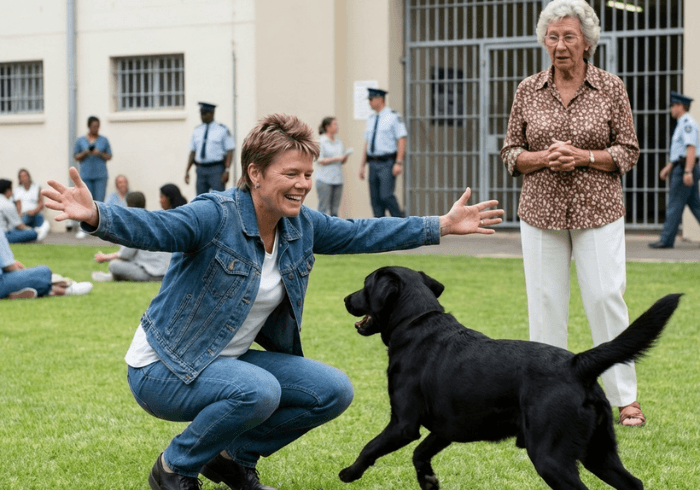
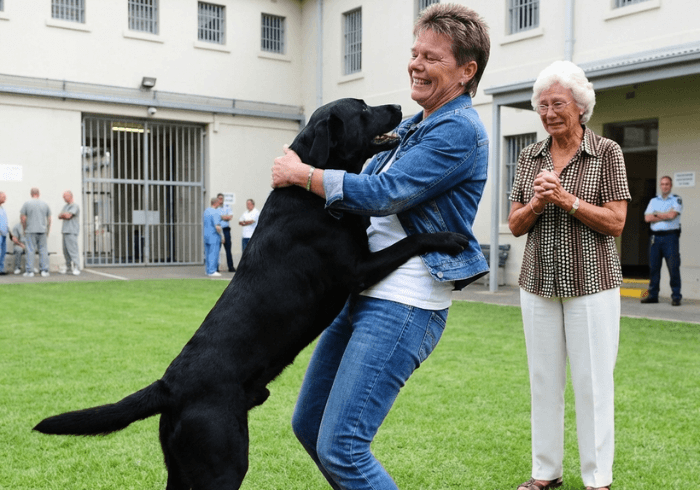
It meant I would have to see my mother through a glass partition again, and just as painfully, it meant I would not see Nuska, my Labrador. My constant source of comfort. My connection to something pure and loyal outside those walls. My mother had cared for her while I was incarcerated, and during my time as an A-group inmate, she had brought Nuska along on visits. Those moments had meant more to me than I could ever explain. That too was taken away.
I was not allowed to tell my mother in person. Instead, I was granted a single telephone call of ten minutes. That’s it. Telling her was one of the most difficult conversations I had to face.
When I heard her voice, I tried to remain composed, but the weight of everything I had to say pressed heavily against me. I explained the outcome of the hearing, what the demotion meant, and how our visits would now be restricted to speaking through a glass partition again.
I knew what those visits had been like before: the distance, the inability to touch, the emotional strain it placed on both of us. I could not bring myself to put her through that again, not after everything she had already endured.
There was silence on the other end. Then I heard the devastation in her voice. She begged me to behave. Pleaded with me not to make things harder for myself. And at that moment, something in me broke.
“I’m sick and tired of being a target because of my sexuality,” I told her. “I’m tired of the degrading, humiliating, and derogatory comments about who I am.”
She tried to comfort me, to steady me, but I could feel myself slipping beyond reassurance.
“Mom,” I said, my voice heavy with exhaustion, “I can’t deal with this anymore.” The words came from a place deeper than frustration. They came from fatigue and from carrying too much for too long.
I knew what those glass visits would do to her. I knew the emotional toll it would take on both of us. And so I asked something that went against everything I needed as a daughter. I asked her not to visit me. Just for a month. Not because I did not want to see her, but because I did. Too much. I just could not bear to watch her sit on the other side of a barrier again, unable to reach me, unable to comfort me.
It was one of the few decisions I made entirely for her sake.
When the call ended, I was left with a silence that felt heavier than before.
Returning to isolation, I withdrew even further into myself. I had expected punishment for my actions, but I could not ignore the growing sense that there was something more behind it: that my sexual orientation made me a target, something seen as threatening, something to be controlled. I did not fully understand it, but I felt it.
It was as though I had been set apart: not only physically, but in every other way as well. I began to feel like a stranger to myself. The person I had been before felt distant, replaced by someone more serious, more guarded, and the loneliness deepened.
Nights were the hardest. I lay awake for hours, often with the overwhelming sense that I was surrounded by judgment, by hostility, by something I could not escape. Coping became a daily challenge. My mind, however, never stopped.
It became the only part of me that remained free, even in isolation. Thoughts became relentless: memories, questions, imagined futures. I revisited my past repeatedly, examined my present, and feared what lay ahead.
Time felt distorted. An hour could feel endless, yet my mind filled every second with thought. There was no escape from it. In that silence, a person is left with only two options: to adapt and learn to cope, or to lose themselves completely.
I chose to endure, and that was when I decided to put my emotions and experience on paper. I started writing, something I thought I wasn't good at, but once I started, I couldn't stop. The ink literally started flowing. In the back of my mind, I thought: "Oh well, let me try "pushing pen on paper"...maybe one day it will become a testimony for someone who needs to read it."
Meanwhile, I prayed constantly. And through it all, the thought of Bari remained my anchor.
At times, I tried to understand why I was being treated the way I was. I questioned whether it was because I was different. After all, I did not think or live as others did regarding humanity and regarding treating all people equal, despite their sexual orientation, religion, or color.
In prison, inmates were graded like food: A-grade, B-grade, or rotten, much like one would be graded in the outside world: upper or lower class.
I knew, without doubt, that I was born this way. There was nothing I could do to change it. And yet, it often felt as though that alone made me a target. The injustice was difficult to carry.
What made it worse was the complete absence of escape. There was nowhere to go. Nowhere to hide. Only the reality in front of me, and the strength I had to find within it.
During the time I have spent in isolation, I was allowed to go to the tuckshop. One day, I went there, not really needing anything, but just had a chocolate craving, something I haven’t had in months.
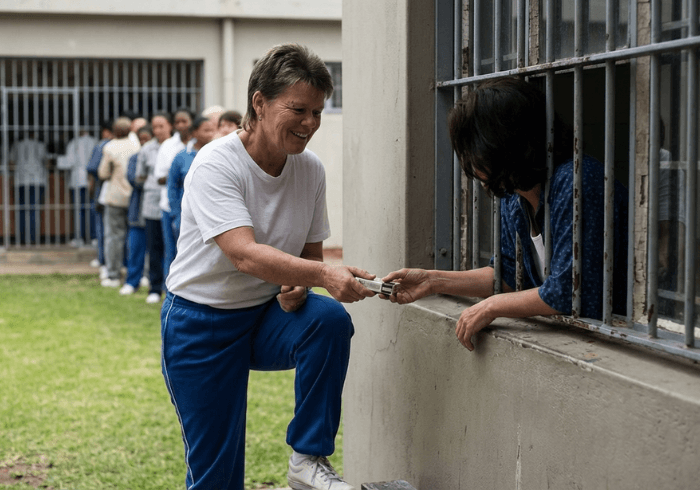
The tuck shop area opened into a very small courtyard, and directly opposite it were the cells that housed maximum-category prisoners. As I stood in line, waiting for my turn, I heard a voice of someone calling out to me from behind the bars. It was an unfamiliar voice, yet vaguely familiar.
When I turned to look, I saw her. It was a face I would never forget. The face of something similar to a caged bird that hasn't been let out in years.
I had noticed her before in passing down the main corridor, but this time was different. This time, I allowed myself to look, really look, without fear of being reprimanded, without Bari scolding: “Stop looking at other women.”
With Bari gone, there was no one watching my every movement, no one questioning where my eyes lingered. During our time together, I had become acutely aware of her jealousy and possessiveness. Even the smallest interaction with another woman could lead to conflict. Now, for the first time since her sudden transfer, I felt a sense of freedom in something as simple as a conversation.
I approached the cell window, and we began to speak. For the first time since Bari had left, I felt completely relaxed in talking to another woman.
There was something about her presence that immediately stood out to me. A quiet softness. A vulnerability that contrasted sharply with the harsh environment around us. In that moment,
I found myself drawn to it, wanting, even if only briefly, to be part of something that felt gentle and human in a place that so often stripped inmates of both.
She hesitated before asking, “Is it possible for you to buy me a packet of cigarettes? I’ll give the money back at a later stage.”
I agreed without any thought. It felt like a small, simple act. Something I could do for someone who had the look of desperation in her eyes. After purchasing the cigarettes, I handed them to her quickly, offering a brief smile before walking away.
The warden who accompanied me to the tuckshop was already calling my name to return to my place of isolation.
There were strict rules in place. Minimum-category prisoners were not allowed to interact with maximum-category inmates. Even a quick exchange of anything could lead to consequences, so I did not linger.
The difference between minimum and maximum prisoners is based on the following, and I quote from research on Google: "In South Africa, the difference between minimum and maximum category prisoners is based on a security risk classification system that determines their housing, supervision, and rehabilitation privileges.
Minimum security prisoners are considered low-risk, non-violent offenders focused on reintegration, while maximum security prisoners are high-risk individuals often serving long sentences for violent crimes.
Minimum Security Prisoners
Offender Profile: Individuals with shorter sentences, low risk of escape, and non-violent crimes.
Conditions: These prisoners are often housed in dormitory-style accommodations rather than single cells.
Privileges: They have more freedom of movement and often participate in community-based work programs (work camps) or attend classes outside the facility.
Goal: Focus is on reintegration into society and rehabilitation.
Maximum Security Prisoners
Offender Profile: High-risk inmates who have committed serious or violent offenses (e.g., murder, armed robbery) and have long sentences, including life imprisonment.
Conditions: Housed in single cells, usually in secure facilities, often located in remote areas.
Privileges: They have strict limitations on movement, minimal access to outdoor activities (often in caged courtyards), and face extreme social isolation.
Risk Mitigation: They are considered too high a risk to work in outside workshops.
Key Distinctions
Rehabilitation Opportunities: Minimum security prisoners can work outside and engage in vocational training, whereas maximum security inmates are often too restricted to participate in work programs, according to some reports.
The "Irony" of the System: Research has noted that in some cases, maximum security prisoners (due to having very long sentences) may eventually gain privileges, while those with very short sentences in lower security may be released before earning such benefits.
Offenders are classified upon admission using the Admission Security Risk Classification Tool and are reclassified biannually based on behaviour changes.” No, I did not have access to the internet while incarcerated. The above research was only gained once I was released.
By the time of that brief interaction at the tuck shop, I had already been aware of Micky’s existence for several months. I had noticed her long before Bari left, and from the very beginning, there was something about her that I liked, something I could not fully explain at the time.
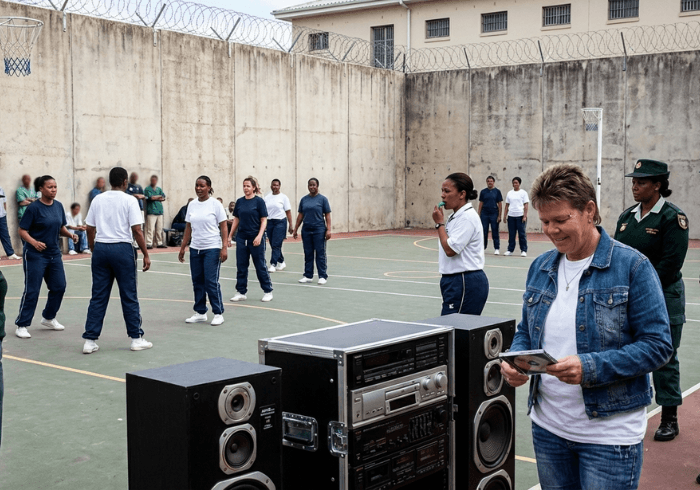
I recalled a specific day when the prison netball team played a match against an outside team from Worcester. It was a rare occasion where maximum-category prisoners were allowed to mix with medium-category inmates as part of a structured recreational and rehabilitation program.
Bari was the referee that day, and I had been given responsibility for the music.
I needed a two-point plug for the hi-fi system. After asking around, another inmate told me that Micky had one. I was aware of Bari watching me as I approached her. That awareness dictated my every movement. I knew I could not afford to linger or engage in unnecessary conversation. I also knew that not only Bari’s eyes, but some wardens and inmates were watching my every move.
During our relationship, I had learned to be very cautious. I was not allowed to speak to or even look at other women without it becoming an issue. Even something as simple as a friendly smile could be questioned. Bari would often ask, “Why are you smiling at that woman?” We were a small “community” of women, approximately 200 of whom there were only 4 white women, the rest were black and coloured. And I’m not mentioning this because I am a racist; in fact, I was not brought up being racist at all, which is why I was in a relationship with a coloured inmate at that stage.
However, Bari’s behaviour confused me. She had told me many times that she trusted me and believed in my commitment. Yet her actions often suggested otherwise.
When I approached Micky that day, I kept the interaction brief. I asked for the plug, thanked her, and walked away.
Afterwards, Bari was furious. She believed I could have asked someone else. In her view, there had been no reason for me to approach Micky specifically. What had been, to me, a simple and practical exchange became the source of an argument that lasted the rest of the day.
She made it clear that she did not want me near Micky again.
In retrospect, I know why…Each year on Women’s Day, the Department of Correctional Services hosted a “Miss Worcester” competition as a light-hearted recreational event for inmates. It was an opportunity for participants to express themselves and momentarily step outside the constraints of daily prison life.
Micky stood out consistently in this competition, having been selected as “Miss Worcester” for three consecutive years: an achievement that reflected not only her presence but the impression she made on both inmates and wardens alike.
By the time three months had passed since Bari’s transfer, the intensity of our relationship, once a constant and reassuring flame, had dimmed, not because of a lack of feeling, but because of the cruel distance imposed between us. After her sudden transfer, all direct contact was cut off. There were no letters, no calls, no chance to see one another. Every attempt to maintain our connection had been systematically obstructed, a barrier neither of us had anticipated.
The only “contact” we had during that time was indirect and fleeting. Whenever an inmate was transferred from Worcester to Pollsmoor, Bari would ask about me, and I would do the same when a new inmate arrived from Pollsmoor. Questions were carefully phrased, observations cautiously shared. Every report I received was the same: “She is doing well, working permanently in the hair salon, but she is not involved in any relationship.” These small scraps of information were all I had to cling to, a fragile lifeline across the vast void between us.
Even without letters or real communication, the emotional strain was overwhelming. Bari’s absence left a hollow ache I could neither express nor share out loud. Her presence had been a source of comfort, a chain to sanity in the chaos of prison life, and now that chain was gone. I tried to carry on, to endure the daily routines and the relentless scrutiny of the system, but every moment was punctuated by the quiet despair of not knowing, of not being able to reach out or be reached.
In this silence, I wrestled with a whirlpool of emotions: frustration at the inhumanity of the rules designed to keep us apart, anger at the cruelty of authority, and longing for the love that had been abruptly removed. I clung to the hope that she was safe, that she was still herself, still holding onto the same affection I knew she had for me. But the enforced distance made even that small hope feel doubtful, a thread stretched across a void I could not bridge.
During those months, I realized just how meticulously the system controlled every aspect of our lives. It wasn’t only the physical walls and barred windows that separated us: it was the deliberate withholding of communication, the careful monitoring that ensured our bond could not survive in the open, at least not while incarcerated.
Every indirect update from transferred inmates reminded me of the invisible cage around us, and of the fact that even love could be policed, controlled, and suppressed. Yet despite it all, I held onto the certainty that Bari’s love endured, even if we could not share it. But inside prison, the human mind can only tolerate so much and not anymore. Your entire being eventually tells you to continue, to stop holding on, to stop believing in something you know will never happen. Eventually, I ended the “non-existing” relationship and knew that Bari would soon receive the message via another inmate.
Yet, life inside the prison continued, unrelenting. During this time, I ran into Micky a few times, either in the main corridor leading to the Head of prison and warden's offices or to the tuck shop. Although I did not yet know the full depth of her story, her presence always struck me.
There was a softness and vulnerability about her that drew me in, a quiet strength hidden beneath the strict confinement of prison rules. A tenderness in every interaction, a quiet curiosity as we discovered more about each other.
Despite the barriers imposed by prison rules, the distance that separated us, and the limited opportunities to see one another, our connection grew with remarkable speed. Moments together felt effortless, almost natural. At first, our interactions were small: brief exchanges at the cell window bars, small favors like giving her a packet of cigarettes or a chocolate, but those interactions carried the warmth of a genuine connection.
At that time, I became aware that she didn’t receive regular visits. Her mother would visit her once in a while, maybe every four to five months, and would only deposit R10.00 into her monthly allowance. Being the daughter of a German Baron, she was completely outcast by her family.
It didn’t take long before I realized that I was deeply in love with Micky. With each passing day, I discovered more about her character. She didn’t belong in a place like that. Her eyes revealed layers of grief and resilience, the kind that spoke of survival through hardships I could hardly imagine, a vulnerability that seemed to demand care rather than punishment. I was only beginning to comprehend the scars from her past, and therefore, the reason I couldn’t help but be drawn to her.
I didn’t want to frighten her, and I certainly didn’t want to make myself look foolish or vulnerable, but her presence was magnetic. Her beauty wasn’t superficial; it radiated from within, just as much as on the outside. She carried herself with a humility that contrasted sharply with the harshness of the prison environment, and yet there was a beauty there, a light within that felt rare and untainted.
Slowly, the bond deepened. I found myself trusting her in ways that were unthinkable just weeks before. By the time she was reclassified as a medium-security prisoner and placed in my cell, the connection between us had deepened into something intense, something that went beyond just friendship.
Micky shared with me fragments of her past: lessons learned from pain, betrayals endured, and love lost in ways that left scars visible in her eyes. She spoke of love and loss, of hope and betrayal. She had loved deeply before, only to have that love destroyed through abuse and betrayal. Every story she told, every glimpse she offered into her life, deepened my admiration and affection for her. I felt drawn to her authenticity, her ability to be sincere even in the face of suffering. And in those moments, I realized that I was falling deeper in love, not only with the woman she appeared to be, but with the strength, vulnerability, and honesty that lay behind her eyes.
Her first deep love, her husband, the man she had believed would bring her lifelong happiness, had turned into a source of torment. His physical and sexual abuse had destroyed her dreams, shattered the life she had envisioned for herself and their two sons. She had been forced to navigate a marriage riddled with infidelity, living alongside mistresses she never consented to, until the abuse and humiliation became unbearable.
She described the impossible choice she faced: to file for divorce and risk her life, or to end the life of the man who had destroyed her. She chose the latter. As she recounted her story, the pain and trauma she had endured became visible in her expressive brown eyes. I could see the weight of her experiences etched into her features, yet there was honesty in her voice that commanded respect. In those moments, I felt closer to her than I had felt to anyone in years. It was a different closeness than what I have experienced with Bari. Maybe it was because I could relate to the betrayal, the infidelity, the abuse. I admired her courage and sincerity. At that time, I believed with all my heart that what she shared with me was the truth.
It wasn’t until eighteen years later that I would learn the full reality of what had transpired in her past. But in prison, confronted with the vulnerability she entrusted to me, I accepted her words as genuine, and my feelings for her deepened with every passing day.
Yet, as our relationship began to blossom, the constant oversight of the authorities never ceased. The same forces that had kept me from Bari now scrutinized Micky and me. Our interactions were monitored, our intentions questioned, and within two weeks, the authorities acted to separate us, each into a different communal cell.
Even so, what had begun in stolen moments at cell window bars and brief encounters would leave a lasting impression on me, shaping my understanding of love, trust, and human connection even under the most oppressive circumstances.
The following excerpt is taken from a newspaper clipping from the time. Names and identifying details have been altered to protect the privacy of those involved.
"For two years, Micky got away with murder. In the nineties, thirty-one-year-old Micky found herself trapped in a marriage that bored her to tears. Her husband, Ben, was a technician in Mpumalanga province.
She was the daughter of a German baron who lived in Tulbagh in the Western Cape. There are striking differences between picturesque historic Tulbagh and the industrialized area where she lived. Tulbagh is a quaint little town, nestling among vineyards and framed by majestic mountains, with a lively winefarm community.
Her residence, on the other hand, was a dusty town built around power plants. The earth is flat, brown, and featureless, and the town does not offer much entertainment, apart from the casino, where one may be too easily recognized.
The noble-blooded Micky sought relief from her boredom much closer to home. As a matter of fact, she found it right across the street in the form of twenty-eight-year-old Pieter.
Scarcely had her husband and children left home in the morning, Pieter would arrive to find Micky waiting for him in bed. When Ben worked night shifts, Pieter would keep his wife company, despite the presence of her sleeping children, 9 and 12 years old at the time.
Their affair began in August 1993. Pieter later recounted that their sexual relationship went hand in hand with smoking dagga. Micky told Pieter that Ben abused her and that it was time to get rid of him. She had it all planned and just needed Pieter to help. She allegedly said that Ben had refused to grant her a divorce. Pieter testified that he had refused to help her on six separate occasions.
On the night during the same year, Micky laced her husband’s drink with sleeping pills. When Pieter arrived, Ben was sleeping soundly. The time had come for getting rid of Ben, but not before the couple had first engaged in a sex and drugs orgy.
Micky and Pieter entered the main bedroom, and Micky sat on Ben’s legs, while Pieter pushed a dishcloth down his throat and smothered him with a pillow. While she was sitting on her struggling husband, Micky’s nine-year-old son walked into the bedroom and asked what was going on. She told him that his father was having a heart attack and they were trying to assist him. She sent him back to bed.
Ben regained consciousness and promised Micky he would divorce her if they spared his life. But the lovers continued relentlessly until there was no life left in his body. They carefully placed the container of sleeping pills in his hand, trying to make it appear to have been a suicide. Micky had carefully planned her alibi. Earlier that night, she had called her friend Susan Potgieter and told her that her husband was lying on the bed and she could not wake him up. At about half-past eleven, she called again, telling Susan that something was seriously wrong with Ben.
Pieter left after the murder and called the ambulance service. Ben was taken to the hospital, with a hysterical Micky in tow. At the hospital, one of the nurses heard Micky’s last words to her husband. She said: “Fuck you.” The cause of death was given as heart failure; no one suspected murder.
During the funeral, there were several incidents that raised suspicion among friends and family. The young son was stony-faced, showing no emotion. Pieter found it difficult to enter the church and would not approach the grave. Micky refused to drop a red rose on her husband’s coffin.
A week after the funeral, Micky confessed to her friend Susan that she and Pieter had killed Ben. For reasons known only to herself, Susan kept quiet about it.
Soon after the murder, Micky became bored with Pieter. She dumped him and began relationships with several other men. Pieter was distraught and bewailed his fate to Micky’s sister-in-law, Amelia. He told her that he had been good enough to assist Micky in killing her husband, and now she was cheating on him. Strangely, Amelia did not inform the police either, despite her husband, Micky’s brother, being a police officer. Later, during the trial, her brother admitted that Micky had told him about the murder.
The town where Micky was residing was becoming too claustrophobic, and she moved to Tulbagh, where she began another relationship. After a year, she had the man prosecuted and convicted for abusing her. But Micky had made two mistakes. First, in a moment of passion, she had confessed to this man that she had participated in Ben’s murder, and secondly, she did not bargain on his taking revenge. It was two years after the murder that the man, on his release from prison, told the police what he knew about Ben’s murder.
Micky and Pieter were arrested. Pieter claimed he could not remember anything, and Micky refused to speak. But while she was in prison, awaiting sentencing, she wrote a letter to a man she had met in prison, confessing to the murder, but apportioning most of the blame to Pieter. She even admitted that she had told her family of the murder before she moved to Tulbagh. She said that she had never been strong enough to embark on divorce proceedings.
A former friend of Micky’s, Elzaan Du Plessis, testified that Micky had complained that Ben had abused her for almost eleven years. She often expressed the wish that he would die. After his death, she laughed hysterically about it.
In April 1997, Micky’s claims of abuse were rejected. Pieter had two previous convictions for burglary and attempted theft. Both were sentenced to twenty-five years' imprisonment.
What is interesting in this case is that Micky admitted that she did not have the strength to file for divorce. Her allegation that Ben had refused to grant her a divorce was therefore untrue. Perhaps he would have divorced her, and it was not necessary to kill him to be free. Was Micky prepared to endure eleven years of abuse instead of asking for a divorce? Surely her policeman brother and influential father would have helped her if she had wanted to leave Ben.
It is appalling that Micky’s son had to testify that he saw his mother killing his father. He was only nine years old when the incident occurred. Now he has no father, and his mother is in prison."
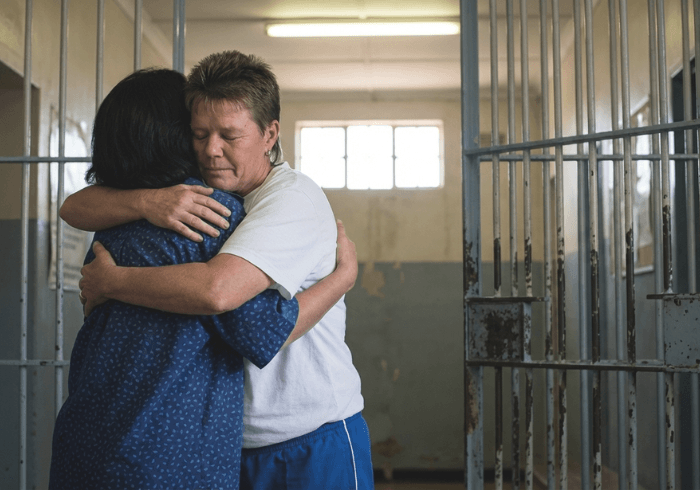
In the early hours of the morning, the night after her birthday, I quietly slipped into her bed. The prison was still, wrapped in a silence that made the moment feel almost unreal. “I’ve never met anyone like you,” I said softly, wanting her to understand the depth of what I felt. (Yes, I know it’s an old and nerdy line, but that’s the only line I knew at the time.) I mean, it’s not like I could ask her on a coffee date at some corner cafe or a fancy dinner restaurant.
At that moment, a question lingered in my mind: one that carried both hope and fear. Was it truly possible to fall in love in a place like this, again? Could something so genuine exist within walls designed to suppress connection? And even if it could, was it something we could trust… something that could last beyond these circumstances?
I felt a tremor of uncertainty, my body tense with the weight of those thoughts. I was afraid to let go of her, afraid that this moment might disappear as suddenly as it had come, leaving me to wake up to emptiness. But this was no illusion. It was real. I could feel it in the closeness between us, in the quiet certainty that settled beneath the surface of my doubt. I could feel the reality lying underneath my aching body.
I was so scared to let go of her, scared that I might lose this precious moment forever and wake up to discover that it had only been a dream. But, it wasn't, it was so real andI drew her closer, holding her as if anchoring myself to something steady: The gentle force almost took her breath away. When I kissed her, there was no hesitation, only a shared understanding that this was something we had both been moving toward for a while.
We have been waiting for this moment for quite some time. “I’ve wanted to be close to you like this for a long time,” I whispered, my voice unsteady but sincere and vibrating with passion. “You’ve been wanting the same, haven’t you?” She responded with a quiet nod, her expression carrying both innocence and a hint of mischievous awareness. In that moment, words were no longer necessary. What mattered was the connection we felt: something unspoken yet deeply understood.
This was her first same-sex relationship in her entire life. She would have admitted to anything to keep this precious moment lasting forever and to allow me to continue doing what I was busy doing. We held onto each other, finding comfort in a closeness that went beyond the physical. It was as though, for a brief moment, the weight of the past, the pain, the loneliness, the uncertainty had been lifted. All that remained was a sense of belonging, of being seen and accepted without condition.
Gently, we stripped each other’s clothes off, our breathing uncontrollably audible. Although we were two bodies, our hearts were beating as one. We were inseparable for the moment, emotionally and physically. We surrendered to the desires of our hearts and couldn’t stop loving each other. All we wanted to do was to bury the tears from the past, the pain, the loneliness, and experience the love that had brought us together.
We were touching and caressing each other gently, and small moans erupted from our trembling lips as the hunger for more became almost unbearable. Her lips were even warmer and more passionate, and the softness she had within was just as soft as the touch of her skin. The warmth of her tongue was driving me crazy, driving me beyond a point of any control as I was lying entangled in her naked body. “I love you,” I whispered passionately, the words carrying more meaning than I had ever given them before.
“I love you too”, the words smothered in her mouth as I pressed my lips hard, but gently, onto hers. I couldn’t stop caressing, holding, and kissing her, and I felt weak from touching the wetness between her legs, feeling her inside of me, and we didn’t want this precious moment to ever end. We stayed like that for a long time, holding onto the moment, neither of us wanting it to end. When it finally did, she wrapped her arms around me and whispered, “I feel like I can face anything now. What we have… it’s something rare. Something that can’t be explained.”
Eventually, we helped each other get dressed. With one last gentle kiss, I returned to my own bed, carrying the weight and the warmth of what we had just shared. Now, you might be wondering: How on earth did we manage to have any privacy in a communal cell filled with other inmates? The answer lay in something as ordinary as a sheet, which soon took on an entirely new purpose beyond simply lying beneath it.
As you know, all the cells were stacked with bunk beds, and the bottom bed became our private space in moments of intimacy. Privacy was created by draping two sheets on either side of the bunk, tucking them tightly under the mattress of the top bed, effectively forming makeshift curtains. Within this temporary sanctuary, we could share moments that otherwise seemed impossible in such a crowded environment.
Even with the sheets drawn, vigilance was crucial. We relied on a “look-out”: an inmate positioned to monitor the cell window during the wardens’ hourly night-shift rounds. When the warden appeared through the main gate leading into the cell courtyard, the look-out would signal us with a sequence of coughs: two short coughs, a brief pause, and then three short coughs. In exchange for this service, the "look-out" would receive small tokens such as tobacco, sugar, coffee, and Cremora milk powder. Typically, the look-out was someone who never received visits, ensuring they had little reason to exploit or betray our trust. Yet, despite all precautions, there were always the jealous “pimps”: inmates who took it upon themselves to monitor relationships and ensure that one of the two involved would be transferred to another cell to prevent closeness. Every moment of intimacy was a delicate negotiation between secrecy, trust, and the constant threat of disruption.
A week after Micky was moved to another cell, and four months after Bari’s transfer, I asked her to enter into a relationship with me. She didn’t hesitate. Her answer was immediate: “Yes.”
I wanted her to understand who I was at my core. I told her that I found meaning in giving, in sharing, in offering care without expectation. I reassured her that I would never intentionally hurt her.“I accept you as you are,” I said, looking directly into her eyes. “I won’t place demands on you. I will share your happiness with you and stand by your side in your pain. I will always be there when you need support, but if you need space, I will respect that too.”
I needed her to see that these were not empty words. They came from the bottom of my heart, a place of sincerity, shaped by everything I had experienced up to that point.
She sat quietly for a moment, almost overwhelmed. Then she said, “I am the happiest woman in the world. And I want you to know that I will always love you and be there for you.”
There was something deeply genuine about her response, something that made me want to hold onto her even more.
“You are beautiful,” I said softly, as I gently touched the back of her neck. I looked into her eyes and slowly began to pull her mouth to mine, searching for reassurance, and found it there. When I kissed her, it was not driven by impulse, but by certainty, a quiet understanding that my heart fully belonged to her.
When I pulled back, I took her face between my hands and looked deep into her eyes. She had a hunger and gentle expression in her eyes, and my only desire was to make love to her right then, but we both knew that it was impossible at that moment.
As our relationship developed over the following months, so did the depth of our connection. What we shared was not fleeting or superficial. Every time we made love, it was like a new experience. Each moment together carried significance, shaped by everything we had endured individually and together.
When we were in each other’s presence, there was an intensity that came from knowing how easily it could all be taken away. Our bond was shaped by loss, fear, and a deep need for something genuine in a place where very little felt authentic.
Everything about her felt different. She embodied qualities I had longed for but never truly found: understanding, sincerity, and emotional depth. The relationship we built was unlike anything I had experienced before. Maybe I had it with Lizette, but memories of her were becoming very vague.
She brought a sense of meaning into my life, even within the confines of prison. In a place defined by limitation, she created moments that felt expanded. In a life marked by hardship, she introduced a sense of beauty I hadn’t known was still possible. And in loving her, I discovered a part of myself that I hadn’t fully understood until then.
She etched into my life the rainbow of her love and awakened me to the riches and beauty of all days. I experienced everything to be different with her. What she thought, what she felt, the way she did certain things, the way tears ran down her cheeks when she cried, the way she laughed when she was happy, the way she responded when we made love, surprised me every time, and then I would realize again how much I really love her. It was as though we were born for each other and only waited to meet in prison. We dreamt about our future life together and shared excitement when we talked about “our home”. We dreamt about carefree days along the beach, lovemaking moments beside a fireplace, and yes…we even discussed marriage.
But all those dreams and goals still had to wait a long time, and we both knew it. And thinking like that in prison was dangerous…there’s always a constant uncertainty…an uncertainty that made you feel as if you could climb the walls. In spite of all the uncertainties, there was undeniably a very strong, tender, and beautiful emotional bond between us. It was a relationship that was built on mutual tenderness, where no unpleasantness existed.
Members and fellow inmates would notice it too and became rude towards me, not towards Micky, in an unbearable way, because in prison, no one granted anyone else any happiness at all. I tried to visualize myself in different conditions because I was really tired of being the victim of my own sexual orientation, but I couldn’t.
The reality of prison life was too overwhelming, but in the midst of all the inhuman conditions, another thought entered my mind. Somewhere, sometime, over the past few months, Micky and I were placed on this line. I don’t know what line it was, all I know is that we had to be the brave ones for our relationship to survive; we had to persevere in being brave because people would do anything in their power to destroy people like Micky and me.
Fortunately for us, our relationship consisted of every characteristic that a strong and committed relationship demanded. We had it all right then, and we will have it for the rest of our lives. Falling in love, the suffering of the terrible pain of being apart, the shedding of many tears, the sharing of dreams, wishes, hopes, and promises, the loss of our dignity, caught up in a place between faith and hypocrisy, running, but nowhere to hide, not knowing what is wrong and what is right anymore.
To be continued...
This chapter ends here… but your thoughts matter! 💬 Drop a comment below.

Author: Elmarie Heckroodt
Stay informed! A new chapter is released every week.
"Section 7 of Jailtime“ continues and will arrive in your email next week.
Keep an eye on your inbox so you don’t miss it.
© 2025 Elmarie Heckroodt. All Rights Reserved.