
Jailtime - Part 12 (Section 5)
She was taken away without any warning, without a hint or suspicion. One moment she was there, smiling and talking beside me, and the next, she was gone: vanished as if the world had swallowed her whole. No goodbyes, no chance to prepare, just an empty space where her presence had been. The cruelty of it, the cold, calculated way it was done, left me stunned and gasping. It wasn’t chaos or chance that separated us; it was a deliberate, cunning move, designed to break us, to test our love in the harshest and most unforgiving way.
Bari and I eventually reached a point where we knew we could no longer accept the treatment we were being subjected to. We decided to take a firm and deliberate stand against what we experienced as ongoing humiliation and discrimination.
We both understood that we were in prison to serve our sentences for the crimes we had committed, nothing more, nothing less. What we were facing went beyond discipline; it felt like punishment for who we were.
What troubled us most was the clear inconsistency in how relationships were handled. The so-called "slanga" relationships, often marked by exploitation and coercion, were largely ignored. Yet our relationship, grounded in mutual respect, commitment, and genuine care, was singled out and scrutinised. We were threatened with disciplinary action or separation, although no one could point to any misconduct on our part. The contrast was difficult to understand and even harder to accept.
We refused to become victims of our circumstances. We made a conscious decision to stand together and protect what we had built, regardless of the consequences. Still, the emotional and mental strain began to take its toll.
While we remained committed to each other, the pressure from the environment around us started to wear us down. It became increasingly clear that we were not only being managed as inmates but also judged and treated differently because of our sexual orientation.
The language used against us reflected this prejudice. Daily, every day, I was often referred to as a man who thinks I have a penis or a "broekie," while Bari was labelled as my "wife." These remarks were deeply hurtful. I knew who I was. God created me a woman, and I knew that God never makes mistakes. I didn't even feel like a man trapped in a woman's body. I was a complete woman - heart, body, soul, and mind. I had never questioned my identity as a woman. Not physically, emotionally, or mentally. The only difference was that I was attracted to women. To have my identity reduced and distorted in that way felt like a deliberate attempt to undermine my dignity and to reduce me to a piece of human rubble.
During this time, I compiled an eleven-page report detailing every incident of discrimination and every violation of my basic rights. I submitted it to the Independent Prison Visitor (IPV), a representative appointed by the South African Human Rights Commission to address inmate complaints. By then, Bari and I had reached a level of determination that left us prepared to take the matter further, even if it meant approaching the Constitutional Court of South Africa.
Despite the tension surrounding us, Bari remained deeply committed to our relationship. She often told me how grateful she was that we had each other, especially during such a difficult time. She had reached a point where the opinions of others no longer held the same weight. In her mind, we had already endured enough humiliation, and instead of breaking us, it had strengthened our bond. She believed we were strong enough to face whatever lay ahead. At the time, I believed that too.
After submitting the report, we entered a two-week waiting period for feedback from the IPV. Those days felt long and uncertain. We did not know whether our concerns would be taken seriously or dismissed like so many others.
As the days passed, Bari began to lose hope. The emotional pressure was affecting her deeply. Although I was struggling just as much, I felt that one of us had to remain steady. I took it upon myself to carry that role, even when it meant suppressing my own frustration.
Internally, I was overwhelmed. The constant humiliation and unfair treatment had built up into a deep sense of frustration. Still, I made a conscious effort to maintain my composure. I allowed myself to cry only in private moments with Bari: quiet, restrained tears that reflected the weight we were carrying. Every day, I tried to encourage her to stay focused on her faith and to prepare herself for any possible outcome. Acceptance, I believed, would be necessary, regardless of the response.
Watching her struggle was one of the hardest parts. There were moments when she would sit quietly, tears running down her face, unable to express the depth of her pain. In those moments, all I wanted to do was hold her and offer some form of comfort, but even that was denied us. No touching, no hugging, no comforting…nothing.
Prison regulations strictly prohibited any physical contact between inmates in same-sex relationships, not only sexually, but touching in any other way, shape, or form. The rule felt unnecessarily harsh and cruel, especially given the emotional strain we were already under.
Despite everything, Bari continued to show strength in her own way. One day, in a moment of vulnerability, she told me, "Besides you, I find encouragement in God. He knows my heart, and He gives me peace." Her words stayed with me. They reminded me that even in a place like this, where so much was taken from us, faith remained something no one could control.
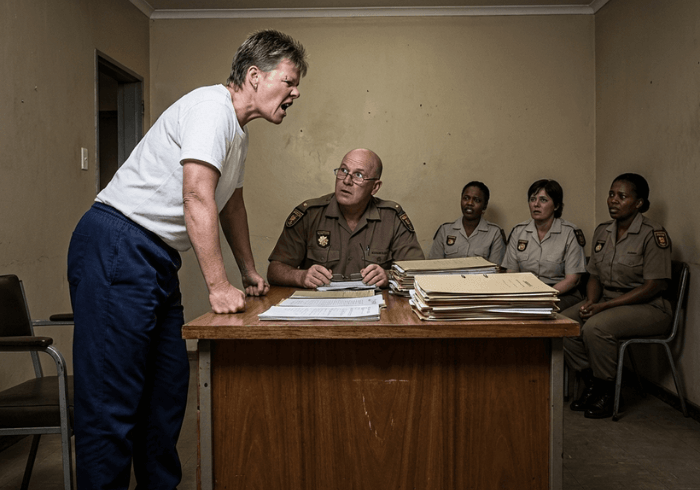
Two days before the IPV was due to return with feedback, we were summoned to the Head of Prison's office. From the moment we entered, her tone made it clear that this would not be a constructive discussion. She was direct, authoritative, and unwilling to engage beyond her own position.
She stated firmly that she had the final authority in the prison and warned us that if we continued pursuing the matter through the IPV, one of us would be transferred. She reiterated that any form of physical contact between us was strictly prohibited and that we would face disciplinary charges for "indecent behaviour" if we failed to comply.
According to her, consistency in enforcing the rules required that we be treated the same as heterosexual inmates, who were also not permitted physical contact.
However, it became clear that her stance went beyond policy. There was a visible sense of discomfort and disapproval in her attitude. Her eyes radiated "lesbian actions disgust me" when she said, "I don't know how your minds work."
By then, I was quite aggravated, struggling to contain my frustration. I responded by pointing out that we were no different from anyone else: we were human, capable of love, commitment, and emotional connection, just like any other heterosexual couple.
My response made no difference. She remained fixed in her views.
The fact is that we didn't even demand or request a sexual relationship, but it became evident that this was not a conversation where understanding would be reached.
While I tried to redirect the discussion to the issue of discrimination and the treatment we had endured, she continued to focus solely on the matter of physical contact. The core issue was never addressed.
Bari remained mostly silent during the exchange, likely recognising that any attempt to contribute would not change the outcome.
When we finally left the office, we both felt a deep sense of disappointment. The meeting had resolved nothing. It had only confirmed what we had already known. The system was not interested in fairness, but in control.
Two days later, the Independent Prison Visitor returned with feedback. Her position was, in many ways, aligned with that of the Head of Prison, but her approach was noticeably different. She addressed the matter with a degree of humanity and empathy that we had not encountered before.
On the issue of discrimination, she was firm. She stated clearly that it could not be tolerated under any circumstances and assured us that she would take the matter up with the Head. She emphasized that no individual should be treated unfairly based on sexual orientation. While she could not change the institutional rules regarding physical contact, she acknowledged our situation, respected our feelings, and showed genuine compassion for what we were trying to protect: our dignity and our relationship.
The “war” was over. In many ways, that marked the end of the formal dispute. What had begun as a straightforward challenge against discrimination within the prison system had gradually shifted into something far more personal. It had become an internal struggle, emotional, spiritual, and deeply psychological. At the time, however, I was not ready to admit that to myself.
I did not feel defeated. It was not about winning or losing. It was about being seen, about being openly allowed to proclaim that I was a lesbian, that I was human, and that I had the same rights as any other inmate. Beneath that, though, there was something deeper that I could not ignore: a continued need for acceptance, not only from others, but from God.
For a long time, something within me had been crying out for clarity, for peace, for resolution. I could feel myself reaching a breaking point. I was becoming emotionally and mentally exhausted, and somewhere in the back of my mind, I recognized that I was moving closer to self-destruction. At that stage, I believed that only God could intervene and pull me back.
Although I told Barineze that we needed to accept the decision and make peace with it, she struggled to do so. Even so, I continued to encourage her. We had endured so much together, and I felt that one of us needed to remain steady.
At the same time, I became increasingly aware that I was not as strong as I appeared. Internally, I was beginning to withdraw. That emotional strain started to affect our relationship. Misunderstandings became more frequent, and arguments followed more easily than before.
One day, when I was feeling particularly discouraged, almost overwhelmed, Barineze looked at me and spoke with quiet sincerity: “I’ve said this before, but I want to say it again. Our love is growing stronger. We are building something more stable by facing all these challenges together. Yes, we’ve had misunderstandings and arguments lately, but my love for you hasn’t changed at all.”
Her words were meant to reassure me, but instead, I found myself sinking deeper into doubt. The situation between us had become fragile. The more I tried to explain what I was feeling internally, the less understood I felt, and it often led to further conflict.
After one such argument, I returned to my cell. As I stood under the shower, I broke down completely. The weight of everything: the fear of losing her, the confusion about my identity, and the ongoing pressure from the system. It all became just too much to carry.
I cried out to God in desperation: “Please, God…give me strength. Give me answers. I cannot continue like this. I am exhausted, physically, emotionally, and spiritually. I feel completely drained.”
I admitted, for the first time, that I no longer had the strength to even pray properly. I told Him that I was placing everything: my struggle, my fears, my relationship, at the cross, and that I could not carry it any longer.
After that, I took two sleeping tablets and a painkiller that I had obtained from another inmate in exchange for cigarettes. I fell into a deep, heavy sleep.
The next morning, after roll call, I did not go to the dining hall for breakfast. I returned straight to my bed and continued sleeping. Around 10:00 a.m., there was a knock on the cell window.
Barineze was standing outside. She looked concerned, her brow slightly furrowed.
“Why weren’t you at breakfast this morning?” she asked. “Are you feeling sick?”
I looked at her, surprised by the question. In my mind, I thought: she knows exactly what I’m going through. How could she think this is physical?
I shook my head. “No, I’m not sick,” I replied quietly. “I feel…empty. Emotionally empty. Can’t you see that?”
“I’m sorry,” she said, visibly uncomfortable. “I love you. Sometimes I express myself too harshly, but I don’t mean to push you away. We’ve been through a lot, and it has affected both of us. But I believe we will overcome this. We have more holding us together than pulling us apart.”
She paused, then continued more softly: “I regret the way I speak sometimes, but I don’t always have the courage to fix it immediately. Still, my love for you hasn’t changed. I can see that you’re suffering, and I wish I could just hold you for a while. Please remember, I’m here to stay. I love you sincerely.”
With that, she turned and walked toward the hair salon where she worked.
I stood there, watching her leave, my eyes filled with tears. I had heard every word she said, but I couldn’t respond. I didn’t have the words at that moment.
Later, as I lay down again, I whispered a quiet prayer of gratitude. I thanked God for her: her presence, her patience, and her love. At that point, I needed her more than ever, and I knew it.
Not long after our meeting with the Head, I was called to appear before the Institutional Board. This was a routine evaluation that every inmate underwent every six months. They assessed behaviour, adaptation to prison life, work performance, and interaction with others.
After the standard questions were completed, the chairperson asked if any of the attending wardens had additional comments.
The Head of Prison cleared her throat before speaking.
“Yes, ma’am,” she said. She then raised the issue of my relationship with Barineze, something that had already been addressed and, in my view, resolved.
I sat there in disbelief. I could not understand why this matter was being brought up again, especially in a formal setting like this.
A wave of anger rose within me. I stood up and looked directly at the chairperson.
“My emotional wounds are only just beginning to heal,” I said firmly. “I find it completely unnecessary for a matter relating to my sexual orientation to be discussed in this forum.”
The chairperson asked me to sit down and said she understood my concern. But by then, I was too overwhelmed to listen.
I had reached my limit. I could no longer tolerate the repeated exposure, the humiliation, or the constant need to defend something so personal.
Before I could stop myself, my frustration surfaced openly. I was aware that my tone carried defiance, even contempt, but in that moment, I did not care. I was prepared to face whatever consequences followed. Without waiting for the discussion to continue, I left the office.
I walked out in tears.
Without fully considering the emotional strain Bari was already under, I went to her and told her about my outburst at the Board meeting. Although I had appeared composed and in control in front of both wardens and fellow inmates, Bari could immediately sense the anger I carried. She had known me all too well by then. She wasn’t impressed with my behaviour at the Board meeting and made it very clear to me that I am likely facing severe disciplinary action.
By simply looking at her, I could see that she had reached her limit. There was a heaviness in her expression, a quiet exhaustion that did not need words. In that moment, I realized that she could not endure any further emotional pressure.
I could not blame her, because the truth was, I could barely live with myself anymore.
We had both been subjected to continuous emotional strain, repeated disappointment, and constant uncertainty.
In different ways, we had come to the same realization: continuing to fight the system at this level was no longer just about resistance. It was beginning to threaten the very foundation of our relationship.
That evening, after lock-up, I once again found myself on my knees in prayer. I felt a deep sense of guilt, convinced that I had disappointed God through my behaviour at the Board meeting. I asked for forgiveness, not only for my anger, but for trying to take control of a situation that I believed should have been placed entirely in His hands.
I prayed for relief for myself and for Barineze. I asked God to ease the emotional burden we were carrying and to give me the strength to accept what I perceived, at that stage, as defeat at the hands of the prison management. More than anything, I asked Him to humble me, to help me recognize where I had gone wrong, and to guide me back to a place of surrender rather than resistance.
The following day, I approached the Head of Prison and apologised for my behaviour. I also asked her to convey my apologies to the Board's chairperson.
In my mind, the matter had been resolved. I believed that a line had been drawn under the conflict and that we could move forward, focusing only on enduring our circumstances with dignity.
At the same time, I became increasingly aware of a quiet, steady strength that seemed to carry us through each day. I interpreted it as God’s presence, guiding us, sustaining us, and reminding us of what was expected of us: to live according to the fruits of the Spirit: love, patience, self-control, and faith, despite the environment we found ourselves in.
A week passed after my meeting with the Head.
It was a Monday morning, and I was informed that I had to attend an AIDS awareness course at the prison’s club hall, situated approximately 500 metres from our cell block. I explained that I had already completed such a course, but I was told that this was an advanced programme and that attendance was compulsory as part of rehabilitation.
At the time, I accepted this explanation without question. I had no reason to suspect otherwise.
To reach the club hall, we had to pass through several security points, exiting the main gate of the cell block and moving closer to the outer areas of the prison grounds. Wardens closely supervised inmate movements, maintaining strict control at all times.
We followed this routine throughout the day: attending the course in the morning, returning to the cell block for lunch at midday, and then returning for the afternoon session.
What I did not know at the time was that my removal from the cell block and work area had a different purpose altogether. It had been carefully arranged.
It was a calculated decision to create distance, to remove me from the environment, and to ensure that I would not be present when the next step was taken.
Looking back, it became clear that this was not an administrative coincidence. It was deliberate.
It was strategic. And it was deeply inhumane.
The following day, as I walked through one of the security gates into the courtyard on my way to the dining hall, I immediately sensed that something was wrong. The atmosphere had changed.
There was an unnatural stillness. Conversations had quieted, movements seemed restrained, and I became aware that people were watching me: both inmates and wardens. There was a tension in the air that was impossible to ignore.
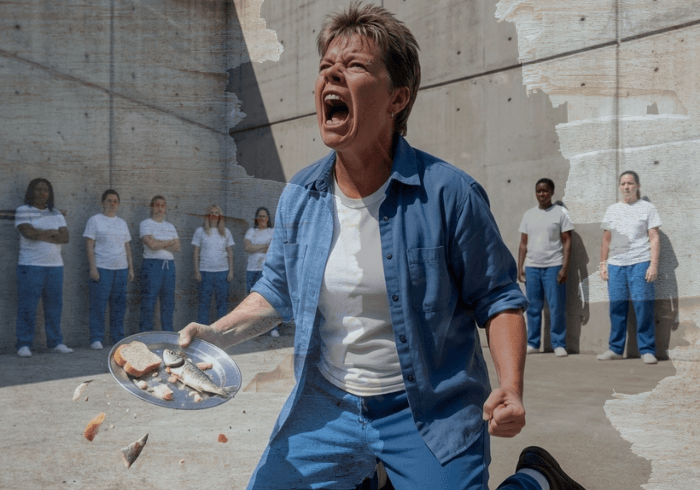
I joined the lunch queue, trying to make sense of the sudden eeriness, when an inmate motioned for me to come closer. I approached her, confused and uneasy. “Yes?” I asked. “Why is everyone acting so differently?” She hesitated. When she finally spoke, her voice was low, almost reluctant, as if she understood the weight of what she was about to say.
“Bari has been transferred back to Pollsmoor this morning.”
For a moment, everything around me seemed to fall silent. It felt as though all the blood had drained from my body. I stared at her, unable to process the words. This cannot be real, I thought. This must be some kind of mistake.
But it wasn’t.
The reality settled in with a force that left me physically shaken. My body began to tremble uncontrollably as the truth became undeniable.
“How is that possible?” I asked, my voice breaking. “There must be a mistake… Oh God, why?”
The words came out as a cry rather than a question. In a moment of complete emotional collapse, I threw my plate of food across the courtyard and covered my face with my hands. I could no longer contain what I was feeling.
I began to walk aimlessly, my movements uncoordinated, my thoughts scattered. It was as if my entire sense of stability had been removed in an instant.
Another inmate approached me, gently supported me, and guided me to sit down.
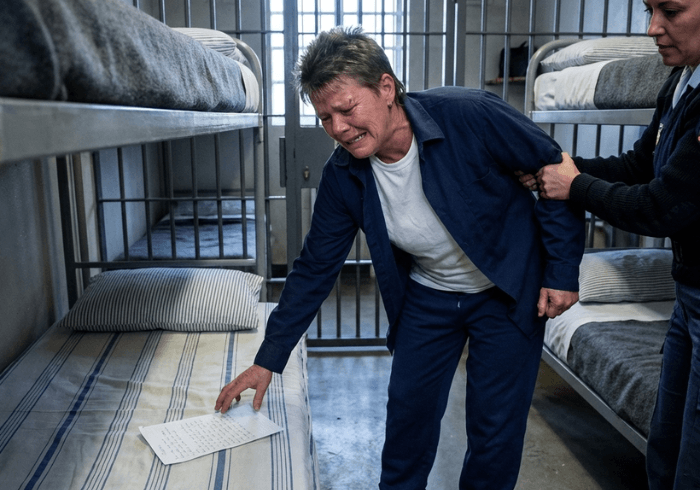
Then I received the note. My hands shook as I opened it. My vision blurred with tears as I tried to focus on the words. Each line felt heavier than the one before.
“Elmarie, the Head just called me. I am being transferred back to Pollsmoor—‘Department of Correctional Services interest,’ according to her. I asked to appeal, but she declined and said that I can appeal once I arrive at Pollsmoor.
I love you very much… my heart is broken… don’t forget me or leave me, please… I love you endlessly… be loyal to me, and I will be loyal to you… I have to go, they are waiting for me.
All my love, Bari.
PS. They are watching over me… I’m not allowed to say goodbye to anybody.”
As I read, the full weight of what had happened settled over me. This was not an accident.
This was not a procedural necessity. This was deliberate separation, executed with precision, without warning, and without the most basic allowance for human dignity. There had been no opportunity to say goodbye. No chance to prepare. No consideration for the emotional consequences. It was a calculated act designed to break the connection and to dismantle what we had built, piece by piece.
In that moment, I experienced a level of loss that surpassed anything I had felt before, even the night Lizette had died.
The emotions were overwhelming and collided all at once: grief, anger, disbelief, loneliness, and a deep sense of abandonment. I felt completely exposed.
I questioned whether I could endure what lay ahead on my own. I felt isolated, as though I had been reduced to something less than human, someone whose pain did not matter, whose identity was a problem to be managed rather than understood.
For years, I had tried to explain myself to show that I was no different, that I was simply human. But in that moment, all those efforts felt meaningless. My spirit felt shattered. My heart, completely broken.
And yet, despite everything, one truth remained unchanged: the depth of the love I felt for her.
That small piece of paper in my hand was all I had left of her in that moment.
And I held onto it as if it were the only thing keeping me from falling apart completely.
I sat on the concrete steps outside my cell, staring up at the pale blue sky. It felt empty, lifeless, much like everything inside me at that moment. There was a hollow stillness where hope had once lived, and I struggled to find a single reason to keep going, especially in a place that already demanded so much just to survive.
I had lost someone I loved before. I knew grief. But this… this felt different. This felt like something inside me was being torn apart while I was still alive to feel every second of it.
I wasn’t prepared for this at all. Tears streamed down my face as the reality settled in. Bari was gone. Gone without warning, without a goodbye: erased from my world in a matter of hours. I was beyond consolation. The grief was relentless, rising and falling like waves that refused to break. I couldn’t think clearly, couldn’t speak, couldn’t even begin to process what had just happened. Nothing except a barely incomprehensible note that was left by her. “God… how can they do this? How can they be so inhuman?” I whispered, my voice trembling. “It’s not fair…”
My entire body shook uncontrollably. I wanted someone to blame, someone to hold responsible for the pain tearing through me, but no amount of anger could bring her back. The questions circled endlessly in my mind. Was this my fate? To keep losing the people I loved? Or was this something God had allowed? I didn’t understand, but I was determined, somehow, to find meaning in it.
That night, I lay on my bed, staring into the darkness, trying to imagine what Bari must be going through. It had been nearly ten months into my sentence, and for the first time since we had met, we were no longer in the same prison. The distance felt unbearable.
I had cried myself into complete exhaustion. Everything around me seemed to move in slow motion, as if I were heavily sedated. Voices from my cellmates sounded distant, like echoes from another world. I felt detached from everything. Numb, yet in agony. I didn’t care, and nothing that happened mattered anymore. All I wanted was to disappear. To retreat into some quiet, hidden place where I wouldn’t have to feel this loss so intensely. I longed for comfort, for someone to sit beside me, to share the disbelief, the anger, the grief. But prison offered none of that. Compassion was rare. Genuine care is almost nonexistent.
I didn’t want to speak to anyone. I didn’t want to be part of a world that could so easily tear two people apart in such a calculated, inhuman way. The thought alone made me feel sick.
I didn’t want to be a part of a society that hurt people like Bari and me. I picked up Bari’s photo, my hands trembling, and stared at her face. The tears came again.
“Why?” I asked softly. “Why?” Her voice echoed in my memory: clear, familiar, painfully alive. “I love you, Sunshine.” The memory felt so real that for a moment I almost believed she was still there. But she wasn’t. And that truth was unbearable.
A quiet voice inside me tried to reassure me. Nothing will change. The love is still there.
But how could I not worry when someone I so deeply loved had been taken from me in such a deliberate, calculated way: planned, executed, and enforced without a trace of humanity.
How does a person continue under those conditions? How do you function when everything inside you is broken?
In that moment, I knew something inside me had died. And somewhere hidden in a deep secret space within me, I would always relive that pain when I see the prison staff who was responsible for Bari’s transfer. I also knew that one day I would uncover the truth behind her transfer. Not in my wildest dreams did I imagine it would take seventeen years to discover who the real mastermind behind Bari’s transfer was.
The memories of us overwhelmed me. Every moment we had shared felt both precious and painfully out of reach. There was no one to talk to, no one who truly cared, no one who understood.
The loneliness was unlike anything I had ever experienced. It was suffocating. I knew I had to go on, but I didn’t know how.
Still, one thing remained certain: the memories we had created together would stay with me, no matter what. No system, no distance, no cruelty could take that away. “Goodbye, Bari… my love,” I whispered into the silence the words I had never been given the chance to say one last time. “I love you.”
The next morning, I felt like a shadow of myself. I hadn’t slept at all. Just days before, I had felt a sense of emotional growth, of rebuilding, but after Bari’s transfer, everything had collapsed inward, shrinking into something dark and suffocating. I didn’t feel present in my own body. The energy and the resilience I once had were gone.
When the warden who had escorted Bari to Pollsmoor walked past me, seated on the steps next to my cell, I called out to her and stood up without thinking. I approached her hesitantly, because I needed something, anything, that could confirm Bari was okay. Tears filled my eyes as I asked, “How was Bari on the way to Pollsmoor? Was she crying? Did she say anything?”
Her response was cold and dismissive. “She was fine. That’s all I can say.”
Her lack of empathy hit me instantly. Anger surged through me within seconds: fast, uncontrollable. It wasn’t just about that moment. It was everything. Months of humiliation, suppression, emotional strain, heartache, and verbal abuse regarding my sexual orientation all erupted at once. I stepped closer, filled with a rage that had been building up for months.
I lashed out, my voice shaking with rage and pain. Tears of anger mixed with grief as I confronted her. But she didn’t understand. None of them did.
“Fuck you!!!!!...you had this all planned…fuck you!!!!...you achieved your goal, and I am entitled to an explanation!!!!
Instead, she laughed, a provocative laugh, and then, with deliberate cruelty, said, “Go stand on the roof and scream so that everyone can hear you.” “You think you are a man, but you haven’t even got a penis.” In response to that, I told her to go fuck her grandmother’s cat, turned around, and walked away. I was beyond every possible shattering emotion that exists on earth.
We argued, harshly and openly. When it was over, I felt a deep sense of relief, but I knew that I would, without a doubt, be severely punished for my language toward the warden. I had released everything I had been holding in, and it felt good. I did not care about the consequences at that stage. I felt she deserved what was coming to her.
The days that followed were heavy and empty. I withdrew completely. I stayed in my cell, refused to work, and barely ate. Time passed, but I wasn’t living. I was existing.
Weekends were the worst. They reminded me of everything we had shared: our quiet moments, our laughter, the way we would sit together in the sun, sometimes saying nothing at all, simply appreciating each other’s presence with a secret touch or a sudden, quick hug.
Now, all of that was gone. The absence was overwhelming.
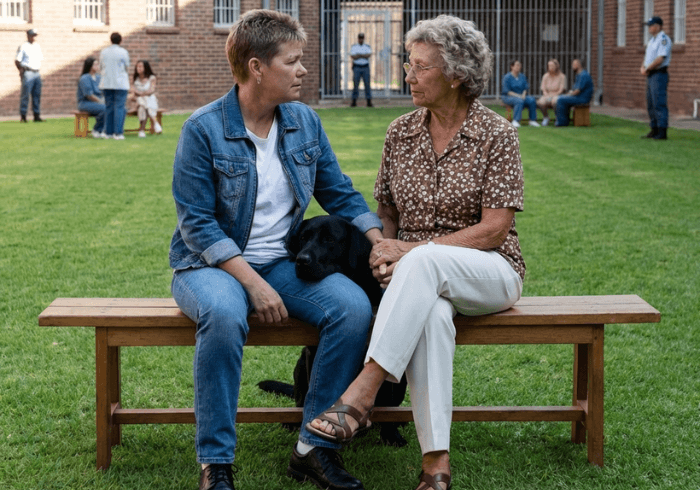
Visits with my mother became more difficult because she could see that I was severely neglecting myself by the way I was losing weight. By that time, I had been promoted from a B-group inmate to an A-group inmate after six months of incarceration. With that status came certain privileges, including contact visits, which meant I no longer had to sit behind a glass partition without physical contact. I was allowed to sit with her, to be near her, hug her, and hold her hand: something I had longed for during the earlier months of my sentence.
Yet, despite that closeness, an emotional distance remained when I mentioned Bari’s name. The Sunday after Bari had been transferred, I told her about the cruel way Bari and I had been ripped apart. I tried, once again, carefully at first, then with quiet desperation to explain that what we had was real, something deeply meaningful and entirely different from anything I had experienced before. Not a repetition of the past. Not another mistake. Something deeper… something honest.
I tried my best to make her understand, but her views remained unchanged. Nothing I said could move her.
I wanted her to see me. To really see me. To understand that Bari wasn’t just someone passing through my life: that she was my everything. I wanted her to share in that love… but more than that, I needed her to share in my pain. The loss. The emptiness. The unbearable silence Bari had left behind.
I needed her to hold me. To say, “I’m sorry, my child… I know how you feel.”
Or even just, “Don’t worry… Bari will be waiting for you.”
But those words never came. Not even close. And slowly, painfully, I began to realise something I didn’t want to accept: She would never understand. No matter how deeply Bari and I had loved each other… no matter how real it was… my mother would never be able to see it through my eyes.
So I let it go. Not because it stopped hurting… but because holding onto it was tearing me and mom apart.
As I looked at her, I saw it more clearly than ever before: how life had worn her down. The lines on her face were no longer just signs of age; they were marks of survival. Pain had settled into her expression. Her eyes carried a tiredness she could no longer hide. She told me she was fine. But I knew she wasn’t.
The years since that night, since Lizette was shot and killed, had carved something permanent into her. Sitting there, looking at her through the crushing weight of everything we had both endured, I felt something inside me sink, slowly, heavily, like a stone dropping into a dark, bottomless pit. The air suddenly felt thick, almost unbreathable, filled with all the things I wanted to say, all the pain we had never truly faced together.
A deep, suffocating self-reproach wrapped itself around my chest and tightened with every breath I tried to take, but I had to maintain my pose for the sake of my mother. I did not want to cause her any further pain, not then, not ever again.
For a moment, I thought: “Elmarie, shame on you to sit here, trying to convince your mother about a damn prison love affair… shame on you for only focusing on your own pain… shame on you for adding another layer of your own shit onto your devoted loving mother after everything she has sacrificed for you.”
The words didn’t just pass through my mind. They struck hard, like blows I knew I deserved. I could feel them echo inside me, over and over again, louder than anything I have ever heard, louder than my father’s raging outbursts, louder than the gunshot. It was as if I was standing outside myself, looking in, disgusted… ashamed… seeing my own desperation as something selfish, something ugly.
There she was, my mother, still showing up, still loving me in the only way she knew how, despite everything. Despite the past. Despite the pain I had caused. Despite the weight she herself was carrying.
And there I was… sitting in front of her, asking for more, wanting more, needing more. As if what she had already given me wasn’t enough.
The resentment I felt toward myself burned deep, sharp, and relentless. It wasn’t anger directed outward anymore: it had turned inward, cutting into me, exposing every flaw, every failure, every moment I wished I could undo. I wanted to reach across to her, to hold her, to take back every ounce of pain I had ever caused… but I couldn’t.
I couldn’t change anything. And that was the worst part.
I was trapped in that moment: torn between the unbearable ache of losing Bari and the crushing realization that, in my desperation, I might be hurting the one person who had never truly abandoned me. And suddenly, my own pain didn’t feel pure anymore.
It felt tainted and heavy with guilt. I blamed myself for so much. For the past. For the pain. For the life she never chose but had to live because of me. There were so many things I wanted to say, so many apologies that burned inside my chest, but the words never came. And even if they had… what would they have changed? Nothing.
In her own way, she loved deeply. Fiercely. But life had not been kind to her either. She had loved once… and lost everything to betrayal. Twenty-five years of marriage reduced to nothing but broken trust and quiet devastation.
Maybe that kind of pain changes you. Maybe it closes something inside you that never fully opens again. Maybe every time she looked at me, she didn’t just see her child… maybe she saw the possibility of that same kind of hurt repeating itself. And maybe… she was just trying to protect me in the only way she knew how.
That thought softened something in me. I stopped searching for the right words after that. Stopped trying to convince her. I didn’t want to hurt her anymore: not with truths she couldn’t carry.
Every Sunday, she still came to visit, no matter what. And in a place like prison, where love was scarce and kindness even scarcer, that meant everything. Her presence alone was more than most of the other inmates ever received. I wanted to thank her for that. I really did, but somehow… the words always seem to fail me.
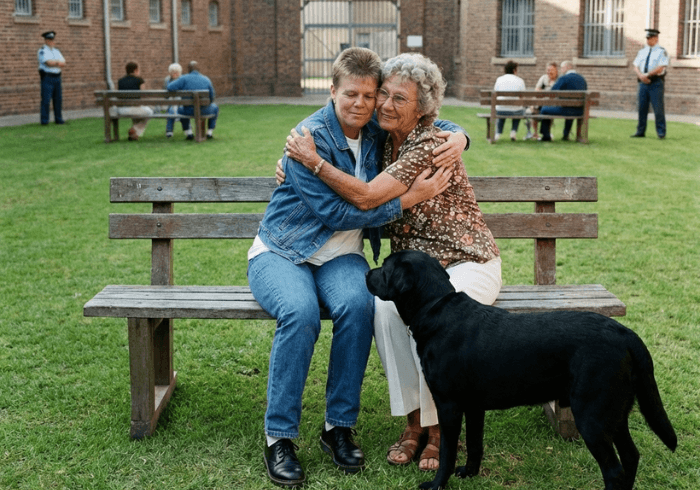
Weeks passed, and still I barely ate or slept. I lived in a constant state of emotional exhaustion.
Most nights, I lie on my bed staring into nothing, trying to process what had happened, trying to accept that Bari was gone. The reality of it did not settle easily. It felt unreal, like something that had been done to me rather than something I was living through.
Every time I looked at her photos and the cards she had given me, still pasted carefully against the wall, I broke down again. The grief was not something that came and went; it stayed. It was constant, heavy, and exhausting.
I tried to reason with myself. At least she was alive. At least she had not disappeared completely. But even that thought brought no comfort. I had already lost Lizette, and that loss had nearly destroyed me. What I had with Bari felt different: stronger, deeper, something I believed was built on trust, loyalty, and commitment. I could not understand how something that felt so solid could be taken away so suddenly.
At the same time, I lived with a constant fear that I was going to lose her completely. I did not know why I felt that way, but the thought stayed with me.
Day by day, I withdrew further into myself. I functioned, but only on the surface. I stopped engaging with other inmates. I avoided conversations and ignored the questions about how I was doing. Many of those questions were not genuine anyway. In that environment, vulnerability was not met with compassion: it was mostly met with ridicule or quiet satisfaction. I had learned that the hard way.
Looking back now, I can see that what happened to Bari and me was not random. It was deliberate. The system did not recognise our relationship as something valid or worth protecting. Instead, it saw it as a problem to be removed.
At the time, however, all I felt was the isolation. It was difficult to accept that I had to continue my sentence alone. Even the thought of my mother, who loved me and supported me, did not bring comfort anymore. The separation from Bari overshadowed everything. It felt as though no one truly understood what had been taken from me. At times, it even felt as though God had abandoned me.
Nights were like continuous nightmares. I would lie on my bed and replay memories of Bari: our conversations, small moments of secret intimacy we shared, and the way we supported each other.
Eventually, I started smoking dagga at night, quietly at first, when everyone else was asleep. It became a way to escape the constant pressure in my mind, an attempt to quiet the pain, because not even God could ease my pain.
When that no longer worked, I stopped hiding it and began smoking openly with others.
At that point, I no longer cared about any consequences when I acted out, because nothing mattered anymore. My focus had shifted. I was no longer trying to build anything. I was no longer focusing on a parole date. For all I cared, I could do the full 9 years. I was simply trying to get through each day.
At the same time, something else was growing inside me: a need for answers, a need for the truth, whatever truth it was. I wanted to understand why this had happened. I wanted to know who had made the decision and on what grounds. More than anything, I wanted justice. I refused to accept that my sexual orientation could be used against me without consequence. Someone had to be held accountable.
One Sunday, my father came to visit from Johannesburg, and I finally said what had been building inside me.
“I need to do this for myself, Dad. I need to prove that nobody can hold my sexual orientation against me. I keep asking the same questions over and over, and there are no answers. I feel like I’m going crazy. I keep asking, “God, why?”
He listened carefully and attentively. I could see the emotion in his face before he even spoke.
“Don’t ask the Lord why for things that people are responsible for,” he said. “You won’t get answers that way. This is how the system works, and you won’t be able to change it yourself. South Africa is still trying to come to terms with accepting homosexuals as human beings, not as something different or wrong.”
His words were direct, but there was a little bit of compassion behind them. “Rather pray, ‘Lord, help me,’” he added.
He paused, then continued more firmly. “Elmarie, stop fighting this. It will cost you more than you think. It’s not worth the humiliation. It’s not worth the pain. I understand what you’re trying to do, but this is not the place to win that battle. It's too soon. I would like to see justice for homosexuals, too, but …wait until you are released, and then you can give them all the hell you have to give. Only then can you fight it properly.”
I struggled to accept what he was saying.
Prison life in the 1990s was not a place where a same-sex relationship was understood or tolerated. It was harshly judged by inmates, wardens, and the system itself. But the truth is, that judgment did not begin inside prison walls; it reflected a much broader reality.
At the time, same-sex relationships were still widely condemned across the world: socially, culturally, and in many countries, even illegal. Homosexuality was often treated as something abnormal, something to be corrected, controlled, or separated. There was very little awareness, and even less acceptance. Compared to the twenty-first century, where there is at least some level of legal protection and social recognition, back then it felt as though simply loving someone of the same sex made you a target. You were classified as filthy, promiscuous, someone with a contagious disease, and even a child molester.
“But Dad, it feels like I’m going insane. And if I do, then at least it will be for something that matters: for justice for gay people,” I replied.
He shook his head. “You’ll only go insane if you allow yourself to. And it will never be worth it.”
For a moment, he looked defeated: head in his hands, then back up at me.
“Please,” he said, “for once in your life, listen to your father.”
I didn’t respond immediately. Our relationship was never easy, and respect had not come naturally between us. But something had changed over time. Losing Lizette had changed both of us.
“Okay, Dad,” I finally said, knowing he was right.
As he left, I felt a shift inside me. Not a dramatic change, but something steady. A conscious decision.
That night, lying on my bed, I thought everything through. For the first time in five weeks since Bari had been taken away, I felt a sense of calm.
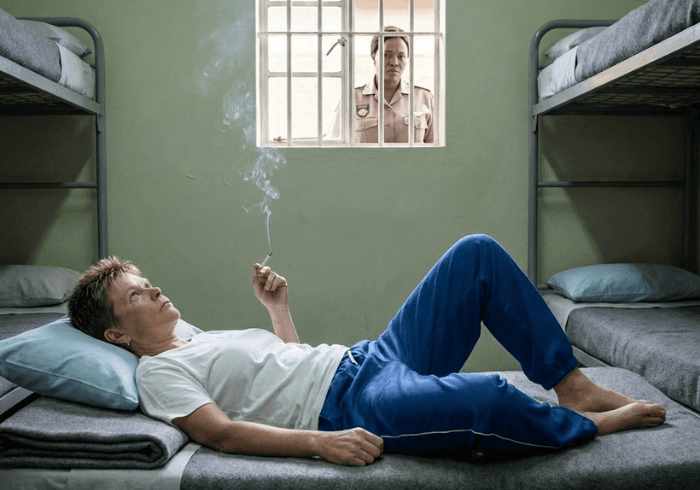
I realised that I could not control the system, but I could control how I chose to continue.
I decided to endure the rest of my sentence differently. I would not give up on myself completely. And I would wait for Bari, for answers, for a time when things could be different.
I took her photo from the wall and held it against my chest.
“You won’t ever lose me, my darling,” I said quietly. “I’m yours… forever.”
After Bari’s transfer, I held on to the one form of connection I believed could not be taken from us: letters. I wrote to her every day.
At first, it gave me a sense of purpose. No matter how difficult the day had been, I would sit down and write, telling her what I was feeling, what I was thinking, and how much I missed her. I wrote about the smallest details of my day, trying to maintain some form of normality between us. It was my way of holding on, of refusing to accept that we had been completely cut off from each other.
Each letter carried the same underlying message: I am still here. I have not walked away. You have not been forgotten.
What I did not know at the time was that Bari was doing the same. She, too, was writing to me every day, but neither of us received a single letter.
Days turned into weeks, and weeks into something far heavier. At first, I tried to be patient. I told myself that delays were normal in the prison system. Mail was often slow, and it was not unusual for letters to take time to arrive, but as time passed, doubt began to surface.
I started to question why there was no response. Not even one letter. Not even a single acknowledgement that my words had reached her. The silence became difficult to ignore.
Eventually, I began to consider the possibility that Bari had chosen not to respond. That she had moved on. That the distance, the sudden separation, and the circumstances had simply been too much.
At the same time, unknown to me, Bari was facing her own version of that same silence. She was also waiting. Also hoping. Also questioning, and then the rumours came.
In prison, information rarely arrives in a clear or truthful form. It circulates through whispers, assumptions, and distortions through inmates who wrote to each other to and from Pollsmoor.
Bari heard that I had grown close to another female inmate. From where she was, with no way to confirm or deny it, that information would have felt real. Just as real as the silence she was experiencing. From her perspective, it must have seemed as though I had gone on with my life without her. From mine, it felt as though she had abandoned what we had shared. In reality, neither of us had done either.
What we did not know, what we could not have known at the time, was that our letters were never lost. They were withheld. Every letter I wrote to her, and every letter she wrote to me, was deliberately kept from us. The one line of communication we had relied on had been completely obstructed without our knowledge. There was no explanation, no warning, and no opportunity for us to question it. It was a controlled silence.
Looking back, it wasn't random or an administrative failure. It formed part of a wider pattern, the same pattern that had removed her from my life without notice. The separation was not only physical; it was enforced on every level. Contact was not just limited, it was eliminated.
At the time, however, I could not see that. I interpreted the silence as rejection. As an absence. As a loss. And I adjusted my thinking accordingly. That is what made it so effective, because while we were both still holding on, still writing, still believing in what we had, we were being led to believe the exact opposite: that the other had let go.
The cruelty of it lay not only in the separation itself, but in the method. It created distance where there was none. It replaced truth with assumption, ensuring that, without ever speaking to each other, we would begin to doubt everything we believed about our relationship.
By the time I started to accept the silence as reality, the damage had already been done.
What should have been a lifeline between us had been turned into another instrument of control. And neither of us knew.
To be continued...
This chapter ends here… but your thoughts matter! 💬 Drop a comment below.

Author: Elmarie Heckroodt
Stay informed! A new chapter is released every week.
"Section 6 of Jailtime“ continues and will arrive in your email next week.
Keep an eye on your inbox so you don’t miss it.
© 2025 Elmarie Heckroodt. All Rights Reserved.