
Court Hearing And Sentence - Part 11
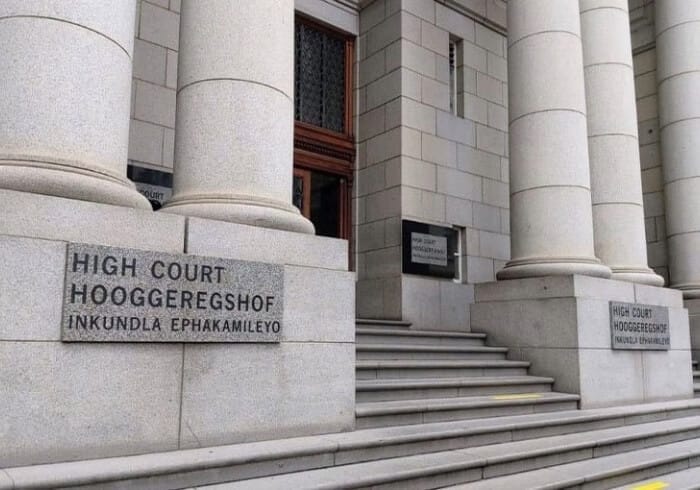
“The verdict fades, but guilt stays, embedding itself into the skin, into the DNA, until it becomes inseparable from the very soul of who you are.”
- Elmarie Heckroodt
A Supreme Court date was set for 17 August 1998. It was twenty months after the terrible incident had occurred and nineteen months after I had been released on bail.
During my bail period, I received eighteen months of very emotional and traumatic therapy with Hendrik, my clinical psychologist, who had in many ways become almost like a father to me. After one hundred and forty-four (144) very intense, but also very relaxing, one-hour sessions, Hendrik believed without any doubt that I was ready to take the witness stand.
In the meantime, Allistiar and I had become good friends. He wasn’t just my lawyer, but someone who genuinely believed in my innocence. He was convinced that we had to approach my case as one of automatism.
In simple terms, that meant he believed my actions were not driven by conscious choice or intent. Automatism refers to behaviour that occurs when a person is effectively unaware of what they are doing: when the mind is not in control of the body. As it was explained to me, it is “an act which is done by the muscles without any control by the mind, such as a spasm, a reflex action, or a convulsion; or an act done by a person who is not conscious of what she is doing. In other words, if the mind is absent, so too is criminal responsibility.
How the court viewed my automatism would shape my fate. If it were accepted as sane automatism, I could be free. If it were classified as insanity-related, I would be found not guilty by reason of insanity: a verdict that sounds like mercy, yet carries its own form of imprisonment, one that could confine me to a mental institution long after I was no longer considered a criminal in the eyes of the law.
Ultimately, the judge rejected automatism entirely. Despite the heavy sedatives in my system and the alcohol I had consumed, he believed I was of sound mind and aware of my actions.
That assessment stood, unchanged, even as the circumstances surrounding my state of consciousness were laid bare. And so, with that belief, my future was decided.
I listened as the words settled over me, trying to reconcile them with how my body had felt that night: heavy, dulled, disconnected, moving without my permission. I remember thinking how strange it was to be described as aware when awareness had been the very thing I had lost.
It wasn’t anger that rose in me first, but a quiet disbelief, the kind that leaves you hollow rather than loud. I had trusted that the truth of my state would speak for itself, that the fog of sedation and alcohol would matter, that absence would be recognised for what it was. Instead, I was told who I had been in that moment, and that version of me carried more weight than the one I remembered, or rather, couldn’t remember at all.

There was one Judge with his two assessors, and the final decision for an appropriate punishment would be in their hands. I didn’t have to pretend to look frightened; I was terrified as I sat opposite my lawyer and advocate in the accused bench.
The prosecution’s case was direct, blunt, and merciless. They pointed out a picture of an aggressive and obsessive person who had planned months before to murder her lover. A psychologist for the prosecution, who didn’t know me from a bar of soap, analyzed my mind as if I were a frog being dissected in a biology laboratory, and the next day the heading in the local newspaper read: “Inside mind of a lesbian killer.”
The State prosecutor frequently pointed at me as he told the court that I was an insensitive, self-centered person, thinking only about my own well-being. He painted a history of violence and aggressive outbursts, and when Lizette could no longer live with it, I shot and killed her in cold blood. The weight of those words crushed me. To sit there, silent, while strangers tore my life into pieces was unbearable.
They were not just judging me for what had happened that night; they were judging me for every mistake, every weakness, every argument, every piece of my past that could be twisted to fit the story of a murderer. I wanted to scream, to tell them that they were wrong, that they didn’t know me, but I couldn’t. My lawyer had warned me not to react, not to let my emotions betray me. So I sat there, frozen, my hands clenched into fists so tight that my knuckles turned white.
Every time the prosecutor pointed at me, his finger felt like a knife. He was not just pointing at the accused; he was pointing at me, Elmarie, a woman who had once been a police officer, a daughter, a lover, a friend. He stripped me of all those identities and left me as only one thing in that courtroom: a killer.
The newspapers didn’t help. Every headline seemed to scream louder than the last. Words like "obsessed," "jealous," and "cold-blooded" followed me like shadows. Even people who had once known me began to doubt. Everybody, except my mother, Allistair, and Hendrik.
When you are placed on trial, it is not only your actions that are judged: it is your entire being, your soul. And in that courtroom, it felt like my soul was being dragged across burning coals.
What made it worse was the silence I had to keep. I couldn’t explain how the sedatives and the alcohol had taken over me that night. I couldn’t describe the way it felt to be trapped in my own body, watching myself like a stranger, unable to stop the disaster that was about to unfold. How could I? How could anyone truly understand what it feels like to lose control of your own mind, your own muscles, your own sense of self? To be present, yet absent? To watch yourself act and not even recognize the person doing it? It was like an out-of-body experience, terrifying and unreal.
But the court didn’t want to hear that. They wanted neat lines, a cause and effect that made sense. They wanted motive, planning, and intention. Automatism was too messy, too complicated, too human. And so my truth was buried beneath layers of accusation and suspicion.
The days in court dragged on like years. Each witness was another stone added to the mountain pressing down on my chest. I listened as people dissected my relationship with Lizette, painting it in colors so dark that even I could barely recognize it. They reduced our love, our laughter, our small moments of joy to a tragic headline.
They stripped Lizette of her humanity, too, turning her into nothing more than a victim in their story. That broke me more than anything. She had been more than that. She had been light, and laughter, and sometimes pain too, but she had been real. And now she was gone, her name only spoken in court as evidence.

The hypocritical mistress
"She watched a life fracture without remorse, merciless eyes unblinking as the damage spread, never realizing I was becoming unbreakable in her shadow." - Elmarie Heckroodt
The hypocritical mistress didn’t just sleep with my partner: she slept with my sanity, my trust, and nine years of my life. She played victim while knowingly destroying a family, and I am done pretending she was anything other than cruel, calculated, and complicit. This image of her will remain with me FOREVER!!!! No forgiveness for this bitch.
On one side of one of the court benches was a still figure seated. Her eyes burned with hatred, sharp and venomous, wanting only revenge. She was the witness for the state. Liz, the mistress, sat tall and confident in the box, her voice steady, her words flowing like they had been rehearsed a hundred times. Her testimony was flawless, the kind that could easily sway a judge or jury.
Every sentence she spoke painted me as the villain, the jealous lover, the aggressor who had finally carried out a plan to end her rival. To anyone listening, it sounded believable, even impeccable. The judge leaned forward at times, clearly impressed by the neatness of her story, as though he was hearing the voice of truth. She delivered her so-called “impeccable” testimony. Every word rolled off her tongue with practiced ease, but it was all a lie, every single word of it. She knew it, and I knew it.
I sat there, dumbfounded by the ability of someone to lie with so much confidence, knowing the truth was the opposite. I knew that every word dripping from her lips was poisoned with lies. Behind her calm tone and carefully chosen words was an agenda: revenge, self-preservation, and the desperate attempt to bury her own guilt. And I had no choice but to sit and watch as her lies were etched into the official record of my life.
The helplessness of that moment still stings. And yet, the Judge was captivated by her story, impressed by her certainty, as though her voice carried the weight of truth itself. During cross-examination, she remained unshaken, calm, polished, and steady, as though every answer had been scripted in advance.
To the judge, it looked like strength and credibility, but to me, it reeked of arrogance, the smug confidence of someone who believed her lies would never be exposed.
Watching it unfold was like standing helplessly in a storm you can’t escape from: every gust cutting deeper, every word designed to bury me further. I knew her all too well: I knew she had a sly and deviant streak.
The story of how I discovered the affair that set all of this in motion, the very foundation of her lies, is not something I can gloss over here. It deserves its own telling. I will share it fully in another blog post titled “A Month Before the Shooting.”

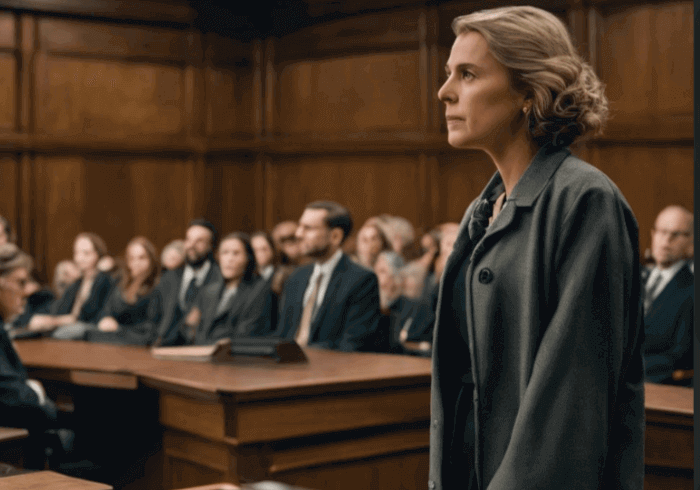
"The witness box took everything I wore but could not touch the one thing I carried: my unbroken truth." - Elmarie Heckroodt
I testified for three long days. Standing in the witness box felt like being stripped bare, every word weighed, every pause dissected. My voice cracked and shook at times, but I forced myself forward, terrified that if I faltered, I’d be swallowed whole.
The courtroom lights beat down hotter than the sun, and each time I opened my mouth, I felt as if I was carving out pieces of myself and handing them over to strangers who would never understand the cost. Those three days stretched on like an eternity. It wasn’t just my story I was telling; it was my soul, spread wide open for judgment.
There were moments when the sobs rose in my throat, choking me, so strong I could barely speak. The Judge, perhaps with a shred of human compassion, told me to sit, to take a moment, catch my breath, and take a sip of water, but I refused. I wanted it over. He paused and glanced toward the court stenographer, his voice steady but firm. “Please note,” he instructed, “the defendant is extremely emotional, barely capable of speaking.” His words cut through the air, formal and detached, as if labeling my anguish for the record.
I stood there, choking on sobs, my voice trembling, reduced to a line of text in the court’s script. I wanted the nightmare to end, even if it meant shattering myself on that stand. Three and a half weeks dragged by in endless grief, reporters chasing me, photographers snapping at me like wolves. And of course, the entire South Africa couldn't wait for another newspaper article to fill their sensational needs.
I was emotionally drained, sick, pale, nothing but a shadow of myself by the time the Judge finally called for the verdict. The suspense was agony beyond words. I sat mutely in the accused bench and looked frighteningly pale. I just wanted it all to be over so that I could start the next chapter of my life. With expressionless eyes, I glanced at my mother, just once, a silent plea, a silent promise.
The bailiff called everyone into the courtroom. When the Judge’s voice rang out, declaring me guilty of murder, the words felt like a hammer striking straight into my chest. The room around me blurred, faces turning into shadows as the sound echoed in my head again and again: "guilty of murder." My hands trembled in my lap, cold and heavy, as if they no longer belonged to me. I had known this moment was coming, yet nothing could prepare me for the finality of it.
In that instant, a part of me crumbled, and all I could think of was my mother; how she must be breaking inside while trying so hard to appear strong.
The state prosecutor rose with his usual confidence, his voice sharp as he addressed the court. He argued that I should be taken directly to prison. In his mind, the moment the guilty verdict was handed down, I was no longer a person with ties to family or community. I was a convicted criminal who belonged behind bars. He painted me as a danger, not only to Liz, but to myself as well. Someone who might flee or commit suicide, considering my emotional state, rather than face what was coming. His words struck like stones, each one designed to strip me further of any humanity.
But then the judge leaned forward, his tone calm yet firm, and shook his head. He had received feedback from police officers, and over the eighteen months since my arrest, they had told him of what they had seen regarding my behaviour. “She has never once failed to appear for her monthly bail hearings, which were postponed every month until we could get a supreme court date,” the one magistrate testified, his voice firm, but also empathetic. “She is not a flight risk." "She has complied with every condition of her bail." "She has shown respect for this court and for the process.” The judge thanked him and then paused, his eyes meeting mine briefly, and then he added, “You may go home and be with your mother tonight, under the strict condition that you present yourself here tomorrow morning at nine o’clock, ready to receive your sentence.”
Relief washed over me, but it was not the kind of relief that makes you breathe easier. It was sharp and fragile, edged with sorrow. One last night. One final chance to be with my mother, to sit in the quiet of our home before the walls of prison closed around me forever. I felt as though the judge had handed me a gift wrapped in both mercy and grief.
Walking out of that courtroom, I knew the reprieve was temporary. The following day, the iron gates would swallow me whole. But that night, I clung to my mother, holding her hand as if I could stop time by gripping hard enough.
She sat close to me at the kitchen table, her hand resting over mine, her thumb brushing lightly across my skin as though she was trying to memorize the shape of my hand. Her face carried the weight of exhaustion, yet she forced a smile every time our eyes met. I could see the glimmer of tears she refused to let fall, her jaw tightening as if holding them back was the only strength she had left to give me. Every glance at her face felt heavier, every word spoken between us carried more meaning.
We spoke a little, but the words felt fragile, too small for the heaviness pressing down on us. Most of the time, it was silence that filled the kitchen, a silence so full it seemed louder than any conversation. Every glance, every touch, every sip of coffee we shared carried the unspoken truth; we were counting down the hours.
It wasn’t just another evening: it was the last evening of freedom, the last time I would fall asleep under the same roof as her for years to come. That night at home felt suspended in time, as if the world outside had gone quiet just for us. My mother and I went to the lounge, the television flickering in the background. She never missed one single episode of “The Bold and the Beautiful”, but that evening she didn’t care to watch her favorite soapie.
When we finally went to bed, I lay awake staring at the ceiling. I listened to the familiar creaks of the house, the sound of my mother moving around her room, the quiet sigh she gave before settling into bed. I tried to etch it all into memory: the smell of home, the softness of my pillow, the sense of safety that I knew I would not feel again for a very long time.
My chest ached with fear of what was awaiting me, but also with gratitude. Gratitude that the judge had allowed me this one last night in her arms, one last night in the only place where I felt truly safe.
It was a goodbye wrapped in silence, love, and sorrow. A memory I knew I would carry with me into the walls of prison, a small light in the darkest place I was yet to face. The prosecutor had wanted to strip me of even that. But the judge had allowed me this one night of dignity, this one chance to say goodbye not in chaos or in chains, but in the tender silence of my mother’s presence.

Now all that was left was the sentence. The air in the courtroom was heavy, every person waiting, their breath caught, the weight of expectation pressing down. I sat in the accused bench, my body rigid, my hands trembling in my lap, feeling as though every pair of eyes in the room was fixed on me.
My entire body trembled. The Judge entered with his two assessors, his robe flowing like a sentence in itself. “Will the defendant please rise?” he ordered gently. My knees were weak, but I rose. He cleared his throat, his eyes locking on me. I closed mine, bracing for the words that would decide my life.
The Judge adjusted his robe, leaned forward, and cleared his throat again. My heart pounded so loudly in my chest that I could hear nothing else; not the shuffle of papers, not the creak of benches, not even my own breath. Just the silence before the storm. His eyes found mine. Gentle, but unblinking. He began to speak, and the sound of his voice felt distant at first, as if I were underwater. Each word came slowly, dragging through the air like lead weights. “After thorough contemplation concerning all the facts…” My stomach clenched. The room blurred. “I hereby sentence you…” The words echoed in my skull, stretching time, as though the walls themselves leaned in to hear. “…to twelve years imprisonment…” It was as if the oxygen had been sucked out of the room. My knees threatened to buckle, but I forced myself to stand tall. “…of which three years are suspended.”
His tone was gentle, yet mechanical, as though this punishment was nothing more than routine. And just like that, the world snapped back into motion. Unraveling in front of me, and I could do nothing, absolutely nothing, to stop it, the courtroom erupted. Shouts, sobbing, voices crashing into each other: a storm of chaos that seemed to swallow the walls whole. The Judge’s gavel slammed down again and again, his voice booming for order. For two minutes, though it felt like forever, I stood frozen, rigid, my ears ringing with thunder, my mind spinning out of control. This was my life. The courtroom rippled with every possible emotion.
Some sighed with relief, satisfied justice had been done. Others sat stunned, unable to believe what they had just heard. Lizette's family grabbed each other in a bear hug, and her mother started sobbing uncontrollably. Deep, raw, throbbing sobs as if she was losing her only daughter all over again.
My mother’s eyes met mine, no tears, just a sadness so deep it swallowed us both, and a strange relief that at least the endless waiting, the almost twenty months of torment, had finally come to an end. I knew in that moment, no matter what came, my mother would walk with me through it all.
I was allowed a brief moment to greet my family before I was led away. There were no speeches, no promises: just quick embraces, trembling hands, and words that felt inadequate under the weight of what was happening.
Then I was taken down the stairs beneath the courtroom, escorted through passages I had never seen before. Outside, a police canter truck was waiting. My wrists were handcuffed, and I was placed in the back of the truck with three other women already seated there. No one spoke. When the doors closed, the courthouse disappeared behind us.
The drive to Pollsmoor Female Prison took about fifty minutes, long enough for the disbelief of my sentence to sink in and for the fear of what was waiting for me at the prison gates to take hold, and for me to understand that whatever came next, there was no turning back.
In Memory of Judge Hannes Fagan

I wish I could speak to you one last time, Judge Fagan. You were the former Western Cape Deputy Judge President and inspecting judge of prison life, a man whose friendly and fair nature earned the respect of everyone fortunate enough to come into contact with you. You passed away from natural causes at the age of 87 on 28 October 2014, and I have thought of you often since.
I wish I could have visited you after my release, hugged you, and thanked you for the fairness and dignity you showed me during my trial. You treated the courtroom and me, a terrified defendant, with a humanity that is rare in the judicial system. I will always remember you, and your loss is one that the entire judicial community deeply feels.
Even amidst the darkness of that time, your fairness shone like a light I will never forget.
This chapter closes here…
But the journey continues in the next post.

Author: Elmarie Heckroodt
Stay informed! A new chapter is released every week.
Your next chapter, "Jailtime - Chapter 12", will arrive in your email next week.
Keep an eye on your inbox so you don’t miss it.
© 2025 Elmarie Heckroodt. All Rights Reserved.