
30 Days Behind Locked Doors In A Psychiatric Hospital - Part 10
Locked Away to Prove My Mind
"Locked Away, They Weren't Just Watching; They Were Dissecting My Mind." - Elmarie Heckroodt
As I opened my eyes on that Monday morning, 27 January 1997, jolted awake by the jangling of heavy cell keys, the weight of endless grief washed over me once more. It felt as though the grief was boundless, the pain everlasting, and the sorrow immeasurable. It was as if Judgment Day had arrived.
On the way to court, I sat in silence beside the driver, too afraid to utter a word or ask any questions; perhaps anything I said would have seemed futile anyway. Breaking the oppressive silence, the driver spoke up, saying, “They will be conducting an autopsy on Lizette today to determine the cause of her death.” It was the last thing I wanted to hear in that moment. I had secretly hoped that someone would tell me it hadn’t happened, but the painful reality was undeniable, much like the clear blue sky above.
The driver’s words left me feeling both bewildered and overwhelmed. I had ended Lizette’s life before she was ready to depart, but did they really have to treat her as if she were a mere specimen on a table? Pushing the horrifying thought aside, I leaned back, closed my eyes, and offered another prayer for Lizette’s soul. It was the least I could do, considering the overwhelming guilt that clung to me.
When we arrived at the courthouse, the scene was chaotic. Photographers, reporters, and a swarm of onlookers surrounded the building. Posters plastered on lampposts along the main road screamed the headline: “Policewoman Trapped After Murdering Her Lover.” The atmosphere buzzed with movement; people rushing, cameras flashing, while I wondered whether it would be easier to disappear into the ground than to face the humiliation head-on.
A faint sense of relief came when I spotted my family and former colleagues. Familiar faces, people I once trusted and worked beside, but their expressions were unreadable. They stood there awkwardly, caught between disbelief and discomfort, not knowing whether to offer comfort or distance.
As I tried to move through the crowd, the relentless clicking of cameras in my face only heightened my anxiety. Two of my colleagues quickly threw a black jacket over my head, held my arms tightly, and rushed me into the court building. Inside, I was escorted to the holding cells behind the courthouse, away from the noise and chaos outside. For the first time that morning, I felt a flicker of relief. There were no photographers, no reporters; just my family and friends.
My family and I clung to one another, unable to find words for the tragedy that had unfolded only two nights before. Exhausted, I retreated to a small consultation room, craving a moment of silence. But fear lingered. I was surrounded not only by love and concern, but also by suspicion and anger. The uncertainty of what lay ahead pressed down on me from all sides.
At 9:00 a.m. that morning, a police officer in the familiar blue uniform approached me. His voice was firm yet routine as he said, “It’s time.” The words carried a finality that made my stomach turn. The hearing was about to begin.
With slow, heavy steps, I followed him into the courtroom, where everyone was already seated. The faint murmur of voices died instantly when I entered. The officer guided me to the accused bench and instructed me to remain standing. My legs felt weak beneath me. As I stood there, my spirit sank, and a wave of unease washed over me. Every eye in that room seemed fixed on me, and I dreaded what was about to unfold.
Moments later, another familiar face appeared; one that instantly softened the tension building in my chest. It was Alastiar. He made his way toward me, his expression calm but serious. When he reached me, he extended his hand, and I felt the warmth of his touch against my trembling, sweaty palm.
“How are you feeling?” he asked quietly, his tone steady, offering comfort where words failed.
“I’m terrified beyond words,” I admitted, my voice barely audible. “But I’ll manage.”
He gave a reassuring nod. “There’s no need to worry. Just trust that Hendrik will convince the magistrate it’s best to send you to a psychiatric facility for thirty days of observation. The alternative,” he paused, glancing around cautiously, “is a long stay in prison, possibly years before your trial even begins.”
I drew in a shaky breath. “The only one I trust now is the Lord,” I said softly. “He will guide us through this morning’s events.”
Alastiar held my gaze for a brief moment, then gave my hand a gentle squeeze before returning to his seat. His calmness steadied me, even if just for a moment.
I turned to look for my mother. She was seated in the front row just on my left, her posture composed yet fragile. When our eyes met, she offered a tender smile, one that carried both love and pain. She had been my pillar since birth, my constant comfort and support throughout every step of my life. Now, seeing her trying so hard to remain strong broke something inside me. I managed a faint smile in return, but before our silent exchange could linger, a commanding voice filled the courtroom.
“All rise!”
The benches creaked under the weight of people standing in unison as the magistrate entered, a woman of stern presence and quiet authority. The room fell into complete silence. Her eyes swept across the courtroom briefly before she took her seat.
“Be seated,” she said, her tone measured.
As the proceedings began, I tried to steady my breathing. Hendrik, my clinical psychologist, rose from his seat, his composure unshaken. When he started to speak, the room seemed to exhale collectively. His voice carried the calm precision of someone who had rehearsed every word, but it also held something else: conviction.
He presented his testimony in a structured, detailed manner. He outlined the emotional, psychological, and situational factors surrounding the incident. He emphasized the need for medical evaluation rather than punishment, arguing that my mental state required observation and professional care. His argument wasn’t one of excuses, but of context.
The magistrate listened intently, occasionally jotting down notes. Time seemed to move slowly. Every second stretched into eternity as I waited for the decision that would shape the next part of my life.
Finally, after a tense silence, the magistrate spoke. Her words came clear and deliberate:
“Bail is granted and set at one thousand rand.”
The tension in the room released like air from a balloon. I heard soft sighs of relief around me; my family, perhaps even Hendrik himself. For me, it was more than relief. It was oxygen. I closed my eyes briefly, whispering a silent prayer.
“Thank you, Lord, for your mercy,” I said inwardly. “Thank you for this miracle. Thank you for not sending me to prison; at least not yet.”
The magistrate continued, her voice steady and authoritative, listing the conditions of my bail. Each condition carried its own weight:
A mandatory 30-day evaluation at Stikland Psychiatric Hospital.
Residence with my mother upon release from the hospital, until sentencing.
No contact with Liz or Kegan under any circumstances.
Abstinence from alcohol.
No access to firearms, nor visits to friends who owned them.
Weekly psychological sessions with Hendrik every Friday, until the Supreme Court hearing was scheduled.
Weekly reporting at Bellville Police Station every Friday at 5 p.m., signing the attendance register as proof of compliance.
The magistrate then concluded that, given the circumstances and the public attention surrounding the case, it was to be referred to the Supreme Court, deeming it a matter beyond the scope of a local magistrate’s court.
As she finished speaking, I stood motionless, absorbing every word. I wasn’t free, not entirely, but I was spared the cold permanence of a prison cell, at least for then.
At the back of the courtroom, two motionless figures sat quietly on a wooden bench. Their stillness was more striking than any movement could have been. Tess and Liz. Their eyes burned with a restrained fury. They had come seeking justice, or perhaps vengeance, and found neither that morning.
Their faces remained expressionless, but their gaze was unrelenting. They had once been close to us. We had shared ordinary moments: meals, laughter, long evenings watching television, weekends working together in the garden. They had opened their home to us during the construction of our house. To them, we weren’t strangers. We were family.
But that bond had shattered the night Lizette died. Now, what remained between us was resentment and anger. I could feel their hatred from across the room. It didn’t need words. It was written in their eyes, in their rigid posture, in the way they refused to blink when looking my way.
I lowered my gaze, refusing to return their stare. Whatever anger they felt, I carried my own punishment already. It was the weight of guilt and grief that followed me everywhere, heavy and inescapable.
As the court adjourned, I was escorted out by the same officer who had led me in. The crowd outside had not dispersed. Cameras still flashed. Questions were shouted that I didn’t answer. I was led out of the courtroom and said my final goodbyes to my friends and family before the policeman escorted me to the waiting vehicle, the same one that had brought me to court earlier that morning.
Leaving the courthouse that day felt unreal. My body moved, but my mind lagged, heavy and slow. People stared as I stepped outside, their eyes filled with curiosity and judgment I could almost taste. I tried to keep my head down, but the weight of their attention clung to me. It wasn’t just a walk to a waiting car; it felt like crossing a line into a future I couldn’t see, a future decided by strangers in white coats who would measure my thoughts and weigh my sanity like evidence on a scale.
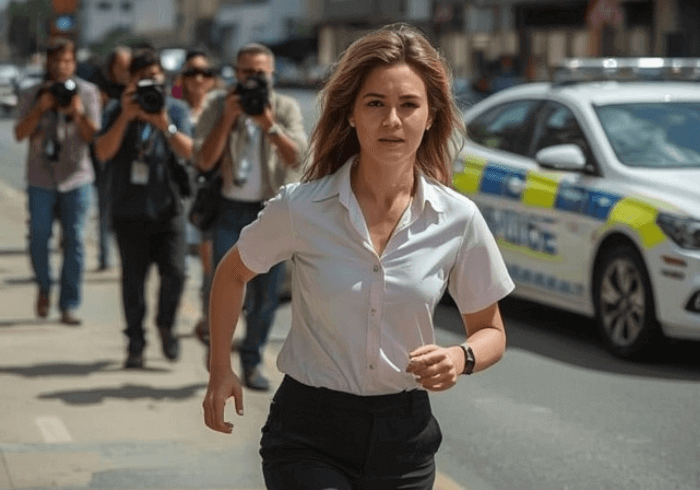
On our way to the police vehicle, the conditions outside the courthouse were even more chaotic. When I reached the waiting police vehicle. Reporters and photographers swarmed the pavement, chasing me like a flock of hungry wolves. Cameras continued flashing, and voices continued shouting questions I couldn’t even make out. My chest tightened. There was nowhere to run and nowhere to hide.
I plunged into the vehicle just in time, falling onto my stomach across the backseat and covering my face to escape the clicking cameras. At the same time, the driver forced the car through the crowd, tyres screeching as the flashes of camera lights exploded outside the windows.
Before plunging into the vehicle, I turned once more amidst all the chaos, looking at my mother, briefly recollecting the one bail condition: one that struck me differently - after Stikland, I was to live with my Mom.
The irony wasn’t lost on me. In the most broken, fragile moment of my life, I would be sent back to the one place that had always been both my refuge and my support: my mother’s care, my safe space.
I turned away, heading for the waiting police vehicle, leaving behind the courthouse, with its cold walls and relentless eyes, which had given me both judgment and reprieve. I knew it was only the beginning of a long road ahead, but at least for then, I could breathe again.
As I was lying on the backseat, thousands of thoughts rushed through my mind; 30 days behind the walls of Stikland, with a doctor, a psychiatrist, a psychologist, a social worker, and a pastor, evaluating and questioning me to decide if my mind itself could be trusted. Thousands of questions I would most probably not have answers for, and my life would be in someone else's hands to determine if I was fit to stand trial. It hit me like a wave I couldn’t outrun. Stikland Psychiatric Hospital. 30 days locked inside a forensic ward, not for punishment but for scrutiny.
And then, freedom, but not the kind I had once known. It was a fragile, conditional freedom. And it came with the quiet, unwavering presence of the woman who had never left my side, even when the rest of the world had already decided I wasn’t worth standing by; one of them, my father and my siblings.
I lay there, frozen, while the noise faded behind us. Every bump in the road jolted me back to the reality of where we were heading. Stikland. The name alone carried a weight everyone in Cape Town understood. People whispered about it with fear and pity, a place for the broken, the dangerous, the lost. Now I was on my way there, not as a visitor, not as a worker, but as someone to be tested.
A dear friend can steady the body, but it cannot bandage the unseen fractures of the heart.” - Elmarie Heckroodt
“Everything’s okay… You can sit up straight now,” the driver said, his voice trembling after the chaos outside. I slowly pushed myself upright, still shaking.
Only then did I notice Ronel sitting quietly beside me. A colleague, a familiar face, in the middle of a day that felt like a nightmare.
I stared ahead, numb, my eyes wide but unfocused. Terror sat heavy behind them, a silent shadow. Whatever came next, I told myself, wouldn’t touch me. I tried to stay frozen, to block it all out, to pretend I was somewhere else, somewhere safe.
For a split second, I imagined Lizette’s arms around me, the way she used to hold me when the world felt too sharp. I wanted to cover my ears, to shut my eyes, to keep the noise and the flashing memories from reaching me. Even the sound of passing traffic made my stomach twist.
The tears came anyway. They tore through me, sudden and unstoppable. I cried until my chest ached, until I felt a weight like a stone dragging through my heart. I wanted to undo every single thing that had led to this moment, to claw back the time before loss, before the court, before Stikland. My arms shot out, striking the seat in front of me in wild, helpless bursts.
“No!… no!… it didn’t happen… it didn’t… It’s not! She died for nothing! For nothing! She died from a bullet I didn’t even realise when the trigger was pulled.” My voice cracked on every word.
Ronel reached for me, her hand warm and steady. Her quiet presence pulled me back just enough to breathe. By the time the driver parked outside Stikland’s reception area, the fight inside me had drained into a hollow stillness. I felt wooden, like my body was moving, but my spirit had been left behind.
“It’s my fault, isn’t it?” The words slipped out before I could stop them. “Don’t say a thing like that, Elmarie,” Ronel said softly. “It’s no one’s fault. It was an accident. The hand of fate. You have to believe that.” “If I had loved her more, or given her more, she’d still be alive,” I whispered, turning to her, desperate for an answer that could rewrite the truth. A moment of anger erupted from me when I screamed: "Why the fuck did Liz return the gun that morning? Why?... Why?... Fucking why? But I knew even before Ronel could speak that nothing she said could bring Lizette back.
“Do you hate me because of what I’ve done?” I asked through the tears. “No, I don’t hate you,” she said firmly. “I love you just as much as always. You will always be my friend. If only I had known you were suffering.”
Her eyes filled with tears. She reached for my hand and looked away. “I just wish things were different for you...you came to my office every morning for coffee...you never implied that something was unraveling inside of you...I was always under the impression that you were happy, especially after moving into your new house." She turned and looked at me, lifting my face gently so that she could look me in the eyes, and said: "I am so sorry I didn't sense anything...I only now recognize the reason for you popping into my office for coffee every single morning...I'm sorry, Elmarie."
I couldn’t answer. Instead, I pulled her close and held her. Gratitude burned through the pain for the kindness in her words, for the way she stayed when so many others had turned away. I wished my tears could wash the guilt from my heart, but all I felt was the sharp edge of self-reproach, a wound no amount of crying could heal.
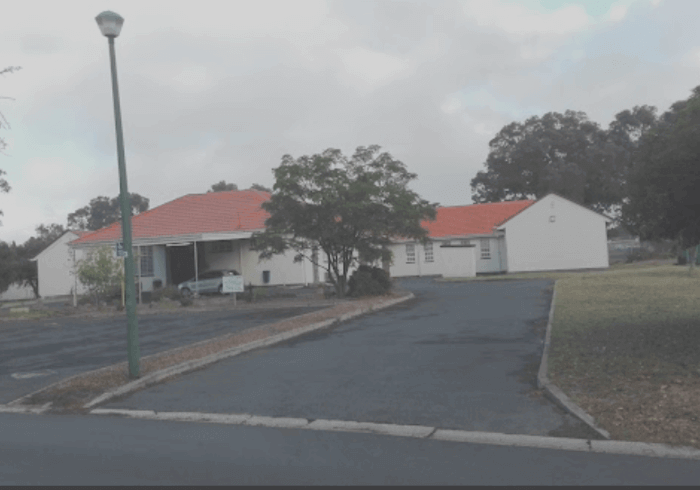
“This is where help and captivity quietly shake hands.” - Elmarie Heckroodt
I received a friendly but strict welcome from the ward sister and the nurse on duty. After they’d completed the standard proceedings and paperwork for new admissions, I felt as if I had just entered a prison disguised as a hospital. They were polite enough, almost gentle in their tone, but every step of the process carried the quiet authority of people who had seen everything and trusted no one.
I was strip-searched. Each of my personal items was practically put under a magnifying glass. A detailed list of my belongings was written out, item by item, as though my toothpaste or a single pen might suddenly become evidence.
I was escorted to a small office that doubled as a dressing room, the air sharp with disinfectant and an undertone of old paper and long forgotten files. A nurse and the head sister flanked me like bookends.
Then came the part that cracked open the reality of where I was; they took everything: my cell phone, my prescription medication, even the shoelaces from my shoes. I stood there barefoot on the cold wooden floor as they sealed my razor in a zip-lock bag marked "Harmful", a word that now seemed to hang in the air like a sentence. When they reached for my cell phone, I nearly choked. It wasn’t just a phone; it was the last fragile thread to the outside world, and now it was gone.
For obvious reasons, they explained, you are cut off from the internet and any potential self-harming materials. The words sounded clinical, but underneath was an unspoken message: We don’t trust you...yet.
I was allowed only the harmless things: clothing, a bar of soap, a facecloth, and a towel, a few books, a couple of photo albums, but even the clothing came with restrictions. No belts. No drawstrings on hoodies or sweatpants. Nothing with violent images. No gang-related t-shirts.
And then, with a flash of dry humor that I barely caught, one of the nurses quipped, “But hey, you can walk naked if you want, just for the fun of it or to be different.” The joke landed awkwardly, hanging somewhere between a dare and a warning. Or maybe she said it to break the ice, because she could sense my anxiety and fear. I didn’t laugh, because maybe they would think that I am not taking them seriously. “You’ll keep your toothbrush with the nurses,” she added casually, as though it were normal to ask permission to brush your teeth.
Then came the line that tightened the knot in my chest. “You’ll need to prove yourself worthy of being kept here under the court order,” the ward sister said, her voice even but sharp as a scalpel. “If you harm yourself or anyone else, or break any rules, you’ll be sent straight to prison. No questions. No second chances.” I decided then and there to obey. Whatever this place demanded of me, I would comply.
They continued to rummage through my suitcase, their hands moving with the detached efficiency of people searching for contraband. My food, cold drink, and cigarettes, kindly packed by my mother, were plucked out and set aside. Gone.
“There’s a strict schedule to things,” the ward sister announced, her stern voice slicing through the quiet room. “We wake up at seven. Wash up and be ready for breakfast at nine. You have thirty minutes to eat. Know this: glances will be thrown around the table. Just ignore them. We house very sick patients here. Do not interfere with outbursts or meltdowns; you are not qualified to handle those situations. Some of our patients are forced to abandon their compulsive routines to fit these rules. Many struggle. Some end up in tears. Some throw temper tantrums. Some just give up. Get used to it. You will see patients freak out and witness all sorts of creative and innovative methods of beating the system.”
Inside my head, my thoughts were already answering her. "Okay, so this is it. This is where I live now."
She wasn’t done. “Lunch is at 1:30. Same rules. A therapy session with your psychiatrist is included in your daily routine, followed by another with your psychologist. There will be homework. Then whoever else is scheduled to see you: a doctor, a social worker, a pastor. Be ready for your appointments. Don't be late. Family and friends may visit only after your evaluations are completed for the day.” “Thank God for allowing regular visits,” I almost said out loud, clinging to the one small mercy she offered.
When the paperwork was finally signed and the last confiscated item sealed away, a nurse gestured for me to follow. My shoes squeaked against the polished wooden floor as we moved down a corridor that smelled faintly of bleach and something older; stale air that had seen too many midnights.
“This is your room,” the nurse said, pushing open a heavy door with a push that felt final.
But it wasn’t a room. It was a hall. A cavernous dormitory lined with beds, row after row, like sardines in a tin. Crackling white linen stretched tight over mattresses that looked too thin to hold a body. Pillows sat upright, puffed up as if inflated with helium, a false promise of comfort. Barred windows cut off any notion of escape, and a mirror and sink sat stranded in one corner like afterthoughts. No curtains. No sharp edges. A room designed to keep you alive, not comfortable. In another corner, steel cabinets stood silent and locked. The wooden floor squeaked under our steps, a sound that immediately marked me as the new arrival.
Your first thought when entering a place like that is that everything about it feels like an open invitation to suicide. There’s nothing warm, nothing soft, nothing to anchor you. Just an echoing space where suffering is laid out in neat rows, with each bed holding its own story.
As the nurse walked away, her shoes clicking against the boards, I stood frozen by my assigned bed, clutching my suitcase in my hand. Around me were murmurs, coughs, the low creak of someone rocking back and forth on her bed, the faint smell of antiseptic mixed with sweat. And in that moment, it hit me fully; this was my life now. This hall, these beds, these barred windows. This was where the system would decide whether my mind itself could be trusted again.

“The bed marked where I would lie, not where I would belong, a space assigned without comfort or claim.” - Elmarie Heckroodt
I slowly let my suitcase drop onto the thin mattress of my assigned bed, my body already aching from the tension of the morning, from the uncertainty that clung to me like a second skin. I sat for a moment, staring at the neat rows of beds stretching away from me, at the pillows that seemed too puffy to be real, the squeaky floorboards, the mirrors and steel cabinets that glinted like silent sentinels. Each detail felt designed to remind me that I was not here by choice.
The ward sister’s voice echoed in my memory, strict and unyielding.
"Dinner takes place at 7:00 pm. Same rules. No consumption of food is allowed after that, and you are not allowed to visit the toilet for 30 minutes after meals."
"That's okay," I thought. "I'll just shit on the floor," and I mischievously smiled inwardly, just to release some tension within my entire body.
The echo continued, "There isn’t a specific time for lights-out, although the lights go off at about 10 pm. No roaming around after lights out. Just stay in your room."
"Just stay in your room", I caught myself grinning at the absurdity of it and thought, “Can I at least talk to myself in third person?” “Sure, but only if the third person stays in the room too,” the thought replied. As I watched through the barred window, catching a glimpse of the moon, I just stared and thought, "Well, at least I wouldn’t be lonely." “Is there something ghostly contagious in this place, or why am I having these silly thoughts?” I thought.
It was just past 11 a.m. when I arrived at the ward, and breakfast had already passed, though I had access to the ward kitchen where coffee and oatmeal porridge were available. I wasn’t hungry; I just wanted to lie down and let the walls close in around me for a while. After I locked my few belongings into a steel locker, I asked, “Where must or can I smoke?” I asked hesitantly just before the nurse exited the room.
“You are not allowed to have any packets of cigarettes in your possession,” came the reply. “The hospital staff will hand out your six cigarettes for the day. That is it. If you don’t shower or bathe between 7:30 and 8:30 in the morning, you have to wait for the following morning and hope you make it in time. Bathrooms are locked at night and only opened when you want to use the toilet.”
I could feel my jaw drop. Six cigarettes every twenty-four hours. If three things in this world drive me ballistic, they are withholding my cigarettes, restricting my right to be clean, and taking away my prescription medication. Up until then, I had been on medication for anxiety, depression, and severe headaches for the past five years. There was nothing I could do. Rules were rules, and while rules previously had sometimes bent around me, there, every line was a hard barrier.
Many people imagine psychiatric hospitals as nail-biting, horror-movie prisons, with padded walls, flickering lights like candles in the wind, and cold, emotionless, butch nurses watching your every move. A place where you sit in a hospital gown, one size fits all, barefoot, hair shaved, under constant supervision, stripped of identity. But the hospital I was in looked nothing like that. It resembled a dormitory more than a prison, with extra locks on the doors and bars across every window. Once the front security gate slammed behind you, there was no leaving.
The realization of being trapped in this ward, surrounded by people who weren’t speaking to me like humans but spiraling through medication-induced chaos, was overwhelming. The sense of powerlessness, the constant edge of fear, is something I can’t describe fully.
Most people only see mental illness in movies; they never experience the raw, human side of it.
For me, it was a huge eye-opener. At first, the experience was unsettling, even terrifying, but over time, it changed the way I see people with mental disabilities. It was a harsh, painful, but ultimately enlightening lesson in humanity.
I think that some of the patients who are there involuntarily do not want to be there, and I could see why. But that wasn’t the point for me. I had to go; not because the judge thought I needed a vacation, not because anyone thought it would be a helpful retreat, but because a court order forced me inside those walls. Every rule, every locked door, every barred window reminded me that this was a place of scrutiny, not comfort. And I had no choice but to face it.
A long month of Social worker, Psychiatric, and psychology sessions, Medical consultations, and the more than often visit of a pastor lay ahead, but I didn’t care about that then. Briefly, the thought of committing suicide appeared in my mind, but I was too exhausted to entertain and analyze the horrendous thought. There was no point in killing myself anyway. I still had so much to be grateful for: a loving and caring mother, a gracious God, and my life. I just had to keep that in mind at all times; otherwise, I would go crazy and do something irresponsible.
Lying there on the bed, its clean, crackling white linen, I started losing the fight against sleep and eventually drifted off to a deep sleep. The last bit of energy had been drained from my entire body due to the events of the day and the lack of proper sleep for many days.
The dream came just as soon as I fell asleep. I dreamt about my mother, whom I so dearly loved and felt that I had betrayed in so many ways. The aged and tender woman appeared to me. She was wearing a black dress and was on her way to Lizette’s funeral. She told me that she was on her way to the funeral to show her last respect and celebrate her gratitude that I was still alive.
When I woke, the dream clung to me like a weight. The ward was quiet, the faint creak of the wooden floor and distant murmurs from the far end of the hall the only sounds. I lay for a moment, letting the afternoon light cut across the rows of beds and the barred windows.
Everything around me reminded me that I was trapped. My cigarettes, my phone, my prescription medication, everything that gave me control, was gone.
All that was left was the room, the rules that pressed down on me like an invisible weight. They weren’t just written on paper; they lived in every locked door, every timed bathroom break, every rationed cigarette. They seeped into the way the nurses walked the halls and the way the patients kept their eyes low, as if even their thoughts were being measured. There, compliance wasn’t a choice; it was survival.
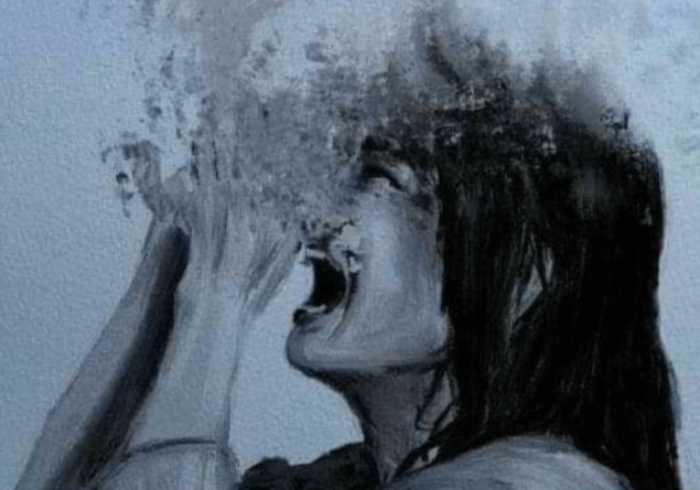
“They said it was to keep my mind clear for their evaluations, but it felt like punishment - no pills, no nicotine, only the slow burn and raw edge of withdrawal while measuring my sanity.” - Elmarie Heckroodt
Dinner clatter echoed from the distant ward kitchen, but I stayed where I was, staring at the cracks in the ceiling as if they might reveal a way out. The barred windows threw long stripes of light across the squeaky wooden floor, sharp and cold, like a reminder that freedom existed only a few feet away but remained untouchable, like a promise I couldn’t touch. Time inside those walls didn’t flow as it did outside. Minutes stretched, warped, turned into a strange kind of eternity.
I could almost feel the eyes of the institution on me: I imagined the social worker with her clipboard, the psychiatrist with her quiet, probing questions, the psychologist searching for hidden meanings in my words.
A month of sessions lay ahead, but in that moment, the idea of analysis felt absurd. What could they possibly find in me that I hadn’t already torn apart myself? My mind wasn’t sick; it was tired; tired of fighting, tired of pretending, tired of being judged.
Somewhere deep down, a small voice reminded me to hold on to the memory of my mother. Her quiet strength, to the stubborn belief that God still had a plan even when I couldn’t see it. I repeated these thoughts like a private mantra, not because they erased the fear, but because they kept it from swallowing me whole.
The room door creaked open; it was the night duty nurse. I noticed her shadow falling across the floor.
“Dinner is served at 7:00 p.m., be there, you have to eat something”, she said, almost with a caring tone in her voice. I leaned back against the cold wall; the beds around me were still; some of the patients lay curled under their helium-light pillows, others sat upright staring into nothing.
I realised then how alien this place was; a world suspended between life and something else, a room for minds deemed unfit to walk free. “I’m not hungry”, I replied, “but I would love to have one of my 500ml bottles of Coke, which the day shift staff took from me, and when can I get my cigarettes”? “Okay”, the reply came. “I’ll get that for you, but you have to attend the breakfast table tomorrow morning; otherwise, I have to report that you are refusing to eat.” I ignored that remark and asked her when I could shower, since I’d only showered that morning before I went to court, and I just wanted to feel clean and fresh.
Her answer came as a bucket of ice water: “When you see THIS face, you don’t ask me to shower or any other favors.” I demanded that I needed to shower because of all the stress I’d experienced during and after the bail hearing. Eventually, she granted me my wish, and from then on, I was privileged to shower every morning and evening under her watchful eye. She mostly worked the night shift during my entire stay there. The sight of someone standing there, clipboard in hand, while I dragged a razor across my own legs and armpits, was both degrading and humiliating.
Other than that privilege, it was as though every small act of control had been stripped from me, piece by piece, leaving only the raw outline of who I used to be. After I showered, I returned to my bed and sat there for a long time, staring at the barred windows. This wasn’t a holiday. This wasn’t a retreat. This was a sentence without a cell door, a test to see if my mind could be trusted, a cloud hanging over me where I had no say in the outcome. And yet, I was breathing, still alive, still watching the man in the moon winking at me through the barred window. (No, I’m not crazy - just checking if you are still reading).😁
"Conversations floated where no mouths moved, like echoes from a world just out of sight." - Elmarie Heckroodt
From the moment I was admitted, it was obvious that I would be treated according to the media coverage that had splashed my name across every newspaper and magazine in the country. It wasn’t my imagination, nor self-pity, nor some twisted attempt to claim a victim’s role.
I could feel it in the air, in the measured pauses between words, in the eyes that slid across me and then away. It wasn’t cruel or openly disrespectful. It was worse; a quiet verdict that said without speaking: "You are a murderer." Every conversation, every signature on a clipboard, every glance over the top of a pair of glasses carried that unspoken sentence.
The patients didn’t care. Why would they? Most of them were so sedated they wouldn’t have noticed if I’d walked in wearing a crown and waving to an invisible audience. To them, I could have been Queen Elizabeth or nobody at all. But the staff, oh, they knew. They had read the stories, the headlines soaked in sensationalism. I could feel their caution like a draft under a locked door. They spoke politely, their smiles practiced, but behind it all was that quiet calculation: dangerous until proven otherwise.
I was already wearing the label of murderer, even though no judge had yet spoken the word. Was I criminally insane? No. But that didn’t matter. I was a forensic patient then, stamped and categorized, my life reduced to a file thick with speculation. I was now a number in a system designed to decide if my mind could be trusted with freedom.
There were two of us under that cold classification of "forensic patients." The other was an elderly woman whose crime seemed almost laughable in comparison: theft.
I overheard a nurse call her a kleptomaniac one evening, the word rolling off her tongue like a diagnosis and a curse. A kleptomaniac, a person driven by an uncontrollable urge to steal, not for need or gain, but for the strange, fleeting relief it brought. The elderly woman shuffled through the ward with a kind of sad dignity, her gestures small and hesitant, as if even reaching for a glass of water might betray her secret compulsion. I felt a pang of pity for her; her crime was petty, but her punishment felt as heavy as mine.
The rest of the ward, twenty or so souls, were a shifting sea of instability. Some knew they were sick and clung to their treatment like a lifeline. Others wandered in a fog of denial, trapped in their own storms, unaware of how far they’d drifted from the shores of sanity. Their moods rose and fell like a rollercoaster: laughter one minute, tears the next, outbursts that cracked the stale air without warning.
And there I was among them, neither fully one of them nor entirely apart, a woman caught between the world’s judgment and the cold machinery of a system that would decide who and what I truly was.
The following morning, I went for my first of many psychiatric evaluations, a routine that quickly became the rhythm of my days. I was introduced to my appointed psychologist, psychiatrist, and social worker, each of them carrying their own stack of files, their own quiet exhaustion.
Some days I met all three at different times, other days only one or two, but never a day passed without at least one appointment. It was relentless, like clockwork. From the start, it was obvious that they were overworked. Typical government facility; understaffed, overloaded, and running on fumes. Their faces told the story long before their words did. There were moments when I could see it in their eyes: the silent calculation of how much of me they could manage to hear before moving on to the next patient.
I often felt like a case study instead of a person. They weren’t cruel or dismissive, but there was a routine to their questions, a clinical rhythm that left little room for real conversation. They followed the procedure the way a surgeon follows a checklist; precisely, without distraction. My evaluations were not about comfort; they were about gathering evidence. Every question was designed to probe, to measure, to build a profile for the court. These weren’t ordinary therapy sessions. They were forensic psychological assessments, and in my case, the results would help shape the judge’s final decision.
They dug deep into every corner of my life: my childhood, family, medical history, relationships, education, work, and the events that had brought me there. They asked about substance use, about fears and habits, about every shadow I might have hidden. Even my thoughts were dissected: how I felt, how I reacted, how I coped. It was unsettling to realize how much they could pull from a single answer, how quickly they could spot patterns I didn’t even know were there.
One truth became clear early on: no one walks out of a psychological evaluation with a clean slate. Nobody is perfectly normal. We all carry quirks, scars, or hidden fractures that place us outside the neat lines of “average.”
The process wasn’t about proving I was sane or insane; it was about finding something. And they always do. In that room, under their steady gaze, I felt them peeling me apart layer by layer, searching for the pieces they could name and classify, until even I began to wonder what they might find.
Every day was extremely and unbelievably boring. Time moved so slowly it felt as if the clocks had forgotten how to turn. I couldn’t interact or socialize with the other patients, and even if I wanted to, there was no one to really talk to. Most of them weren’t even aware of where, what, or who they were. They floated in their own worlds; some stared into space, others mumbling to themselves, too lost in medication or illness to connect with anyone around them.
Sometimes, a few of the staff members would pause for a moment, sharing a bit of light, animated chit-chat, but it never lasted long. They were careful, always keeping a professional distance. Rules made sure of that. No one was allowed to get too close, too personal.
By the end of each day, the only real therapy I had, the only human warmth I could count on, was when my mom came to visit. Her presence broke the monotony like a ray of sunlight piercing a dark room. For that short time, I felt seen, felt human again. When she left, the silence returned heavier than before, wrapping itself around me like a damp blanket.
Life inside was structured to the minute. A schedule dictated everything: when you woke up, when you ate, when you were expected to “participate,” and when you were left to simply exist.
They encouraged you to follow it, but almost nothing was forced, except my scheduled daily appointments.
Most patients spent their first days hidden away in the room, lying on their beds in a medicated fog. I did the same, venturing out only when it was time for an evaluation with one of the appointed doctors. New arrivals would appear and then vanish back into their room, sometimes unseen for days. The staff expected this withdrawal and didn’t press, at least not in the beginning.
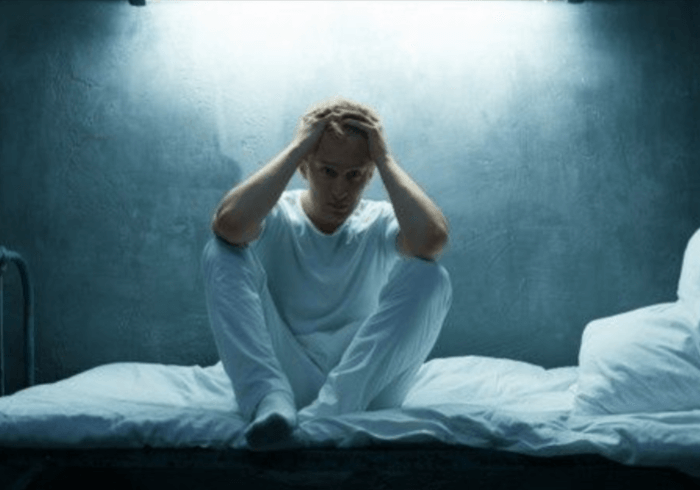
"The hardest hours were not the days filled with others, but the nights spent face to face with my own unfiltered reflection." - Elmarie Heckroodt
During the day, there was nothing to do except roam the corridors or sit on the long porch that overlooked the grounds. It reminded me of an old-age home: rows of chairs filled with people sitting silently, eyes fixed on nothing, as if life had already moved on without them. Loved ones had left them to the mercy of time, and now they were just waiting, though for what, no one could say.
And while it seemed quiet, the staff were always watching. Not in secret, but with a quiet vigilance that became unsettling once you noticed it. Nurses and security guards walked slowly through the halls with clipboards in hand, chewing on pens, jotting notes with deliberate care.
They weren’t just observing; they were cataloging. Every movement, every gesture was marked down. They recorded whether you were socializing, sitting, standing, lying down, sleeping, reading, coloring, watching TV, crying, using the phone, or, strangely enough, being happy. Whoever designed that checklist must have spent hours dreaming up every possible human action.
If you happened to be sitting and socializing while the television played in the background, they would tick off four boxes at once. It was almost comical, except for the fact that it was my life being reduced to marks on a page. "At least," I thought with a pinch of mischief, "there wasn’t a box for activities while on the toilet."
One evening, while drinking coffee with the night-shift nurse, I caught a glimpse of one of those sheets on the desk next to the computer. Through narrowed eyes, I could see the list of every patient’s name lined up neatly beside rows of tiny boxes. Each tick was a quiet record of our existence, proof that even in our silence, nothing went unnoticed.
“Each checkmark felt like a quiet verdict, flattening my days into a language only statistics could read.” - Elmarie Heckroodt
And just as boring as it was, it would suddenly and often erupt into a noisy and chaotic place when one or more patients started having an outbreak. These occasional outbreaks would happen more than once, and it scared me to quite an extent, because it wasn’t the person herself who had the outbreak, but the voices inside their heads who told them to act in a certain way.
It wasn’t a nice picture to see. When these things happened, I remained as calm as possible and was told not to attempt to get involved, although at times it was difficult to restrain myself when I felt a patient was being mistreated. They would restrain her with a straitjacket, give her an injection, and then carry her to a room that I’ve never seen on the inside. But the thought of what it looked like on the other side of that room’s door was scary, very scary.
The sounds of an outbreak were unlike anything I had ever experienced; shouts that started as a low tremor and then swelled into a storm of screams, furniture scraping across the floor, the hurried footsteps of nurses rushing in. There was a rhythm to the chaos, as if the voices inside the patient’s head were conducting an orchestra only she could hear. Watching it unfold, I felt both frozen and exposed, my heart pounding in a body that refused to move.
These women who hear voices might also be very good listeners when they have the right medications, and be a good person to talk to when you need someone to open up to a little. I had spoken to one of them on quieter days, when her eyes were clear and her voice soft, when she could laugh at a joke or share a small story from her life before the voices came. She knew the voices weren’t real, but knowing didn’t stop the sound. She explained it once in a moment of calm; it was like wearing headphones with the same song on repeat. You can press pause in your mind, but the music keeps playing anyway.
Ironically, she went to school with my younger sister. She had been top of her class in music, and after matriculation, she joined a band. That’s where she was first introduced to crack and cocaine. Experimenting with other drugs eventually led to her starting to hear voices.
Weekends, she was released into her parents’ care, but each Sunday at 5 p.m., she had to return to the ward, back to the noise and the rigid routines, the rooms lined with beds, the staff watching every move.
Months later, my father, who had known her parents, told me she had committed suicide. The words hit like a stone in my chest. The bright, talented girl who once could laugh and play music, now reduced to a memory, gone. Just another statistic. I thought of her headphones, the song that never stopped, and I shivered. Even in a place designed to observe, evaluate, and protect, some of the suffering couldn’t be fixed, couldn’t be silenced.
There was something heartbreaking about that awareness: to recognize the illusion, to see the strings, and still be pulled by them. It made me wonder how thin the line really was between her world and mine, between reason and madness. Maybe the only difference was a matter of timing, a bad chemical turn, or a single unbearable day.
Still, under no circumstances could I allow myself to get into anything that might put my bail application at risk. I had to stay quiet, stay still, and let the storm pass. Every outbreak was a test of restraint—not just for the patient, but for me. I learned to sit with my fear like it was another patient in the room, breathing beside me, waiting for the next unpredictable sound.
"I counted shadows instead of hours, knowing each one carried me closer to a verdict I could not escape." - Elmarie Heckroodt
Forget about meditating or time spent alone with yourself. The only time that I could have some “me” time was when I went to bed at night. Those were the hardest times. The atmosphere was eerie, and when sleep wouldn’t come, the events of the evening on which Lizette had died came crawling like a fog of smoke, enhancing my entire humanness, sometimes to such an extent that it felt as if I couldn’t breathe. It felt as if something or someone was choking me. Afterward, I would just lie there, numb, staring at the reflection of the moon against the ceiling, thinking about what was going to happen once this 30-day observation period was over.
The most annoying thing was that at night there was always some noise. The nightshift staff talked in low murmurs, a patient coughing, farting, or burping despite the heavy sleeping medication. Everything carried through the corridors like a distorted soundtrack. These corridors were echo chambers after dark, and the slightest sound seemed to ricochet off the walls and settle into my bones.
I was not entitled to any medication or drugs because I had to be of a sober mind for the daily evaluations. Each sleepless hour stretched like a lifetime. Many nights, when sleep refused to come, I would walk down the dim hallway to the night-shift nurse’s office, drinking hospital coffee and chatting to pass the time. But not every nurse, sister, and security guard allowed it. Especially one sister kept her eyes fixed on the rules more than on the faces of the people living inside them.
Those nights when I couldn’t sleep, I just needed to talk to someone; someone who would tell me that everything was going to be okay. I desperately needed that assurance, but no matter what anybody said, it would make no difference to the bail conditions or the Supreme Court hearing procedures awaiting me. Still, I needed someone to talk to, if only to quiet the noise in my own head.
Eventually, I made peace with the fact that many of the patients, by the nature of their mental illness, took up most of the nurse’s time. It was frustrating; after all, I was also a patient and needed to be heard. But after a while, I let them go and accepted that they needed more attention than I did.
Daytime was better; I had my appointed psychologist, psychiatrist, social worker, or pastor to talk to.
Even sleep came with its own interruptions. Every patient had to be checked. On the hour, every hour, a nurse would appear at the foot of my bed to make sure I was still breathing, still behaving, still there. They never touched me or spoke much, just stood there like silent sentries before moving on to the next bed. At random times through the night, the nurse would walk in and shine a torch directly into my eyes; an intrusive flash that ripped me from whatever shallow rest I had managed to find.
One night, a small act of rebellion broke through the monotony. I was experiencing heavy nicotine withdrawal. I convinced the night nurse to hand me a full packet of cigarettes instead of the usual six, and she slipped it under my pillow with a quick, knowing glance. From then on, she did it every night, a quiet exchange of trust in a place where trust felt almost extinct.
By this time, Olla, the night shift nurse, and I had become relatively acquainted. She worked mostly night shift, except when it was her days off, and our small conversations over lukewarm coffee slowly grew into an unspoken friendship.
Word of her kindness traveled, and more than once she was reprimanded by head office, after rumors spread that she was granting me privileges she wasn’t allowed to give. But neither of us was overly concerned. We simply changed our routine and spent less time together. What also nipped at me at times was that I could sense a strange, almost eerie, and unspoken attraction between us.
Another concern I had was that she might lose her job. Olla was also a smoker and a lesbian, so she understood both the craving for nicotine and the deeper hunger for connection in a place designed to strip you of both. That single packet, hidden beneath the stiff hospital pillow, became my secret lifeline, a tiny reminder that even inside a locked ward, small freedoms could still be smuggled in the dark.
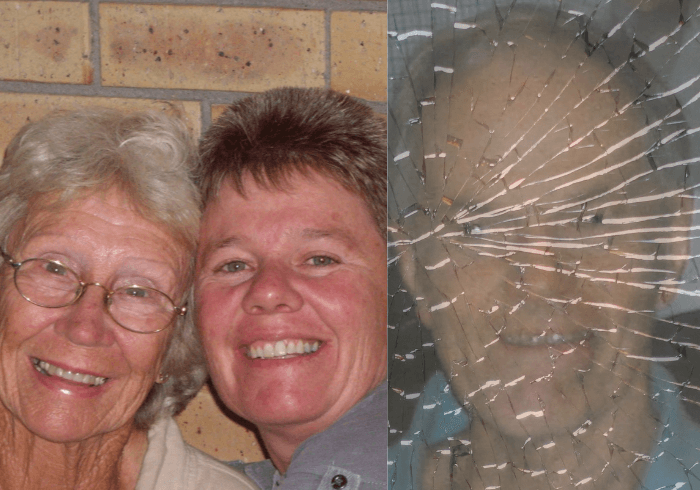
"My mother held me in silence when words couldn't reach, but my father forced his voice into every crack of my existence." - Elmarie Heckroodt
Visitors became the only lifeline to the outside world, a fragile thread that reminded me I still existed beyond those locked walls. I was technically “lucky” to be allowed visitors every day. They could bring food, clothing, books, and cigarettes.
But even those small comforts came with conditions. Bags were searched, items rationed, and nothing truly belonged to me anymore. I could sit across or next to someone and smoke freely while they were there, but once they left, I was back in the cage.
At first, a handful of friends showed up. They smiled awkwardly, tried to comfort me with meaningless chatter, and then slowly disappeared, one by one. After the first week, they were gone. It was too much for them. Too uncomfortable. Too confronting.
My mother, though, came every single day. One hour, sometimes more if the nurses allowed it. She was my anchor and my glue, even when it felt as if I was falling apart. I could scream, cry, unravel in front of her, and still she stayed. That one hour of unconditional presence kept me sane in ways no therapy session ever could.
But then there was my father. His less frequent visits weren’t about love or support; they were about control. He showed up once, maybe twice, and even then, it wasn’t to see me. It was to drop off photo albums and some admissible personal things he thought I needed.
Meanwhile, behind my back, while I spent my time in that ward, he sold my car and my house. He canceled every single one of my life insurance policies. He even went as far as to file for my police pension to be paid out. Without my consent. Without even a discussion. As if I didn't even exist or have a say in my own finances and property. In retrospect, I think he thought I would receive a life sentence.
I cannot describe the rage and disbelief that ripped through me when I found out. Imagine being locked away, already stripped of dignity, already treated like a number, already waiting for the Supreme Court to decide your fate, and then learning that your own father had gutted what little you had left. My possessions, my financial safety net, my independence; gone. And the way he justified it still makes my blood boil.
According to him, he was doing me a favor. He told me, almost smugly, that he had taken care of everything so I would have money while I stayed with my mother after my release from the hospital, to carry me through until sentencing, and even to support me financially once I was serving my time. The arrogance in his tone was unbearable, as if my fate had already been sealed in his mind, as if he knew without question that I would spend years, maybe life, behind bars. He wore his so-called reasoning like a badge of honor, twisting his betrayal into an act of sacrifice. But I didn’t ask for that sacrifice. I didn’t ask for him to strip me of the little stability I had left.
And when I confronted him about his audacity, about how he had made life-altering decisions behind my back as though I were already condemned, he brushed me off with a cold wave of superiority. He claimed I was “emotionally unstable,” and therefore, in his words, it wasn’t possible to have a rational discussion with me about what he had done. It was the perfect excuse for him to bulldoze over my autonomy and then walk away as if he had done nothing wrong. In that moment, I realized he wasn’t just managing my affairs; he was erasing me, rewriting my story into one where I had no voice, no say, and no control over my own life.
And he had the arrogance, the breathtaking arrogance, to stand there afterward and brag about it. He told me, almost proudly, that if it weren’t for him, I would never have received a cent of that pension. As if I owed him gratitude for dismantling my life. As if I should thank him for swooping in and taking over, like some twisted savior.
The tone in his voice wasn’t one of concern; it was ownership. He spoke as though my life was his to manage, his to profit from, his to call the shots on. One would have sworn, listening to him, that I was already sentenced to life in prison. That I was beyond saving, and he was simply handling the funeral arrangements for my future. The way he spoke, it was as if my existence was already sealed behind bars, and my only worth was in the scraps he could salvage from the wreckage.
That arrogance left me gutted. Angry beyond words. But also hollow. Because what could I do? I was trapped in there, powerless, dependent on the very people who were dismantling my life outside. I wanted to scream, to fight, to take back what was mine, but instead I had to sit with the reality that the one man who should have been protecting me was already burying me alive. Many would most likely see this as being ungrateful, but this is my story, my life, my opinion.
None of my siblings came to visit. That silence gnawed at me, but I pushed it down. I had bigger fears to wrestle with, like what the judge would decide, how many years of my life I was about to lose. But if I’m honest, what I wanted most after that first week wasn’t more visits, it wasn’t even justice. I just wanted to go home. To unlock the door to my own space. To breathe air that wasn’t rationed. To feel like my life was still mine.
But in that place, home felt like a dream I’d once had and forgotten the details of. And outside those walls, the pieces of my life were being sold, canceled, claimed, until I hardly recognized them as mine anymore.
During my stay at the institute, I made friends with some of the nursing staff as well as a few of the security guards, which made the experience slightly more bearable. Their presence reminded me that not everyone there was cold or indifferent. Small gestures, like a quiet smile or a nod in the hallway, meant more than I could express.
I also found that it was best to be kind and helpful to other patients who weren’t as mentally ill or unstable as the majority. In a place where emotions run high and instability is common, a little empathy went a long way. We all needed that sense of worth, that feeling of belonging, even if it was temporary, even if it existed only for a few hours between evaluations and therapy sessions. Regardless of our personal storms, we all craved the reassurance that we mattered, if only to ourselves and to one another.
Many times, I thought about the real reason for being sent there. Maybe, strangely, it worked because it was a forced break from the world. A chance to step away from the constant demands, the noise, and the relentless expectations of life outside. It was an opportunity, albeit a harsh one, to rest, to reflect, and to focus on myself without interruption.
At the same time, the staff, psychologists, and social workers were quietly observing, documenting, and analyzing. Every movement, every reaction, every flicker of emotion was being noted, compiled, and translated into a thorough evaluation report.
The report would later determine how I was perceived legally; whether I showed remorse, whether I could be trusted, and whether my mind could be considered stable. It was a constant reminder that none of this was just for me; it was also for the court, for the system that had already decided my life needed to be scrutinized.
There was no free access to telephones. The ward had a single phone, shared among everyone for local calls, while a security guard hovered nearby, listening to every word. Privacy was minimal, and every conversation felt like it was filtered through an invisible lens of judgment. The only person I called while I was there was my mother. Her voice became my anchor, my lifeline, the only connection to the world that mattered to me.
And then there was the television, my single window to the outside. Through that flickering screen, I could glimpse life beyond the ward’s walls, a life that felt distant and almost unattainable. But even that small glimpse was enough to remind me that the world continued, whether I was trapped behind those locked doors or not.
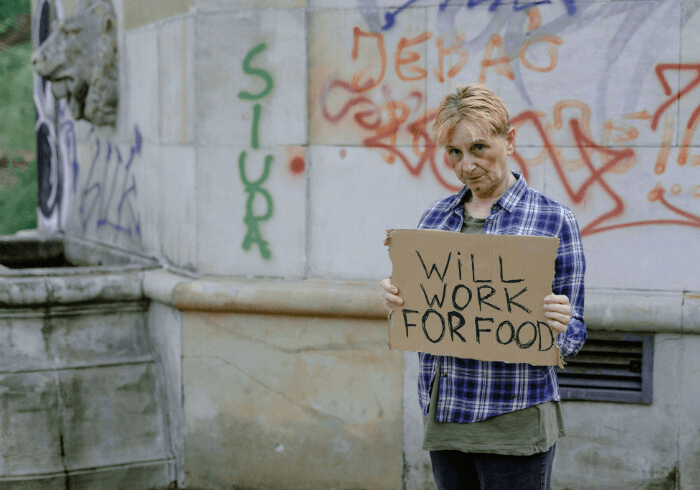
"The fall from wealth is silent, but the mind's collapse echoes louder than any siren or scandal." - Elmarie Heckroodt
Patients come from all walks of life. At one table, you might have a tattooed lesbian, a drug addict, an accountant, an unemployed 24-year-old still living with their parents, a moderately wealthy banker, and the homeless. On the outside, their worlds would never overlap. In a psychiatric hospital, those lines blurred. They all carried stories written in scars, secrets, and silent battles, and somehow those stories connected.
It was strange, almost absurd, that the banker who once signed off million-rand deals could lean across the same table and confide in a lesbian about her craving for Methamphetamine (meth), a powerful, highly addictive synthetic stimulant drug that affects the central nervous system.
The accountant, neat and quiet, would listen intently to the homeless woman’s stories of survival on the streets, stories told with a mix of humor and heartbreak. The young one, still just starting life but already broken by it, might laugh at a crude joke from someone twice their age, and for a moment, the weight of diagnoses and court orders seemed to lift.
The ward became this odd little ecosystem, where people who would normally cross the street to avoid one another now sat shoulder to shoulder, pouring instant coffee into polystyrene cups, sharing cigarettes, or playing a slow game of dominoes or cards. The contradictions were everywhere, but so was the connection.
I realized that pain doesn’t care about class or status. Addiction doesn’t check your bank balance before it takes hold. Depression doesn’t ask if you live in a mansion or under a bridge. Anxiety doesn’t care if you drive a luxury car or sleep on a bus bench. In that ward, stripped of our titles, jobs, and reputations, we were all just human; flawed, fragile, and searching for a piece of ourselves we thought we had lost. We really were all more the same than different.

"No upbringing, no wealth, no education is enough armor against the moment your mind buckles." - Elmarie Heckroodt
The irony hit me hard. Out there, in the “normal” world, people cling to labels: rich, poor, successful, failure, sinner, saint. But in there, none of it mattered. The labels dissolved the moment you were handed hospital pajamas, for those who didn't have anything, except for the shirt on their back, and your shoelaces were taken away.
No one cared what car you drove, or how high you had once climbed, or how far you had fallen. What mattered was whether you were still fighting to breathe through another day, whether you could keep the voices quiet long enough to sleep, or whether the hunger for your drug of choice would tear you apart before morning.
Seeing that, really seeing and experiencing it, changed something in me. Something nobody would understand unless they have experienced it themselves.
It made the world outside feel like a lie, some grand performance where everyone hides behind masks of success and failure, pretending they are different, pretending their pain is unique. But inside those locked doors, I saw something rawer, more truthful: the nakedness of suffering, the proof that at the end of it all, we’re not separated by wealth, race, or education. We’re united by our fragility. And maybe, in a twisted way, that psychiatric ward was more honest than the outside world ever could be.
Being part of that mix was disorienting at first. I wasn’t sure where I fit in, despite being a lesbian. There were three of us: Lindsy, the girl who committed suicide, Olla, the nurse, and me. I wasn’t the gangster, or the addict, or the homeless woman, yet I also wasn’t the banker or the accountant. I was something in between. Someone sent there not because I was “sick” in the same way, but because the courts wanted to know if I was fit to stand trial. That fact never left me.
At times, I felt like an intruder, a spy dropped into a place where I didn’t fully belong. But then again, didn’t I? I was locked in the same ward, wearing the same casual clothing, eating the same bland meals, having my phone calls monitored, my movements restricted, and my emotions dissected. Whatever the reason for my admission, I was part of the same machine, and the machine didn’t care about the fine print of why I was there.
So, I learned to sit at those tables. I learned to share cigarettes with the addicts, to laugh at the homeless woman's jokes, to nod along with the accountant’s quiet worries. I started seeing myself reflected in them in ways I didn’t expect. Their struggles weren’t mine, not exactly, but the loneliness, the shame, the hunger for belonging; I knew those feelings all too well.
It was humbling, but also heartbreaking.
Outside, I had carried around so much anger, so much defiance, like a shield.
Inside that psych ward, surrounded by people stripped of everything, I realized that anger was just another kind of mask. There, no one could really hide. We were all exposed, and in that exposure, I started to see my own humanity a little clearer.
I won’t pretend or deny that I didn’t sometimes feel superior. Part of me clung to the idea that I wasn’t like them, that my presence was temporary, that I had been placed there unfairly. But another part of me, the quieter, more honest part, knew I wasn’t above them either. Maybe my demons had different names, maybe my battles took different shapes, but at the end of the day, I was just as human, just as breakable.
And that realization sat heavily with me. It was uncomfortable, but it was also freeing. Because once you stop fighting to prove you’re different, you start to see how much alike you really are. And in that sameness, strangely enough, there’s comfort.
Facing the Questions: Trapped Between Honesty and Judgment"
"The weight of honesty is when truth feels like a trial." - Elmarie Heckroodt
A week passed before they called me for another session with the psychologist. The other days, I still had appointments with the psychiatrist, the social worker, and the pastor.
Another walk down that corridor, the same walls, the same institutional smell of disinfectant and overcooked food, another door that shut behind me like a lock clicking. It was a small, typical government office, a single chair on my side of the table, another opposite me. The inside of the door handle being removed when you enter says more about your freedom than any paperwork ever could. It almost made me feel claustrophobic.
You notice these things when you’re in a place like that. The nurse who took me to the office kept the door slightly ajar, indicated that I must enter, told me to wait, and then left with the door handle as if it were something harmful, shutting the door behind her.
The air felt close, almost stale. I sat waiting, staring at the table. My palms were sweating even though the room was cold. It wasn’t just another session. It was another opportunity to be judged, weighed, and measured.
This wasn’t therapy; it was a process, a system, and I was just another case file moving through it.
Then she came in, a woman I’d never seen before. She greeted briefly. No handshake, no name. Having a mischievous side, I imagined a nametag on her jacket saying: “I’m an asshole”. She sat down, eyes already on my file. She explained in that clinical, detached voice people use when they’re ticking boxes that she’d be working with me occasionally over the remaining two weeks.
Her responsibility was to prepare a full report about me: my history, my behaviour, my every word and silence. Evidence for the court, evidence for my sentencing. "Evidence." The word sat like lead in my stomach.
She didn’t even glance up properly before she spoke. Her voice was cool, professional. Then, without a pause, we went straight into the evaluation survey. It felt like being shoved back into Grade 1; only instead of spelling words on a page, you’re spelling out pieces of yourself.
“Are you having thoughts of suicide?” she asked. No preamble, no easing in.
“What the fuck?” I thought bitterly. Why always start there? Why not, “Tell me about a memory that makes you happy”? But of course, that’s not how this works. They don’t start with soft landings there. I swallowed it down and answered anyway.
“Yes,” I said out loud. “It’s nothing new. I’ve had suicidal thoughts since childhood.” She barely blinked. “Have you thought of how you might kill yourself?” “Yes,” I said again. “But I never had a solid plan. I was always afraid of ending up like a cabbage if I didn't succeed.”
As soon as the words left my mouth, I felt the trap snap shut. I’d handed her ammunition. Everything I said and everything I didn’t say would be noted, weighed, and turned into evidence. It didn’t feel like therapy. It felt like a cross-examination. “Fuck,” I thought. “Am I already standing trial?”
Every nerve in my body told me to shut up. To stop feeding the file. But another voice inside reminded me why I was there: my bail application, my upcoming trial and sentence, my mom, Kegan. I was young. 33. Naïve. I thought honesty might count for something.
The session ended abruptly. A few more questions. More notes. She called someone to come open the door, then she was gone. “I’ll be back soon,” she said. But "soon" in a place like that doesn’t mean what you think it means.
An hour later, someone escorted me to another room. A female nurse stood waiting.
“Undress,” she said. I stared at her. “Undress?” “Yes,” she said flatly. No explanation. No warmth.
She didn’t flinch. I stripped because what else could I do? She examined me inch by inch, like a specimen, not a person. My skin crawled under her eyes.
“Please examine my dignity as well. I’m not using it,” I muttered. Half a joke, half a plea. She scribbled something down, “aggression,” probably, and glared over her bifocals with that cold, bureaucratic stare. “You can get dressed now,” she said. She made more notes about the tattoos on my body, then left without another word.
I sank to the floor, my back against the wall. No one told me what to do next, so I waited. I stayed where I was, sitting on the cold floor with my back against the wall. I didn’t know what to do. No one told me if I was done or if there was more. In a place like that, you’re constantly waiting. Waiting for someone to tell you where to go, what to do, who you are now. That’s what you do there. You wait. Minutes stretched out until finally she returned and said I could go back to my room. And just like that, I was dismissed. Another box ticked. Another small piece of my dignity was taken and filed away.
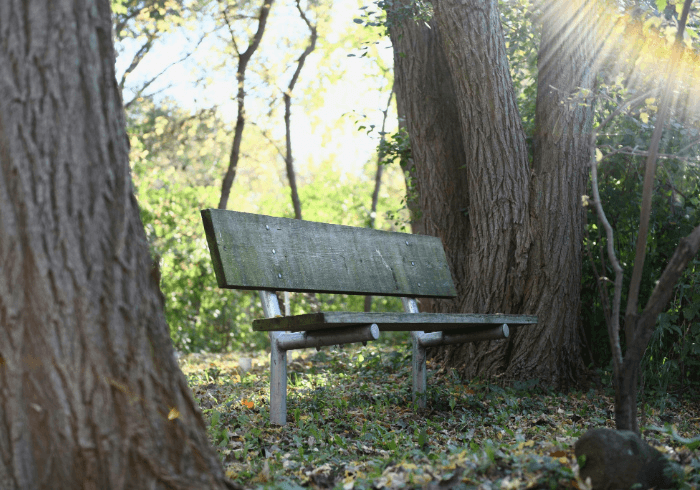
"We all have our cracks: Theirs just show differently than mine." - Elmarie Heckroodt
Twice a day, we were allowed outside. Those brief times became the most important markers of the day, like two breaths of air in an otherwise suffocating routine. The space itself wasn’t much, just a patch of grass, a few old wooden benches and tables that creaked when you sat down, and the odd shrub with a few flowers trying their best to brighten the place.
But what really stood out were the bluegum trees. Tall, ancient, and everywhere. Their smell clung to the air, sharp and clean, so unlike the sterile, recycled staleness of the ward. They felt alive, strong, untouchable. Those trees were the only thing in that place that felt sane, solid, silent, unshaken.
Twice a day, I’d sit under one, the only living thing in that place that seemed unbothered by all the madness around it. It stood there silently, offering shade like some ancient witness to human suffering, and I’d remind myself: I don’t belong here. I’m not crazy. I’m just passing through. But on some days, even that reassurance felt thin.
That area was also the visitors’ area, which gave it a strange double meaning. On some days, it was where laughter or tears broke the monotony, where you saw faces from the outside world and remembered that you were still someone’s daughter, sibling, or friend.
On other days, it felt like a stage where your reality was exposed, stripped down in front of people who didn’t really know what it meant to live inside those walls. For me, those few minutes outside weren’t about freedom; they were about contrast. Inside was noise, madness, and fluorescent lighting that made everyone look sick. Outside, even though it was limited, there was grass under my shoes and the whisper of trees. You’d almost believe for a second that things were normal, until the session ended and you were herded back in.
The rest of the day? Inside. Always inside. The ward was filled with people who sat in the TV room, staring blankly at a screen that was usually playing reruns or the evening news. Sometimes they’d laugh, but not because anything was funny. The voices in their heads told them the scene was like a Tom and Jerry cartoon. The TV was entertainment, inducing a numbing, euphoric escape from the voices in their heads.
But I’ll tell you this: the patients themselves… well, they were something else. Calling them “interesting” doesn’t even scratch the surface. Honestly, the highlight wasn’t the benches, the shrubs, or even the towering trees; it was the patients. The ward was populated by characters you couldn’t make up if you tried. Every person carried a story, sometimes bizarre, sometimes heartbreaking, sometimes both at once.
There was that girl, remember, the same one I mentioned earlier, who attended school with my sister and later committed suicide, Lindsy. She wasn’t shy about her… let’s say connections.
She had, according to herself, a direct psychic line to President Nelson Mandela. One night, the news was on. There he was on the screen. She froze, listening. Then she stood up suddenly, as she had just received urgent instructions from God himself. Apparently, Mandela had told her, through the television, to slap the kleptomaniac elderly lady sitting right next to her, busy knitting. And she did. Before the knitting needles and wool could land on the floor, the lady jumped up and ran from the television room.
Chaos followed. I assisted the staff in trying to locate the poor woman who had been slapped in her face. Eventually, we found her under her bed, curled up tightly with a pillow clutched to her chest. She was shaking so violently that her false teeth rattled. At one point, I thought they were going to pop straight out of her mouth. The nurse, trying to keep a straight face, suggested she remove them before she accidentally swallowed them. That moment, as horrible as it was, had a strange comedy to it. Here was this woman, traumatized and trembling, while her teeth were bouncing up and down like a bad circus act. It would have been funny if it weren’t so tragic, but I couldn’t help laughing afterwards, not because I didn’t care, but because sometimes in there, laughter was the only way not to lose your own mind.
To put the scene into a clearer perspective: she always had an almost pathetic posture, she hardly ever mixed with the patients, she was quiet, somewhat of a loner. One couldn't help but feel empathy for her without knowing her life story. She didn't receive daily visits like me, but when someone visited her, it was her husband, and he never stayed the full hour.
And then there was the one who believed she was a twin. Not just a twin, but that her twin had to be recognized in everything. At lunch, when the nurse refused to set a plate and fork for her invisible sister, she completely lost it. She flipped the table upside down, food everywhere, people screaming. It was both terrifying and disturbing.
That’s the thing about being locked in there. You don’t just see madness, you live inside it, day after day. And while part of you wants to laugh, another part knows this isn’t funny. These weren’t just quirky personalities; these were people drowning in realities they couldn’t escape.
And in the middle of all that, I was stuck. Watching, listening, laughing when I shouldn’t, shaking my head at the situation, and at the same time, feeling my own grip on reality being tested. You can’t sit in a room full of people convinced of impossible things without starting to question yourself about what’s real.
Many of you might ask: "But why was I placed in that specific ward?" It was the only ward where escape was impossible. I was placed in that ward because of the crime I had committed. The level of security, the barred windows, locked doors, security guards, and constant camera surveillance existed because it was not a place for people who were simply sad or anxious. It housed patients whose minds could become dangerously unstable without strict medication and supervision.
Because they heard voices that commanded them, some lost touch with reality entirely. Without their prescribed treatment, their behaviour could spiral beyond their control, posing a great risk to themselves and to the outside world.
The ward was designed to contain chaos, not punish it. Every bar, every lock, every camera existed to keep those patients safe, inside and out, until their minds could be stabilised again.
The other wards on the hospital premises were open wards for patients who didn't pose a threat to anybody, but had mild mental health problems. They could come and go as they wish.
Then there was the girl, who couldn’t have been older than twenty, who firmly believed her ex-boyfriend was Elvis Presley. She spoke about him with the certainty most people reserve for death and taxes. For her, the King was still alive, and more importantly, still hers. The nurses mocked her gently, telling her Elvis might be a little too old for her. She shot back with a look of pure confidence and unshaken, as if they were the crazy ones.
I’ll admit it, I laughed harder than I should have. The whole situation was hilarious. I couldn’t help but laugh, but behind the humor, there was something deeply sad about it. A young woman trapped in a love story that only existed in her mind. So young, yet her reality had already split apart, and she had built this fantasy relationship to fill the gap.
Another patient liked to pretend she was a pillow. No explanation, no conversation, just lay flat and rigid, arms pressed close, face blank. A nurse even fluffed her once and asked what she was doing. She mumbled, “I’m a pillow now.” She didn’t react, didn’t move. Just remained a pillow. Times like those, I would completely forget why I was there.
Another patient had her own ritual. She paced the room endlessly, back and forth like a pendulum, counting her steps aloud. One, two, three, four, five, six… skip seven… eight, nine, ten. Then she’d start again. Always skipping number seven, as if it carried some kind of curse. It made no sense to me, but it made perfect sense to her. I watched her for hours sometimes, mesmerized by how committed she was to her own pattern, as if the whole world would collapse if she dared to speak “seven.” I asked her once why she skipped it, and she just looked at me blankly and started again. “One, two, three…” I still don’t know what happened to number seven.
Being surrounded by those people was a strange experience. On one hand, it was deeply unsettling, but also extremely sad. These were individuals whose grip on reality had slipped so far that their entire lives revolved around things that weren’t there, or weren’t true. On the other hand, it was fascinating. They weren’t boring, not like the gray walls or the humming fluorescent lights inside. They had fire, belief, conviction, misplaced as it was.
Every single patient had their own brand of madness. It struck me then that the line between “them” and “us” wasn’t as thick as people liked to believe. Sure, I wasn’t talking to Mandela or dating Elvis or skipping number seven, but I was still there, locked inside with them, trying to hold myself together. And maybe that was the most sobering part. We all had our cracks. Theirs just showed differently from mine.
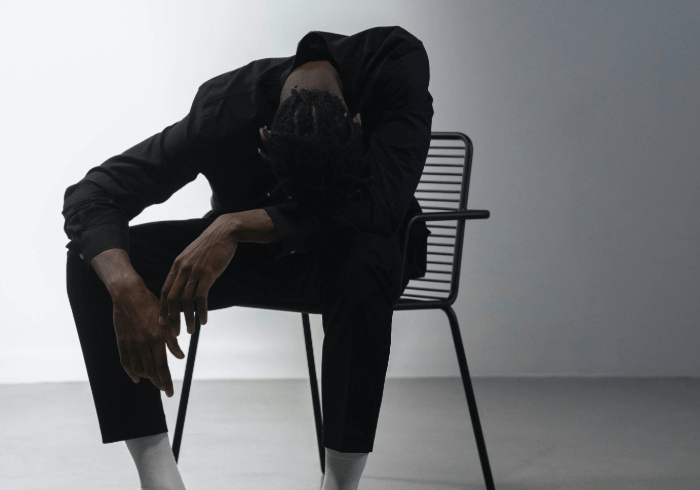
"Survival isn't a choice, it's the body remembering how to fight." - Elmarie Heckroodt
During the last two weeks of that month’s observation, the rhythm of my days changed. I had to see my appointed psychologist twice a day. Twice. Every morning and every afternoon. By then, I had already become numb to the routine of the institute, but those last two weeks were the hardest. They weren’t just difficult; they were brutal. This was where I saw the darkest, most fucked-up side of psychiatry.
You’d think therapy is supposed to be a safe space, right? A room where you can finally let down your guard, take off the mask you wear for the world, and trust that what you say will stay between you and the person scribbling notes on the other side of the desk. That’s the illusion. That’s the fairytale they sell you. The reality was far different.
One evening, as I walked down the hall, I overheard staff members casually talking about details from my private sessions. Details I had given my psychologist, the things I told her when I let myself be raw and honest.
I froze, every nerve in my body turning ice cold, then boiling. Betrayal hit me like a punch in the gut. My privacy, my pain, had become their entertainment. I felt betrayed by someone I was supposed to trust with my life. And at the same time, I felt angry towards her as well. Details changed to protect the innocent, and, as an unfortunate side effect, the guilty will remain guilty, regardless of whatever effects certain events throughout my life had on me.
I felt stripped naked, not by choice, but by their careless gossip. And right then, I realized something that still burns inside me: they weren’t just talking about my story, they were handling my life as evidence. Not a human being anymore, not a soul struggling to hold on. Just a case file, another name in a report.
The next day, I walked into her office like a storm. I didn’t sit down. I walked straight to her desk, placed both hands on it, leaned forward, and stared into her eyes with all the anger I could summon. “How the fuck could you do this to me? Why did you discuss my story with the staff? How do you want me to trust you for these last two weeks?”
I wanted to break her with my stare alone. She leaned back in her chair, perfectly calm, almost too quiet. She told me she had to share some information with the staff so they could observe me more effectively, allowing them to report back to her. “At this stage, I’m concerned you still have anger issues,” she said. Then she admitted it was unprofessional of the staff to discuss it openly where I could hear, and she would talk to them about it.
Her words meant nothing. She wanted me to see it through her lens, to understand it as part of her job. I told her that I’m not the fucking psychologist here and that I think it was very low and unprofessional of her to go to such an extent to test my anger. I wasn’t the one with the pen in my hand. I wasn’t the one protected by a clipboard and a title. I told her what I thought: that she was testing me in the lowest way possible. If she wanted to know whether I had anger issues, there had to be a better way than betraying my trust.
“Yes, I have anger issues,” I said. “But anger doesn’t come from nowhere. Anger is just hate mixed in different ways. I hate my father. I hate him for what he did to me and what he did to my family, especially to my mother. I hate my stepmother. I hate being rejected. I hate being humiliated with disgusting names. I hate Lizette for betraying me. I hate God. I hate the whole fucking world, because nobody can be trusted. Mix it all together, and yeah, you get anger.
Now you tell me, how the fuck must I handle it?” The words erupted out of me like lava, hot and uncontrollable. For a moment, it felt like I had vomited my entire soul onto that desk.
She didn’t flinch. Instead, she let the silence hang in the air like smoke.
Then, after a few minutes, she told me to sit down and gave me a few minutes to regain myself.
“Close your eyes.” She started.
“Picture the time when you were most vulnerable,” she said. “Imagine what’s around you. Imagine what you feel.”
Flashbacks weren’t new to me. I had been haunted by them since the shooting. But this one was different, deeper, rawer. It cracked something open inside me. Suddenly, I wasn’t in that consulting room anymore. I was back in one of those vulnerable places, the kind where survival feels like a coin toss. My body reacted before my mind could. I curled up into a ball, sobbing hysterically, slumped over, my head between my knees like I might pass out.
“Say what you feel,” she demanded. Her voice was firm, not cruel, but demanding. She pushed again. “Say something. Anything.” The words ripped out of me without warning: “Oh God, no.”
Then her tone shifted, sharp as a blade. “Look at how you’re sitting. Your shoulders hunched, your body folded in like a rag. You’re sitting like a victim. Now sit like a survivor.”
I heard her, but my body wouldn’t obey. I was trapped in my posture, trapped in my own memories. She stood up, walked behind me, and instructed me to plant my feet on the ground. She told me to stop acting like a victim, to rise in my body, to sit up straight. She scolded me, berated me, but also pushed me in a way that I couldn’t ignore.
It felt as if she was inside my head, yanking at the strings I had tried to cut. Slowly, against my will, I straightened up. My chest lifted, my shoulders pulled back. I was upright again, but not free.
Still, she wasn’t satisfied. She stared at me, eyes locked, and told me again that I was weak, that I needed to act strong, that I needed to embody survival.
Something snapped. I don’t know if it was her persistence, my rage, or the years of pain finally finding a voice. But suddenly, the words shot out of me, raw and unfiltered:
“I am a survivor. I survived.”
The room shook with it. I could feel the truth of it in my bones, even if I hated the way it came out. I looked at her, stunned by myself, then blurted out the only thing I could manage through the mess of emotion: “I hate you. I fucking hate you for doing this to me, you damn heartless fool.”
She didn’t react the way I expected. She calmly walked back to her chair, sat down, and slid a worksheet across the desk; a “victim versus survivor” worksheet. She smiled, as if she had achieved something. And then she ended the session with the most mundane words possible:
“See you tomorrow morning at 10 o’clock.”
And just like that, I was dismissed. Shaken. Exhausted. But also carrying words I could never take back, words that changed me, even if I didn’t want to admit it yet.
"I move through the silence of what was broken, hoping to find a path that feels like home." - Elmarie Heckroodt
I thought she was a total asshole for how she conducted each session, especially that one, because, unwillingly, I allowed her into my mind, but deep down, I also knew that she cared. I don't know how she managed that intense moment, but it is a moment that I will never forget as long as I live.
In her strange, clinical way, she was trying to help me unpack all the emotions and issues I’d been dragging behind me like heavy luggage. Every day, every hour spent in that room with her felt like she’d placed my brain on a conveyor belt, picking apart every thought, every memory, every wound, examining it under a cold light. And yet, as much as I wanted to dislike her, I couldn’t. I think each session was just as exhausting for her as it was for me. She had to sit, facing a human being who was both broken and still fighting, someone who kept shoving the truth back at her like a mirror she maybe didn’t want to see herself.
Still, it felt dehumanizing at times, as if I wasn’t a person sitting there but a collection of labels: lesbian, ex-cop, moron, idiot, slut, whore, useless, worthless, rebel, self-centered, selfish, murderer. Like my humanity had been stripped from me and replaced with a file number, a diagnosis, a courtroom date. I wasn’t being treated as me; I was being treated as a textbook case. Some “interesting” puzzle for a professional to solve. I’d catch myself staring at her during sessions, thinking, Do you even see me? Or just what you’ve been trained to see?
I remember disagreeing with her on so many things, big things, personal things. I found myself trying to justify my very existence to her, trying to explain over and over why I’m gay, what it means to be gay, how that part of me had nothing to do with the crime, the pain, or the labels they were trying to stick on me. During the whole process, I wasn’t just fighting her; I was fighting myself. Fighting this endless stream of questions running through my mind: Who am I? Where do I belong?
Every psychiatric evaluation method she used felt like it was one-size-fits-all. As if she were holding up a template, trying to press me into it until I fit. And the truth was, I didn’t. There were more times I disagreed with her than I agreed, because deep down I knew I was different, unique. Not “special” in some shiny way, but in the way that my life, my pain, my identity, didn’t fit neatly into a single column on a chart.
I kept waiting for answers, answers about myself, about life, about why everything had unfolded the way it had. I believed there had to be answers, because why else would I be sitting there spilling my guts to a stranger? But day after day, I left feeling unheard. As if my questions weren’t even reaching the surface of her attention. I still don't have answers. Maybe I must just stop searching, I don't know.
Maybe that’s what hurt the most. That quiet, gnawing feeling that every time I reached out for help, real, desperate help, I was rejected or brushed off. Brushed off for seeking acceptance. Brushed off for needing love. Brushed off for saying out loud, “I don’t know where I belong.” Even now, years later, that feeling still lingers. Like an echo of that room, her chair, my chair, the conveyor belt of my brain. A sense that no matter how much I spoke, no matter how honest I tried to be, nobody ever truly heard me.
I believe the real story was the storm I’d lived in since childhood. A father who broke me long before life had the chance. His fists, the belt with the buckle, the open hand slaps across my face, his cruelty, his rejection carved scars so deep that even now, they pulse in my blood. He taught me to hate before I ever understood love. He showed me humiliation before I ever knew dignity. He drilled into me, day after day, that I was worthless, unlovable, less than nothing.
So yes, I had anger. Yes, I had hate. They were born out of years of abuse, years of being treated like an object instead of a daughter. And no psychologist, no report, no courtroom could ever quite capture that truth.
I also believe that if anyone really wanted to know who I was, they had to look past the labels. Past the sessions. Past the thick file of notes. They had to see the child who never had a chance. The girl who carried her father’s violence, rage, and anger like an inheritance. The woman who is still trying to crawl out of the wreckage. And that was the part no one ever wanted to write down.

"Strength is not given: it is carved out in the silence of survival." - Elmarie Heckroodt
Amidst all the chaos, the relentless psychology sessions, and the suffocating weight of evaluation, I slowly began to accept my situation, the reason why I was there, and what that strange, confining place represented.
It was only during my last week at Stikland that I began to recognize something unexpected.
Even though I was being evaluated, watched, and constrained, I started to understand resilience, strength, and the subtle ways in which survival works. I was learning something unseen, unspoken, still, it doesn't have a name. I have no way to define it. It felt spiritual and out of reach, but whatever it was, it felt good.
The ward became a mirror reflecting both the damage of my past and the possibility of survival. I realized that being confined, evaluated, and watched didn’t just strip me down; it forced me to find the inner strength I never knew I had.
I realized that during my stay at Stikland, I was subconsciously observing the patients around me and began to see patterns, rhythms, and behaviors that mirrored fragments of my own life: the outbursts, the quiet tremors of fear, the flashes of anger, and the moments of fragile laughter.
The thought of leaving the ward felt terrifying; the outside world seemed a distant, hostile place. Within those walls, however, the ward became a strange kind of sanctuary, a cozy retreat filled with people whose minds were fractured and turbulent, yet in their brokenness, I recognized fragments of humanity I understood in a way no one else could see.
The real purpose of being in a place like that became clear, or so I thought at the time. It was a pause from life, a chance to focus on myself without the constant demands, judgments, and chaos of the outside world.
To give more clarity on why I was afraid to leave the psychiatric hospital, I will use an example.
The first one that comes to mind is control. By nature or through DNA, I'm not sure, everybody wants control, but control comes in many shapes. The hospital’s control was methodical, clinical, and necessary; it kept people safe. I felt safe. Obedience was expected but enforced with a quiet, almost invisible hand. Compliance wasn’t optional, but it was done in a way that carried the weight of empathy, not fear. My future depended on it, yes, but there was no hatred behind it, no personal vendetta.
My father’s control was chaotic, merciless, and destructive; it broke me piece by piece. It carried a poison. It left scars that never fully healed, echoes that reverberated in every evaluation session, every corner of the ward, in the way I flinched at authority, in the anger and mistrust that shadowed my every thought.

"Pain wears many masks: sometimes violent, sometimes gentle, but it always leaves a mark." - Elmarie Heckroodt
The difference was sharp but subtle, and I learned that the hard way. The contrast between the two was jarring.
Both forms of control had one thing in common: they reminded me of how little say I had in my own life. One crushed me with cruelty, the other held me tightly and safely in the name of a court order. Neither gave me freedom, because one left bruises on my soul, while the other left me searching for dignity and self-worth.
I don't know if anything in this chapter makes perfect sense because I am all over the place, but I am writing from a place where the memories of the emotions and experience are still very real and clear. Now, after almost three decades, I am typing this on my computer from pieces of wrinkled pages and faded ink, using the exact same words that were written down in a tiny single cell, with barely any light and a Bic pen.
Stepping Out of the Walls, Carrying the Silence With Me

"Freedom can feel heavier than confinement when the world outside still echoes your fears." - Elmarie Heckroodt
My thirty-day evaluation was over. It wasn’t a place where I healed. It was a place where I was measured, tested, and labeled.
Still, something inside me shifted. I saw pieces of humanity there that I didn’t think existed anymore. Everyone, no matter how broken, was searching for the same thing: a place to belong, a kind of love that didn’t demand perfection.
I didn’t enjoy being there. The walls felt too tight, the days too long. But I had to play my part. I had to demonstrate that I could cooperate, stay calm, and follow the rules. I reminded myself, over and over, that any slip could send me straight to prison; no warning, no second chance. That fear kept me in line.
The upside of my thirty days there is that the "pillow", the "twin", the "unspoken 7", Lindsy, and Elvis's girlfriend, unexpectedly widened my eyes. In a world already fractured by heartache and brokenness, they stripped life down to its rawest form; unfiltered, unpolished, and painfully honest. There was no pretending, no curated normality. Their minds may have wandered far from consensus reality, but their humanity was unmistakable, and it forced me to see how fragile we all are, and how thin the line is between being “well” and being lost. The sad part is that they will never know that their fractured minds held up a mirror to my fractured life, and in that reflection, I saw something that never crossed my mind before, and that is that brokenness is not a hierarchy. It is not a competition. It is a shared human condition, and witnessing theirs softened the way I now hold my own.
On discharge day, I sat with my psychologist, psychiatrist, and social worker. They spoke gently, asked if I was ready, ensured I had appointments lined up, and confirmed that I’d be living with my mother. They said all the right words: encouragements for the road ahead, but the truth was, I didn’t feel ready for the world outside those locked doors.
When they told me I could leave, I cried. It caught me off guard. There was something safe about the structure of that ward, something gentle and empathetic. I’d found comfort in the chaos. I’d made friends, people who didn’t judge, people whose brokenness matched mine. Strangely, that place became a cocoon. Life outside felt too loud, too sharp. Inside, I was learning how to exist again, even if it was in a security ward.
Still, I walked out. Mom stood beside me at the reception while they finalized my discharge papers. Just knowing she was there, calm, steady, and safe, made the moment a little easier to bear. By the time we left, my bag felt heavier than it was. Maybe because it carried pieces of what I’d faced inside those walls: fear, reflection, and a strange kind of healing that didn’t yet make sense.
One thing I knew was that Mom wouldn’t hurt me like my father once did. That alone made stepping out bearable.
Before leaving, they assigned me an outpatient therapist, Hendrik. He would be responsible for my mental and emotional health until the court case. It all sounded so structured, like a plan meant to protect me from falling apart again. But in truth, I was terrified. I didn’t know what the next chapter held.
The thirty days felt like a lifetime and a blink all at once. As we drove away, I looked back at the building, wondering how something that felt like a prison could also feel like home.
Back at Mom's house, the air was different: lighter, but uncertain. The fear of the upcoming court case never really left; it just sank deeper under the surface.
Still, my mood was better. Hendrik started me on medication that finally balanced the chaos in my head. For the first time in a long while, I felt almost normal.
This chapter ends here… but your thoughts matter! 💬 Drop a comment below.
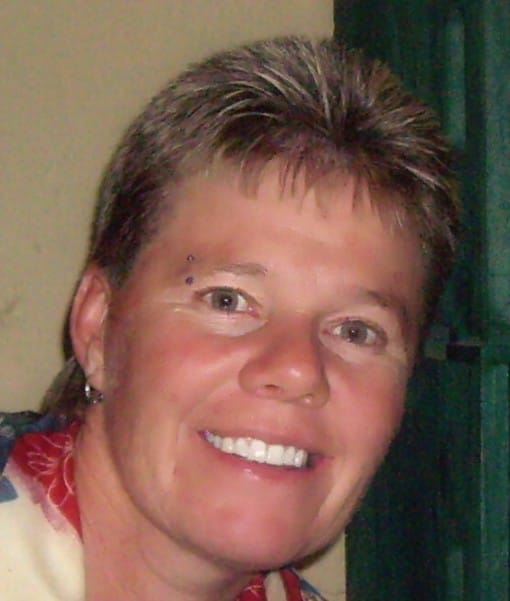
Author: Elmarie Heckroodt
Stay informed! A new chapter is released every week.
Your next chapter, “Court Hearing And Sentence - Part 11", will arrive in your email next week.
Keep an eye on your inbox so you don’t miss it.
© 2025 Elmarie Heckroodt. All Rights Reserved.